

Pool fire feature installation in Arizona can turn an ordinary swim area into a comfortable evening destination. The right feature adds warmth, light, and a natural gathering point, but it also needs thoughtful placement, a suitable fuel plan, safe clearances, and coordination with the pool, patio, landscape, and local permitting process. If the feature is part of a larger renovation, review Modern Pools’ Phoenix pool remodel and renovation guide as you define the full scope.
Book Estimate with Modern Pools or call 480-698-8412
What Fire Features Can Be Added to an Arizona Pool?
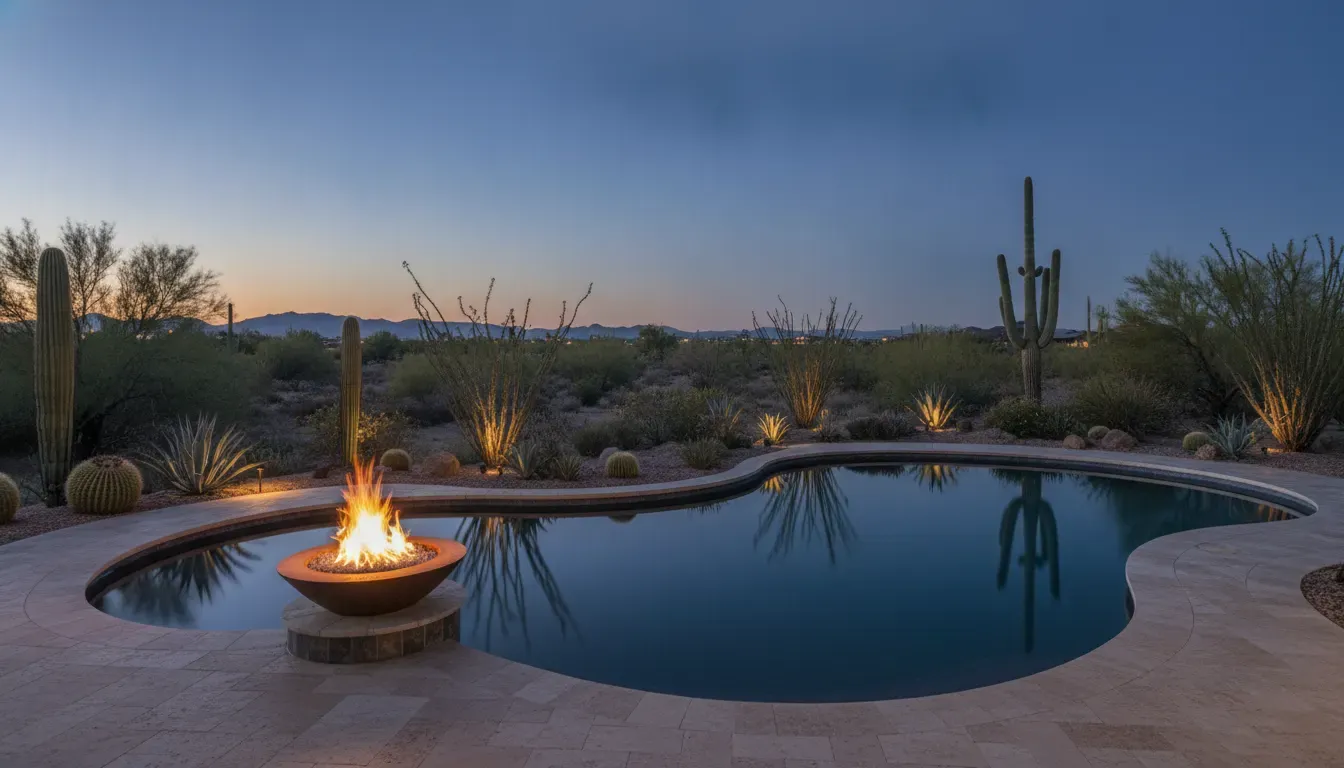
Pool fire feature installation Arizona homeowners choose most often includes fire bowls, fire pits, linear fire features, fire tables, and poolside fireplaces. Modern Pools can also combine fire with water, such as a linear burner above a sheer descent. The best option depends on the pool shape, seating plan, fuel access, finish palette, and how you want to use the backyard.
A fire feature should be planned as part of the complete outdoor living design, not added as an isolated object after the deck is finished. Start with the view from the house, the main entertaining zone, and the places where people will sit after sunset.
- Fire bowls: A sculptural bowl can frame a spa, sit at a pool corner, or anchor a conversation area.
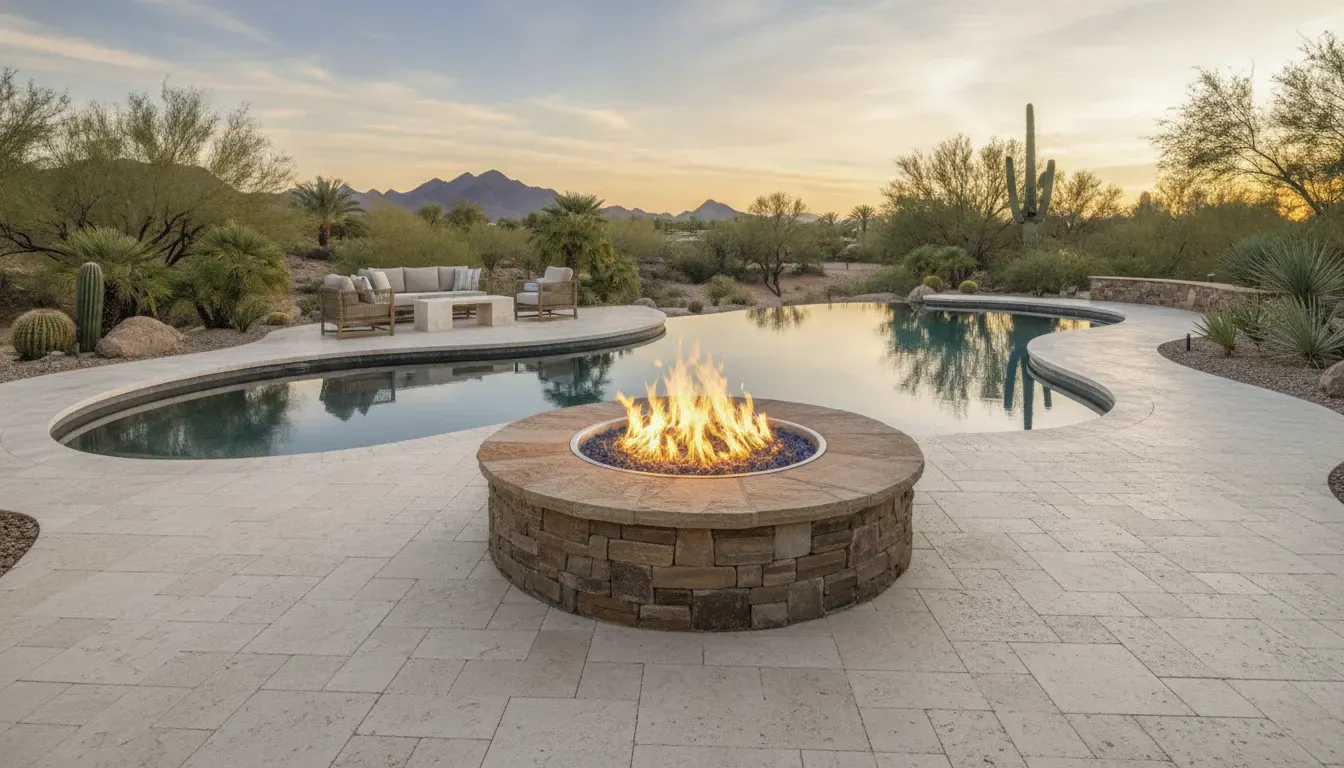
- Fire pits: A larger pit creates a central gathering point and can be built with stone, tile, masonry, or a coordinated coping material.
- Linear fire features: A long burner creates a clean architectural line along a raised wall, planter, or pool edge.
- Fire walls and fireplaces: Vertical features add a stronger architectural backdrop near a patio, outdoor kitchen, or covered seating area.
- Fire tables: A table-style feature can combine flame and usable surface area where the layout supports it.
Modern Pools’ fire and water feature service includes custom fire pits, bowls, tables, linear features, fireplaces, and integrated fire-and-water designs. The same page also outlines water options such as sheer descents, waterfalls, bubblers, scuppers, deck jets, and laminars.
Fire Pits vs. Fire Bowls vs. Fire Walls: Which Suits Your Design?
Fire pits suit social seating, fire bowls suit visual balance, and fire walls suit architectural drama. In a Phoenix East Valley backyard, the right choice is the one that fits the circulation path, protects the view, complements desert materials, and leaves enough room for comfortable seating and safe operation.
| Feature | Best design role | Planning questions |
|---|---|---|
| Fire bowl | Frame a pool, spa, or focal view | Will the bowl balance the pool without narrowing the walking path? |
| Fire pit | Create a social gathering zone | Is there enough room for seating, circulation, and heat-aware furniture placement? |
| Linear fire wall | Add a modern architectural accent | Can the wall support the burner, finish, gas route, drainage, and service access? |
| Fireplace | Build a vertical destination near a patio | How will the structure relate to the roofline, outdoor kitchen, ventilation, and view? |
For a smaller pool deck, one or two carefully placed bowls may create more usable space than a large central pit. For a long raised bond beam, a linear feature can emphasize the geometry of the pool. For a remodel, the existing shell, deck, utilities, and drainage often determine which options are practical without unnecessary demolition.
Material selection matters in the Arizona sun. Travertine, pavers, natural stone, porcelain, glass tile, and masonry each create a different visual relationship with the flame. A designer should also consider how the finish looks in daylight, because the feature will be part of the backyard even when it is turned off.
Gas vs. Propane Fire Features in Arizona
Natural gas and propane can both power a pool fire feature, but the better choice depends on utility availability, feature size, tank logistics, line routing, controls, and the property layout. A qualified installer should confirm the fuel source, pressure requirements, shutoff locations, appliance specifications, and inspection needs before construction starts.
Natural gas
Natural gas can be convenient when a suitable utility connection already serves the property. The design team still needs to confirm the available capacity and plan a properly sized route to the feature. Long runs, multiple appliances, and a large burner may affect the mechanical design, so the fuel plan should be coordinated before the patio or raised wall is built.
Propane
Propane can work where natural gas is unavailable or where the homeowner prefers a tank-based fuel arrangement. The team must plan the tank location, delivery access, line route, screening, ventilation, and relationship to the pool equipment and living spaces. A concealed tank should never be treated as an afterthought.
Do not choose a fuel solely on the apparent convenience of the appliance. Ask how the system will be serviced, where the shutoff will be located, how the control system will work, and what must be inspected before the feature is used. Modern Pools can coordinate fire, water, lighting, and pool automation so the finished backyard operates as one experience.
Talk with Modern Pools about your pool fire feature plan
What Fire and Water Feature Combinations Work Best?
Fire and water combinations work best when each element has a clear visual role and the mechanical system is designed as one coordinated installation. Common concepts include fire bowls beside a spa, a linear flame above a water wall, a fire feature at the end of a raised pool wall, or a pair of bowls framing a sheer descent.
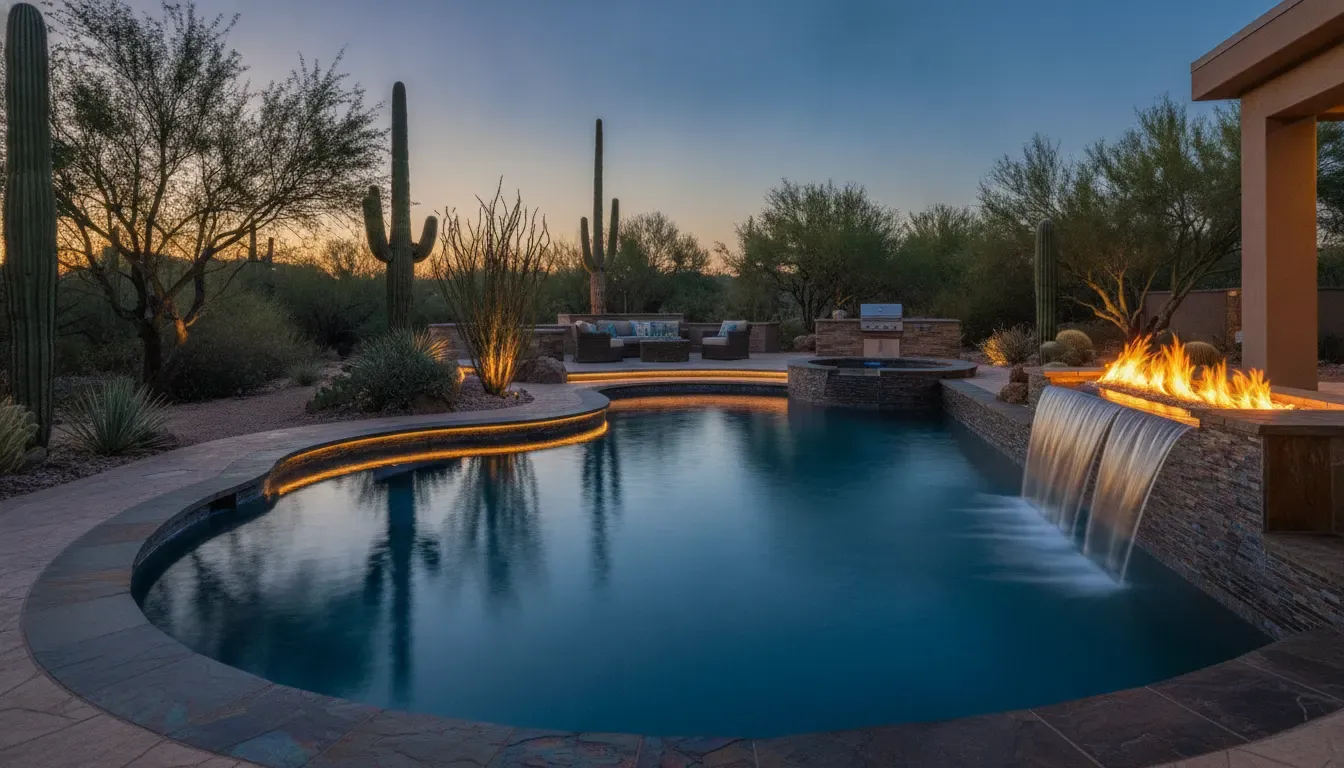
The strongest designs use contrast with restraint. Fire supplies warmth and a moving focal point. Water supplies sound, reflection, and motion. Putting too many effects in one small yard can make the space feel busy, while a single aligned feature can make a compact Tempe or Chandler backyard feel intentional.
- Raised wall combination: Use a linear fire element above a water sheet for a crisp, contemporary look.
- Spa framing: Place matching bowls at the ends of a spa or raised bond beam to create symmetry.
- Conversation edge: Combine a low fire feature with a nearby seating zone, while keeping circulation clear.
- Landscape transition: Use stone, planting, and low lighting to connect the pool feature to the wider yard.
Lighting should support the flame instead of competing with it. Automation can make it easier to coordinate pumps, LED lighting, water effects, and fire controls, but every component still needs appropriate access for inspection and maintenance.
For a remodel, adding fire and water may involve structural work, new plumbing, new electrical or gas routing, updated finishes, and changes to the surrounding deck. Link the concept to the Phoenix pool remodel guide early so the feature is evaluated alongside the rest of the renovation rather than priced as a disconnected add-on.
What Are the Permitting Requirements for Pool Fire Feature Installation Arizona?
Permit requirements for pool fire feature installation in Arizona vary by city, feature type, fuel source, structural work, electrical work, and property conditions. In the East Valley, confirm requirements with the city having jurisdiction and the HOA before construction. A licensed contractor should coordinate drawings, applications, inspections, and utility-related work as applicable.
Use official city resources as a starting point, not as a substitute for a project-specific review:
- Scottsdale Permit Services explains that most construction and structural improvements require permits and lists swimming pools and spas among examples of work requiring a building permit.
- Phoenix Fire Permit Forms, Applications and Fees provides the city’s current fire-permit resources.
- Mesa Fire Permits and Fees provides fire-prevention permit and fee information for Mesa properties.
- Chandler Fire Prevention, Inspections and Permits is the city’s resource for fire-prevention services and inspections.
Permit scope can involve more than the flame itself. Ask whether the project includes a new gas line, electrical connection, masonry wall, structural modification, pool remodel, patio cover, or work near an easement. The answer may affect the plan set, trade permits, inspection sequence, and schedule.
HOA review is separate from city approval. A community may have rules for visible flames, fuel storage, exterior materials, wall heights, setbacks, or construction hours even when a city page does not address those design preferences. Gather the HOA documents and submit the concept early when the property is in a planned community.
Modern Pools can help homeowners plan a permit-ready project and can connect this work with its Arizona pool permit planning guide. Requirements change, so the final authority is the city, reviewing agency, utility provider, and approved project documents.
What Does Pool Fire Feature Installation Arizona Cost and How Does It Work?
Pool fire feature installation Arizona cost is shaped by the feature, materials, fuel route, structural work, electrical and automation needs, access, permits, and whether the project is new construction or a remodel. A site-specific design and scope review is more useful than a generic online number because two features that look similar can require very different site work.
Key cost factors to review
- Feature type, size, burner configuration, and number of fire elements
- Natural gas or propane availability and the distance from the source
- Raised walls, foundations, masonry, coping, tile, or structural modifications
- Pool plumbing, water basins, pumps, drains, and water-feature controls
- Electrical supply, lighting, automation, shutoffs, and service access
- Deck demolition, grading, drainage, landscaping, and construction access
- Permit, engineering, inspection, HOA, and utility coordination
Typical installation sequence
- Site and lifestyle review: Identify views, seating, circulation, pool use, shade, utility locations, and the desired atmosphere.
- Concept design: Compare bowls, pits, walls, fireplaces, and fire-water combinations against the pool and landscape plan.
- Technical coordination: Confirm fuel, gas or electrical routing, water systems, structural needs, equipment access, and control strategy.
- Permit and HOA review: Prepare the required information for the city, trade reviewers, utility providers, and community approval process.
- Site preparation: Protect the property, establish access, complete demolition or excavation when needed, and prepare the work area.
- Installation and finishes: Build the structure, install lines and equipment, apply masonry or tile, and coordinate the surrounding deck and landscape.
- Testing and orientation: Inspect the completed work, test the flame and water effects, review controls, and explain safe operation and maintenance.
The schedule depends on permit review, material lead times, access, weather, inspection availability, and the complexity of the surrounding pool work. A feature installed during a new pool build can be coordinated from the beginning. A remodel may require more investigation because the existing shell, deck, utilities, and drainage must be evaluated first.
Modern Pools brings pool construction, remodeling, hardscape, landscape, outdoor kitchens, pergolas, and fire and water features into one outdoor living plan. That integrated approach helps homeowners compare the finished backyard as a whole instead of coordinating unrelated trades without a shared design.
Book a pool fire feature design consultation with Modern Pools
Frequently Asked Questions About Pool Fire Feature Installation Arizona
Most homeowners should decide on the feature, fuel, placement, permit path, and service access before construction begins. The answers below summarize the planning questions that matter most, but the city having jurisdiction and the project documents control the final requirements for each Arizona property.
Can a fire bowl be added to an existing pool?
Often, yes, but feasibility depends on the deck, pool wall, available utility routes, drainage, structural support, fuel source, and required clearances. A site review can show whether a bowl can be added with limited work or whether the surrounding pool remodel should be planned at the same time.
Are pool fire features safe in an Arizona backyard?
They can be when selected, installed, and operated correctly. Keep the feature away from combustible materials as required by the approved design, maintain clear circulation, follow the appliance and control instructions, and have gas, electrical, and structural work completed by qualified professionals. Never improvise a fuel connection or move a feature after approval.
Should I choose natural gas or propane?
Choose after confirming utility availability, capacity, tank placement, line routing, feature requirements, maintenance access, and local review needs. Natural gas may be convenient where an appropriate connection exists. Propane may fit properties without that connection, but tank logistics and screening must be designed into the project.
Do fire features require a permit in Scottsdale, Mesa, Chandler, or Phoenix?
Requirements vary by city and scope. Structural work, gas or electrical work, pool changes, and fire-related installations may involve different reviews. Check the applicable city resources and ask the contractor to confirm the permit path before work starts. HOA approval, when applicable, is a separate requirement.
Can Modern Pools add a fire feature during a pool remodel?
Yes. Modern Pools offers pool remodeling along with fire and water features, hardscape, landscape, outdoor kitchens, and pergolas. Adding the feature during a broader renovation can help coordinate finishes, utilities, grading, controls, and the overall backyard flow.