


Pool water features in Arizona can turn a plain swimming pool into a more comfortable, expressive outdoor living space. The right feature adds motion, sound, and a focal point without overwhelming the pool or creating a maintenance headache. For Phoenix East Valley homeowners, the best choice balances the backyard layout, desert climate, desired sound level, plumbing plan, and long-term use.
Book Estimate for your Arizona pool water feature project
What pool water features Arizona homeowners choose for desert backyards?
Pool water features Arizona homeowners choose most often include sheer descents, scuppers, waterfalls, deck jets, laminar jets, and bubblers. Each creates a different combination of movement, sound, and visual style. A feature should be selected as part of the pool and patio design, not added as an isolated decoration after the main work is complete.
Arizona backyards have a distinct design context. Strong sun, dust, hardscape, and warm evenings make water movement valuable for both atmosphere and visual relief. A quiet sheer descent may suit a compact Chandler courtyard, while a broad rock waterfall may feel more natural in a larger Scottsdale backyard.
- For clean architectural lines: choose sheer descents or scuppers.
- For playful movement: consider deck jets or bubblers.
- For a natural retreat: explore a rock waterfall or grotto.
- For a remodel: confirm plumbing, elevation, structure, and equipment capacity before choosing the finish.
Modern Pools treats the feature as part of a complete backyard transformation. The pool, coping, patio, landscape, lighting, and water flow should look intentional from the main seating areas and from inside the home.
Which scuppers, sheer descents, and waterfall options fit your pool?
Scuppers, sheer descents, and waterfalls differ mainly in how they deliver water and how much visual and acoustic presence they create. Scuppers send water through an opening in a raised wall. Sheer descents create a smooth sheet of water. Waterfalls can range from a controlled spillway to a textured natural-rock cascade. The best fit depends on elevation, style, sound, and available plumbing.
Scuppers
Scuppers are a strong choice for raised bond beams, walls, and formal pool designs. Their openings can create a rhythmic series of streams that complement glass tile, stone, or stucco. Because the water exits from a defined point, scuppers can work well when the design needs a crisp line rather than a wide curtain.
Sheer descents
Sheer descents produce a smooth, modern sheet that catches sunlight during the day and reflects pool lighting at night. They pair naturally with raised walls, tanning ledges, and contemporary finishes. Flow can be tuned to create a subtle ribbon or a more noticeable cascade, but the wall, lip, and receiving pool must be planned together.
Waterfalls and spillways
Waterfalls offer the widest range of appearances. A narrow spillway can connect a raised spa to the pool, while a wider cascade can become the backyard focal point. Natural rock introduces texture and sound. A clean masonry waterfall creates a more tailored appearance. In either case, access for cleaning and equipment service matters as much as the first impression.
See Modern Pools’ fire and water feature options for examples of how water elements can work alongside pools, patios, and landscape design.
How do deck jets and bubblers add movement to your pool?
Deck jets and bubblers add smaller, more targeted streams of water, making them useful when a homeowner wants movement without a large raised wall or rock structure. They can define a sightline, animate a shallow shelf, or create a playful feature for family use. Their success depends on nozzle placement, lighting, water level, and a clear plan for access.
Deck jets and laminar jets
Deck jets arc from the surrounding deck into the pool. They can frame a long edge, connect the pool visually to a seating area, or create a repeating pattern across the water. Laminar jets are especially valued for a smooth, consistent arc. Their nozzles need careful alignment and protection from foot traffic, so the deck layout should be coordinated before installation.
Bubblers on a baja shelf
Bubblers push water vertically from a shallow sun shelf or ledge. They add gentle sound and motion close to the pool edge, where people can see and hear them easily. Because bubblers are located in a shallow area, the shelf depth, seating arrangement, water level, and splash control should be evaluated together.
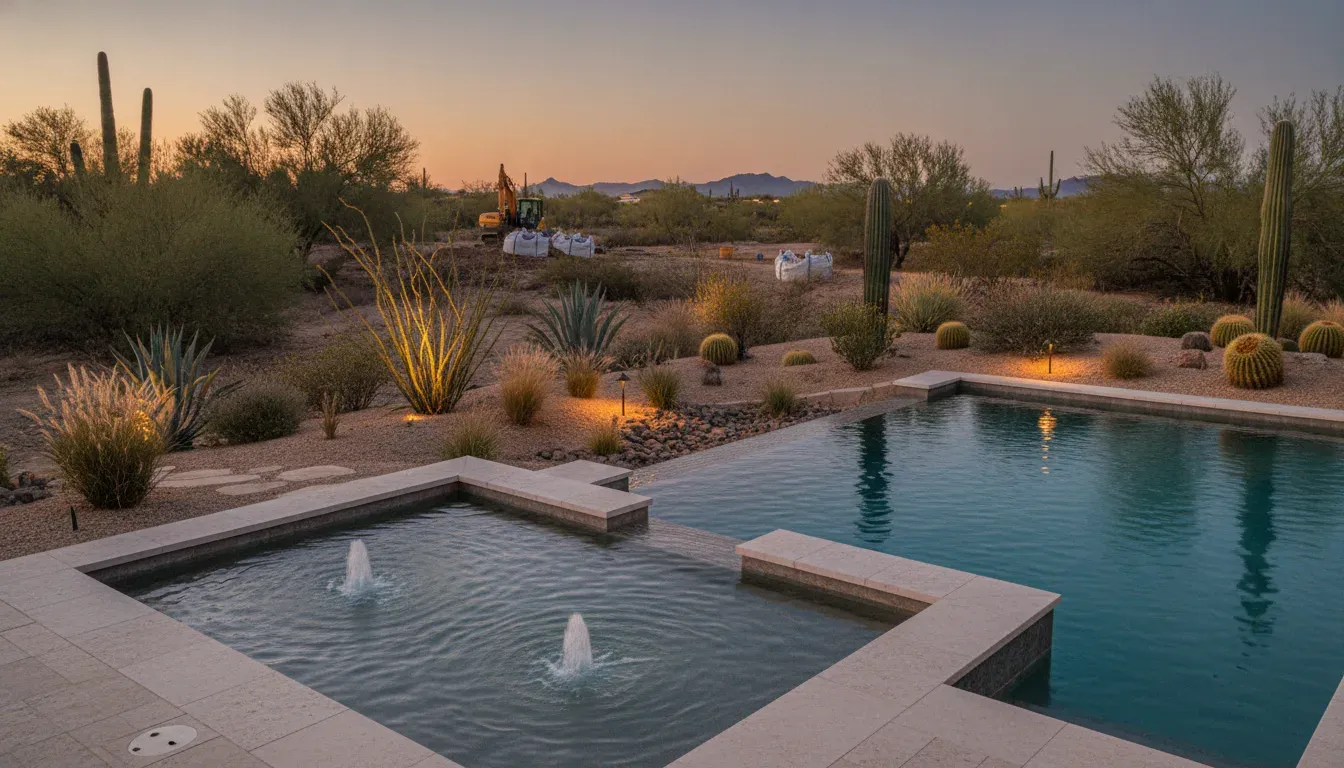
Both options can be controlled with pool automation, including schedules for quieter hours. That does not remove the need for thoughtful hydraulic design. A feature that is beautiful in a rendering may be too forceful, too noisy, or poorly positioned if nozzle height and flow are not calibrated on site.
Talk with Modern Pools about the right water feature for your backyard
When do grotto and rock waterfall features make sense for luxury pools?
Grotto and rock waterfall features make sense when the backyard has enough space, structural capacity, and a design goal that supports a natural resort-style focal point. They are more involved than adding a few deck jets. The design must account for the rock composition, access, water return, structural support, sightlines, lighting, and how the feature will be cleaned and serviced over time.
A grotto can create a shaded retreat, a dramatic swim-through, or a private visual anchor. Rock waterfalls can soften a straight pool edge and connect the pool to desert planting. These features are most successful when they are proportionate to the home and yard. Oversized rockwork in a small space can reduce usable deck area and make maintenance less convenient.
During design, homeowners should decide:
- Where the feature will be seen from the house, patio, and pool.
- Whether the sound should be calming background noise or a stronger focal effect.
- How the feature will be lit after sunset.
- Where pumps, valves, filters, and service access will be located.
- How rock, coping, tile, and landscape materials will meet at the edge.
For an existing pool, the broader Phoenix pool remodel guide provides useful context on planning a renovation without treating every backyard as a one-size-fits-all project.
What affects the cost to add water features to an existing pool?
The cost to add a water feature to an existing pool depends on the feature type, plumbing distance, elevation changes, structural work, finish materials, equipment capacity, controls, access, and permitting requirements. A small bubbler may require a different scope from a raised wall, grotto, or rock waterfall. An accurate estimate starts with an evaluation of the pool and the surrounding yard rather than a generic add-on number.
Important cost drivers include:
| Cost driver | Why it matters |
|---|---|
| Feature type | Jets and bubblers use a different installation approach from raised walls, sheer descents, or rockwork. |
| Existing plumbing | The current returns, valves, and equipment may or may not support the planned flow. |
| Elevation and structure | A raised feature can require masonry, structural support, waterproofing, and a dedicated water return. |
| Finish integration | Tile, stone, coping, lighting, and landscape transitions affect both appearance and labor. |
| Access and site conditions | Tight side yards, demolition, restoration, and material delivery can change the construction plan. |
| Controls and efficiency | Automation, pump sizing, flow control, and scheduling influence usability and operation. |
Permitting is also a planning question, especially when an addition affects structure, electrical work, plumbing, or a pool barrier. Phoenix homeowners can review the City of Phoenix residential pool and spa permit guidance. Scottsdale homeowners can review the city’s swimming pool and spa requirements. Requirements vary by jurisdiction and project scope, so the applicable city review should be confirmed before construction begins.
Safety planning should not be treated as an afterthought. Arizona’s residential pool enclosure statute covers barrier requirements and exceptions. A water feature does not replace compliant barriers, gates, or supervision practices.
Modern Pools’ pool remodeling service can help homeowners evaluate water features alongside finishes, coping, equipment, Baja steps, landscaping, and other renovation priorities.
How does Modern Pools design and install water features?
Modern Pools begins with the existing pool, the homeowner’s goals, and the backyard’s physical constraints, then coordinates design, hydraulics, construction, and final calibration. This owner-involved approach helps keep the feature connected to the broader renovation. The team serves Phoenix East Valley communities including Scottsdale, Chandler, Mesa, and Tempe, with desert-appropriate materials and local permitting considerations.
- Evaluate the existing pool: Review the shell, deck, elevations, equipment, plumbing, electrical needs, access, and the areas where water movement will be visible.
- Define the experience: Decide whether the priority is quiet sound, dramatic movement, family play, a resort-style focal point, or a combination of goals.
- Develop the design: Coordinate feature scale, materials, lighting, landscape, seating, and sightlines. Three-dimensional design renderings can help homeowners understand the result before construction.
- Plan the system: Confirm water returns, flow rates, valves, pump capacity, automation, service access, and any structural or permitting requirements.
- Install and integrate: Complete the approved scope, connect the feature to the pool system, and protect the surrounding finishes and landscape during construction.
- Calibrate and explain: Adjust flow, check water movement, review controls, and provide care guidance so the feature performs as intended.
The Phoenix pool remodel process guide explains how assessment, design, permitting, installation, and startup fit together. Water features should be sequenced within that larger plan, not treated as a last-minute decoration.
Book Estimate with Modern Pools for a custom Arizona pool water feature plan
Frequently Asked Questions About Pool Water Features in Arizona
What is the best water feature for an Arizona pool?
The best feature depends on the pool layout and the experience you want. Sheer descents and scuppers suit modern raised walls, bubblers suit shallow shelves, and waterfalls create a stronger natural focal point. A professional evaluation can match the feature to the yard, equipment, sound preference, and maintenance plan.
Are water features hard to maintain in the Arizona climate?
Maintenance varies by feature. All moving-water features need routine cleaning, water chemistry care, and periodic inspection of pumps, valves, nozzles, and surfaces. Dust and evaporation make access important in Arizona, so the design should include serviceable components and controls that make regular operation practical.
Can I add a waterfall or jets to an existing pool?
Many existing pools can receive a water feature, but feasibility depends on the shell, deck, elevation, plumbing, equipment, electrical service, access, and desired finish. A remodel evaluation should confirm whether the feature can be integrated safely and attractively before materials or construction are selected.
Do pool water features require a permit in Arizona?
Permit requirements depend on the city and the project scope. Structural, plumbing, electrical, pool barrier, and other changes may trigger review. Homeowners should confirm requirements with the local building department and include permitting in the project plan rather than assuming every water feature follows the same path.
Modern Pools can help you compare feature options and plan a coordinated backyard transformation for your Phoenix East Valley home.
Book Estimate with Modern Pools to plan your pool water features Arizona project