

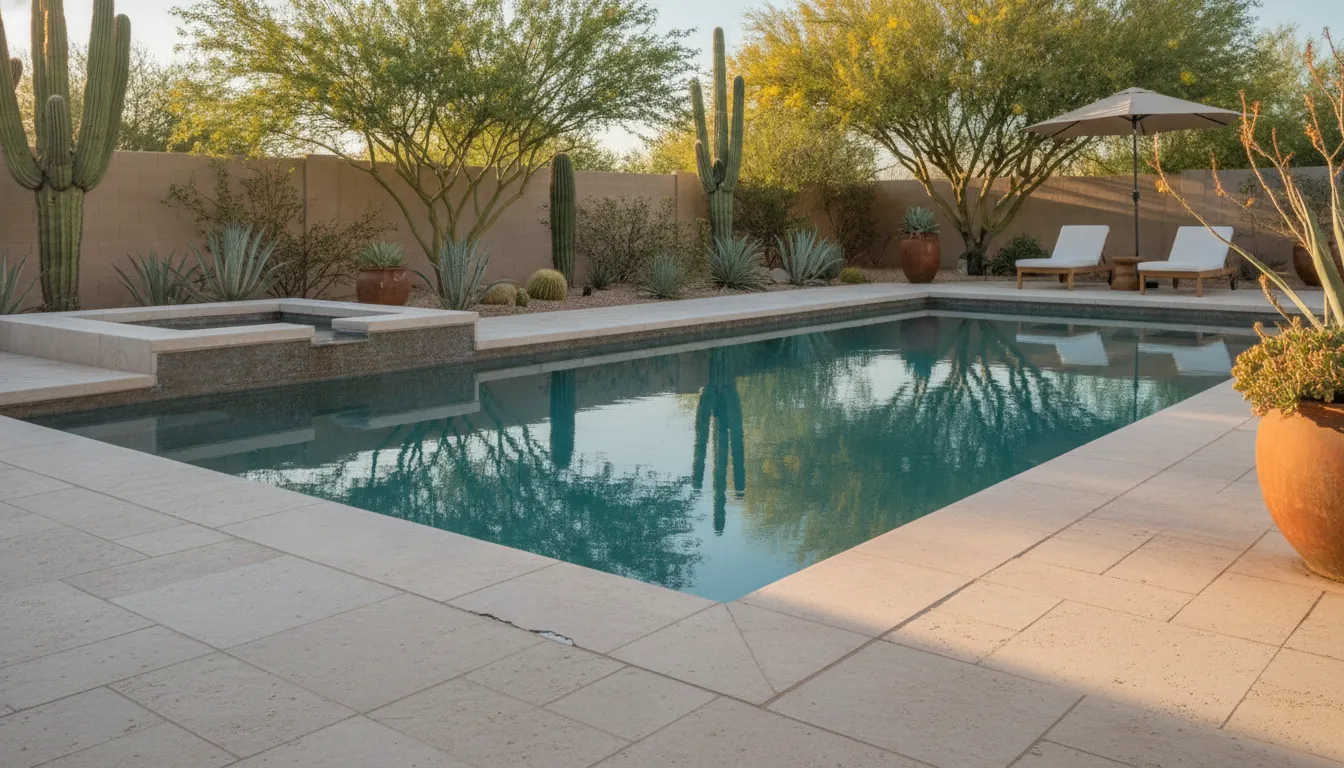
A crack in a pool can be a small finish issue, a sign of movement in the shell, or part of a larger renovation decision. For Phoenix East Valley homeowners researching pool crack repair Arizona, the decision starts with identifying what is cracking, whether the damage is changing, and whether the surrounding finish is still sound. This guide explains when a targeted repair may be appropriate and when resurfacing deserves a closer look.
Why Do Phoenix Pools Crack, and What Does Arizona Change?
Pool crack repair in Arizona starts with the cause, not the visible line. Phoenix pools experience intense sun, wide temperature swings, long dry periods, soil movement, aging materials, and ordinary structural stress. Those conditions can contribute to surface deterioration or expose a deeper problem, so a professional assessment should come before choosing a patch, repair, or resurfacing project.
Arizona’s climate does not make every crack structural, and a crack alone cannot confirm the cause. It does mean that a homeowner should look at the pattern and the surrounding symptoms instead of treating every mark with the same product.
- Heat and expansion: Repeated heating and cooling can stress finishes, tile joints, coping, and other connected materials.
- Soil movement: Settlement or movement around the pool can place stress on the shell, deck, plumbing, or attached features.
- Age and wear: Older plaster, pebble, or tile systems may show several forms of deterioration at once.
- Water and chemistry: Persistent leaks or poorly balanced water can accelerate finish damage, even when they are not the original cause.
Notice whether the crack is stable or growing, whether it crosses multiple materials, and whether the pool is losing water beyond normal evaporation. Those observations help a pool remodeling professional decide what to inspect next.
How Can You Tell if a Pool Crack Is Structural or Surface-Level?
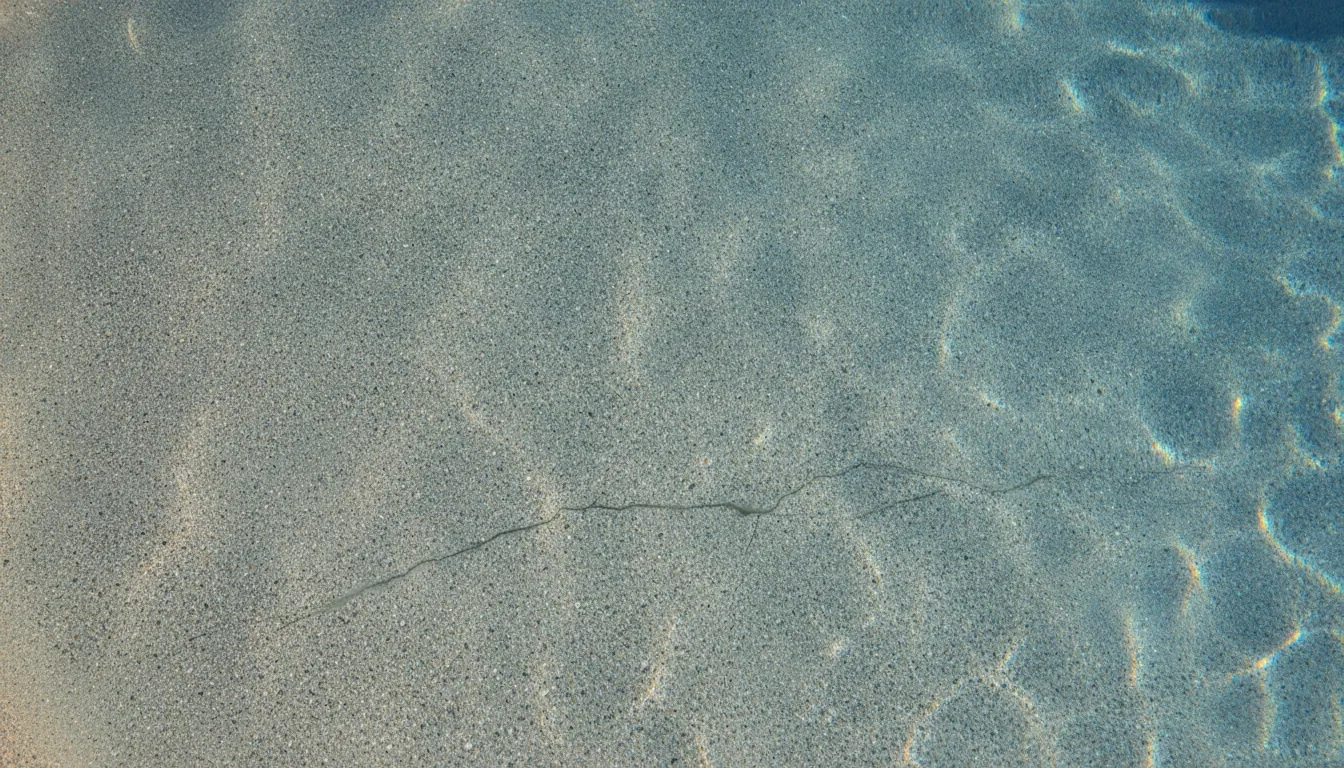
Surface cracks usually affect the finish, while structural cracks may involve the pool shell or accompany movement and water loss. The distinction cannot be confirmed reliably from a photograph alone. A qualified professional should inspect the crack, its depth and direction, nearby fittings, the finish condition, and any changes in water level or pool geometry.
A surface-level issue may look like a fine line limited to plaster, pebble, or another finish. It may not be accompanied by unexplained water loss or visible movement. Even then, the finish should be checked because a small opening can allow water to reach materials below.
Structural warning signs deserve prompt attention:
- The crack is widening, returning after a previous patch, or crossing the floor and wall.
- Water loss is faster than expected evaporation and cannot be explained by splash-out or equipment operation.
- Tile, coping, decking, or connected features are also separating or shifting.
- The crack appears near a fitting, corner, step, spa connection, or other stress point.
- The pool shows multiple cracks, uneven surfaces, or a pattern that suggests movement rather than isolated finish wear.
Do not chisel into a crack or drain the pool based on a generic online recommendation. Draining and opening a pool can create additional risk if the surrounding soil or shell condition is not understood. Document the location with photos, note water-level changes, and arrange an inspection.
| What you notice | What it may suggest | Practical next step |
|---|---|---|
| One fine line limited to the finish | Cosmetic or localized surface deterioration | Have the finish and shell assessed before selecting a repair |
| Growing or recurring crack | Movement or an unresolved cause | Schedule a structural inspection promptly |
| Crack plus unexplained water loss | Possible leak or shell-related damage | Pause assumptions and request leak and structural evaluation |
| Several cracks with rough, peeling, or worn finish | Broader resurfacing or remodel scope | Compare targeted repair with a complete finish plan |
When Is Pool Crack Repair Arizona the Right Fix?
Pool crack repair Arizona may be the right approach when the damage is localized, the shell is stable, and the surrounding finish does not need a full replacement. The repair should address the underlying condition and restore the finished surface, not simply cover the visible line. Scope depends on what an inspection finds beneath and around the crack.
A targeted repair may make sense when:
- The crack is isolated and has not changed over time.
- The pool is not showing unexplained water loss or connected movement.
- The surrounding finish is in good condition and still meets the homeowner’s goals.
- The damage can be opened, cleaned, stabilized, filled, and blended without disturbing a larger area.
A repair is not a promise that the crack can be handled with a surface patch. A durable solution may require opening the damaged area, removing weak material, reinforcing or rebuilding the affected section, and matching the finish. If the inspection finds shell movement, widespread deterioration, or a leak source that extends beyond the visible crack, the recommended scope may be larger.
Modern Pools handles pool remodels and renovations across Scottsdale, Chandler, Mesa, Tempe, and nearby Phoenix East Valley communities. Its remodel work can include structural modifications, surface refinishing, tile, coping, equipment, and new features when a repair needs to be part of a broader plan. See the complete pool remodeling guide for the larger planning context.
When Does Cracking Mean It Is Time to Resurface?
Cracking may point toward resurfacing when the finish is worn across a broad area, several cracks appear, or the surface is rough, peeling, stained, or difficult to maintain. Resurfacing renews the interior finish, but it should not be used to hide an unresolved structural problem. The shell and source of the damage still need evaluation before new finish material is applied.
Resurfacing is worth discussing when:
- Cracks are spread across the pool instead of limited to one repairable location.
- The finish has widespread roughness, etching, peeling, discoloration, or exposed aggregate.
- Previous spot repairs are visible, recurring, or no longer blend with the surrounding surface.
- The homeowner wants to coordinate the finish with new tile, coping, steps, lighting, or water features.
- The pool is already being remodeled and a finish replacement will avoid repeating demolition or startup work later.
Resurfacing is different from deck resurfacing. The pool interior, waterline tile, coping, and surrounding deck may each require different preparation and materials. Modern Pools’ pool deck resurfacing guide covers deck-surface decisions separately, while the pool remodeling service page explains how surface work can fit with other renovation needs.
Talk with Modern Pools about the right repair or resurfacing scope
What Does Pool Crack Repair Arizona Involve?
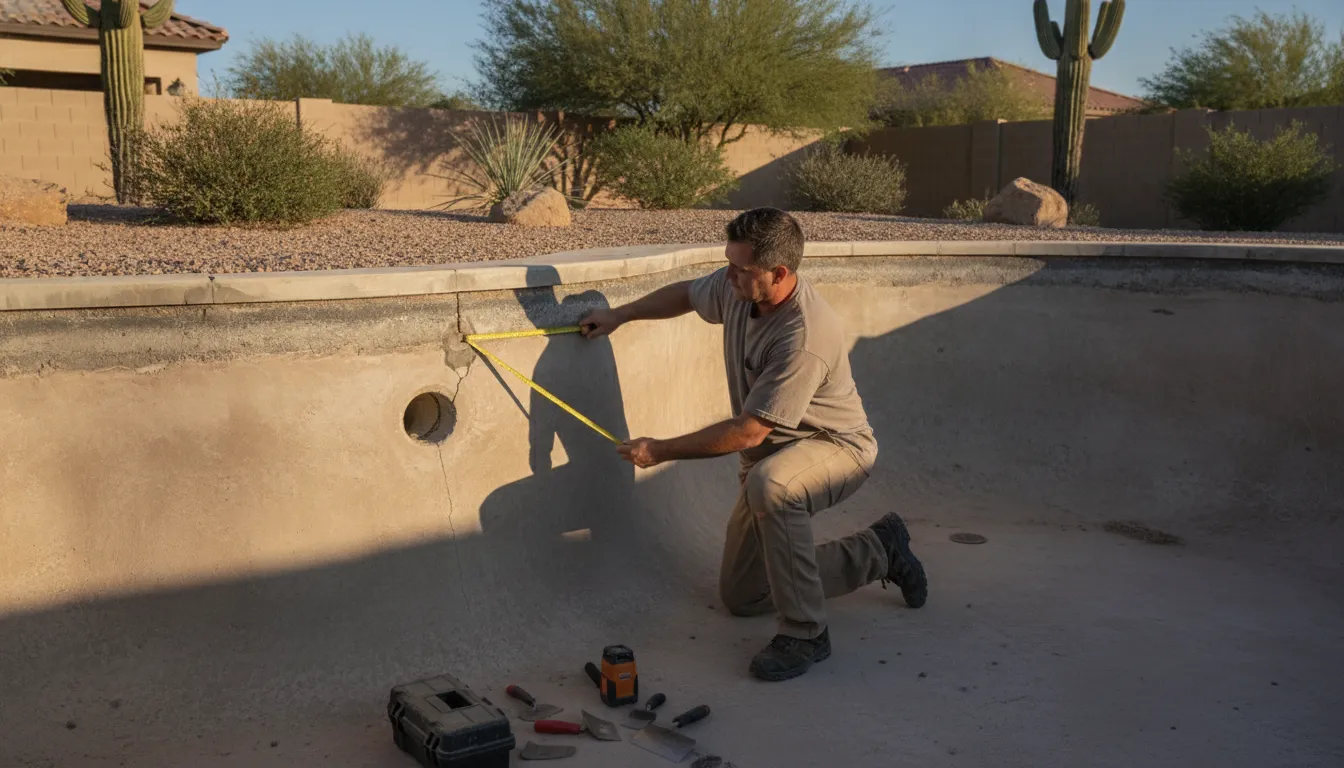
Pool crack repair Arizona typically moves from diagnosis to preparation, structural or finish repair, surface blending, and startup verification. The exact sequence changes with the shell, finish, access, water condition, and source of the damage. A clear scope should identify what will be repaired, what will be replaced, and what conditions could expand the work.
- Assessment: The contractor reviews the crack pattern, water level, adjacent materials, equipment, and visible signs of movement or deterioration.
- Scope and preparation: The area is made accessible, and weak or damaged material is removed so the repair bonds to a sound surface.
- Repair or reinforcement: The appropriate repair method is selected for the confirmed condition. Structural work should restore stability rather than merely cover the crack.
- Finish restoration: The repaired area is blended with the existing finish when practical, or the agreed resurfacing system is installed if the project requires broader renewal.
- Refill and startup: The pool is refilled and the water is brought into balance according to the finish and project requirements.
Ask for photos or a written explanation of the affected area, the proposed materials, the finish transition, and any related tile, coping, deck, plumbing, or equipment work. In Phoenix-area projects, permitting, access, HOA requirements, and desert-appropriate materials may also affect scheduling and scope. The City of Phoenix maintains official residential pool and spa permit resources; requirements can vary by municipality, so confirm the rules for the property.
Is a Cracked Pool Covered by Homeowners Insurance in Arizona?
Homeowners insurance may cover sudden damage caused by a covered peril, but routine wear, neglect, or excluded earth movement may not be covered. A cracked pool is not automatically approved or denied based on its appearance. The policy language, cause of loss, exclusions, endorsements, deductible, and damage documentation all matter, so the insurer or a licensed adjuster must make the coverage determination.
Arizona’s Department of Insurance and Financial Institutions explains that homeowners policies contain exclusions and that wear and tear is treated differently from damage caused by an insured event. Its guidance is useful for understanding terms, but it is not a coverage decision for a specific pool.
- Take dated photos and notes before disturbing the crack or draining the pool.
- Record water-level changes, maintenance history, weather events, and any related property movement.
- Ask the carrier what documentation and inspection steps it requires.
- Do not assume a contractor, online article, or warranty can interpret your policy.
Review the Arizona DIFI information on home insurance terms and policy exclusions, then speak with your carrier about your specific situation. Modern Pools can help define the construction scope, but the insurer determines whether a claim is covered.
Book Estimate before choosing a repair or resurfacing plan
Frequently Asked Questions About Pool Crack Repair in Arizona
Can a small pool crack be repaired without resurfacing?
Sometimes. A stable, localized finish crack may only need a targeted repair if the shell and surrounding finish are sound. An inspection should rule out water loss, movement, and broader deterioration before a homeowner chooses a spot repair.
How do I know if a pool crack is leaking?
Unexplained water loss can be a warning sign, but evaporation, splash-out, plumbing, equipment, and autofill issues can also change the water level. Track the level and ask a professional to evaluate the pool and connected systems.
Should I resurface a pool with multiple cracks?
Multiple cracks make a broader finish or remodeling discussion more likely, especially when the surface is also rough, peeling, or worn. Resurfacing should follow an assessment of the shell and any movement, not replace that assessment.
How soon should I address a structural pool crack?
Arrange an evaluation promptly if a crack is growing, recurring, crossing the floor or wall, associated with water loss, or accompanied by movement in tile, coping, or decking. Early diagnosis helps define the smallest safe scope.
Does Modern Pools repair and resurface pools in the East Valley?
Modern Pools provides pool remodeling and renovation services for homeowners in Phoenix East Valley communities, including Scottsdale, Chandler, Mesa, and Tempe. The team can review the existing condition and discuss repair, resurfacing, or broader renovation options.