

For Phoenix East Valley homeowners, Pebble Tec pool resurfacing in Arizona is a decision about the whole pool, not just a finish color. Modern Pools brings 36+ years of combined experience to pool remodeling, so the first question is whether the shell, tile, coping, equipment, and drainage support the result you want. PebbleTec is a premium exposed aggregate finish with a natural look and a higher upfront investment than standard plaster. For many Scottsdale, Chandler, Mesa, and Tempe homeowners, it is worth considering when long-term appearance, craftsmanship, and clear scope matter as much as the initial project price.
What Is Pebble Tec Pool Resurfacing?
Pebble Tec pool resurfacing replaces the worn interior finish of an existing pool with a cementitious surface containing small natural pebbles or aggregate. The old finish is removed or prepared, the shell is inspected and repaired as needed, and the new material is applied, finished, filled, and started with careful water balancing.
The manufacturer uses the name PebbleTec, while homeowners often search for it as Pebble Tec or Pebble Tech. The important distinction is that a genuine branded finish is a specific product family, not a generic name for every pebble surface. Pebble Technology International describes its products as finishes for both new pools and remodels, supported by an authorized installation network and product guidance.
- It creates a textured exposed aggregate appearance instead of a uniform plaster look.
- It can produce deeper water color through the selected aggregate and cement blend.
- It offers multiple finish families, textures, and color directions for different backyard designs.
- It requires proper surface preparation, application, startup, and ongoing water care.
Resurfacing changes the pool’s interior finish. It does not automatically correct a structural shell problem, replace all tile and coping, or redesign the surrounding deck. Those items can be evaluated as part of a larger pool remodel, but they should be listed separately in a written scope.
Why Is Pebble Tec Popular in Arizona?
Pebble Tec is popular in Arizona because it combines a natural resort-style appearance with a finish designed for long-term pool use. Phoenix homeowners also value the way aggregate surfaces can add visual depth and help a remodeled pool feel like a complete backyard transformation rather than a simple patch or cosmetic update.
Arizona pools face strong ultraviolet exposure, very hot summers, dust, mineral-heavy water, and long swimming seasons. Those conditions make finish selection and water care especially important. PebbleTec states that proper water chemistry is essential to the longevity of any pool finish, so the material alone should never be treated as a substitute for maintenance.
The finish also fits common East Valley design preferences. A natural pebble surface can work with desert landscaping, travertine or concrete decking, warm stone, shaded outdoor rooms, and water features. In Scottsdale, Chandler, Mesa, and Tempe, that connection between the pool interior and the rest of the yard can matter as much as the surface itself.
Homeowners should still ask practical questions before choosing it:
- What condition is the existing shell in?
- Will tile, coping, steps, benches, or drains be changed at the same time?
- How will the selected texture feel underfoot?
- What startup and water-balancing instructions will be provided?
- Who is responsible for the workmanship and the final inspection?
For a broader look at how resurfacing fits into a complete renovation, review Modern Pools’ pool remodel guide for Phoenix homeowners.
How Does Pebble Tec Compare With Standard Plaster?
Pebble Tec and standard plaster can both create a watertight interior finish, but they offer different experiences. Plaster is smoother and usually has a lower initial material cost. PebbleTec provides more aggregate texture, visual variation, and design depth, but its final price depends on the finish, pool size, preparation, access, and any related remodeling work.
| Consideration | PebbleTec aggregate | Standard plaster |
| Appearance | Natural variation, depth, and a richer water-color effect | Uniform, smooth, and traditional |
| Texture | More textured, with the feel depending on the selected finish | Smoother under normal conditions |
| Design range | Multiple aggregate, color, and texture directions | More limited color and visual variation |
| Upfront investment | Typically higher, based on finish and project scope | Typically lower for a basic re-plaster scope |
| Maintenance sensitivity | Still depends on balanced water and correct startup | Also depends on balanced water and correct startup |
| Best fit | Homeowners prioritizing a natural, premium remodel finish | Homeowners prioritizing a smooth traditional finish and simpler scope |
A comparison should not be reduced to a promise that one surface always lasts longer. Service life depends on water chemistry, startup, cleaning, sun exposure, installation quality, and the condition of the pool shell. The right choice is the one that matches the homeowner’s maintenance habits, comfort preferences, design goals, and total remodel budget.
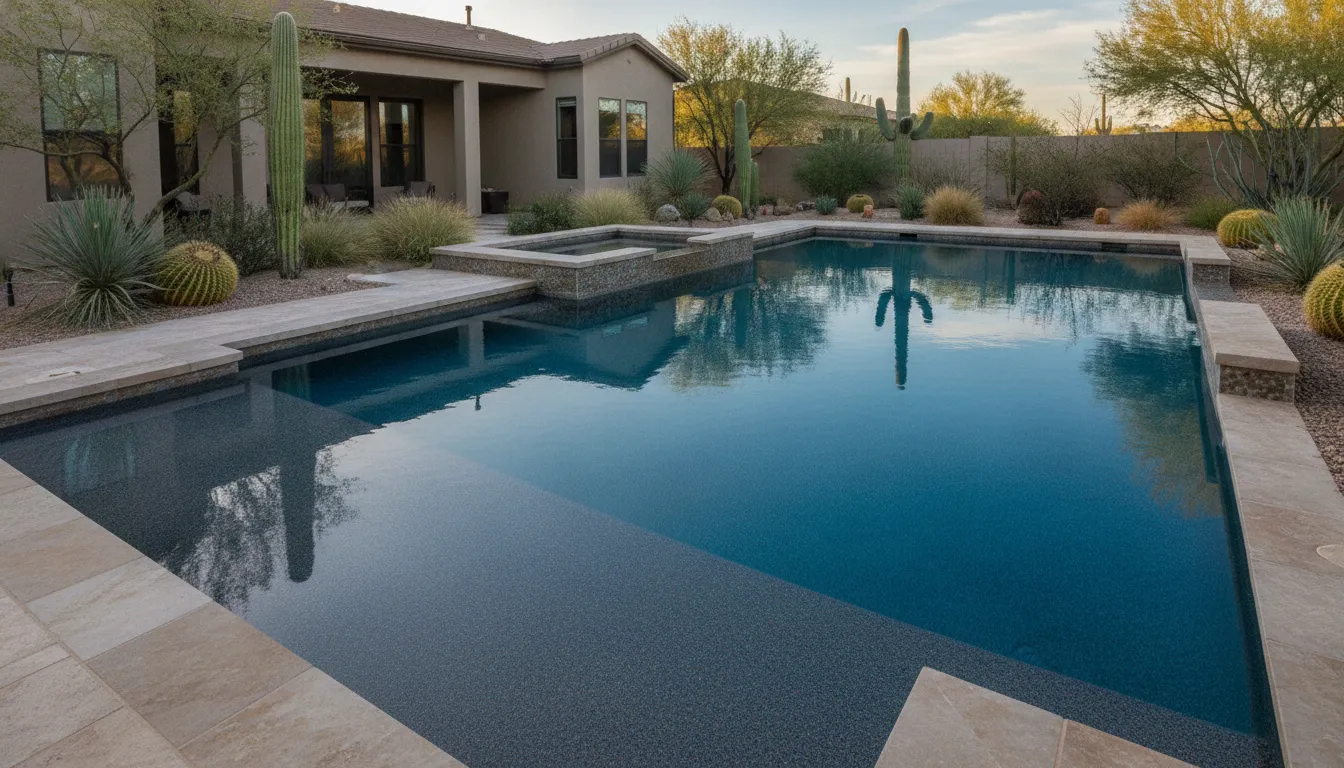
A wide aggregate finish can connect an Arizona pool’s water color with its tile, coping, and desert landscape.
How Much Does Pebble Tec Resurfacing Cost in Phoenix?
Pebble Tec resurfacing cost in Phoenix cannot be responsibly reduced to one price without inspecting the pool. The total depends on the interior surface area, existing finish removal, shell repairs, selected product, waterline tile, coping, steps, access, drainage, permits when applicable, and whether equipment or outdoor living features are included.
When comparing estimates, ask whether each proposal includes the same scope. A lower number may cover only the interior finish, while another may include prep, repairs, tile, coping, startup, cleanup, and project management. Modern Pools uses a written estimate process so homeowners can see what is included instead of guessing from a headline price.
Common cost drivers include:
- Pool size, depth, shape, and the amount of interior surface to be finished.
- Draining, removing, and disposing of the existing finish.
- Cracks, delamination, exposed plumbing, shell repairs, or leveling work found during preparation.
- Waterline tile replacement, raised bond-beam work, coping, steps, benches, or a Baja shelf.
- Finish family, aggregate size, color blend, texture, and hand-finishing requirements.
- Restricted side-yard access, pumping, protection of landscaping, and site cleanup.
- Equipment upgrades, automation, lighting, water features, or deck work added to the remodel.
Ask for line items, allowances, exclusions, payment milestones, startup instructions, and warranty responsibilities. Also ask whether permits or taxes are included. A transparent comparison protects the homeowner from choosing an estimate that appears lower only because important work was left out.
How Long Does a PebbleTec Finish Last in Arizona?
A PebbleTec finish can provide many years of service in Arizona, but no responsible contractor should guarantee a universal lifespan. Longevity depends on the finish system, application quality, startup procedure, water balance, cleaning routine, sunlight, mineral exposure, and whether the pool shell remains sound.
The strongest durability plan begins before the finish is applied. The contractor should inspect the shell, identify repairs, document the selected finish, and explain how the pool will be filled and chemically balanced. After startup, the homeowner should follow the care instructions rather than treating the new surface like an ordinary filled pool.
Early warning signs that a pool may need professional evaluation include:
- Widespread roughness, staining, discoloration, or visible surface wear.
- Persistent leaks or water loss that cannot be explained by evaporation.
- Loose or missing tile, damaged coping, or failing expansion joints.
- Cracks, hollow-sounding areas, flaking, or exposed shell material.
- Recurring chemistry problems that have damaged the finish or equipment.
Surface symptoms do not always reveal the underlying cause. A pool with structural movement, plumbing issues, or major deck drainage problems may need a wider renovation plan instead of a finish-only installation.
Which PebbleTec Colors and Finishes Work Well in Arizona?
The best PebbleTec color for an Arizona pool depends on the desired water appearance, sunlight, surrounding materials, landscape palette, and the texture homeowners prefer underfoot. Samples viewed dry can look very different when submerged, so finish selections should be reviewed with water, daylight, and nearby tile or coping in mind.
Blue, blue-green, gray, and earth-toned blends can create different effects. Lighter finishes can feel bright and open. Darker or richer blends can create a deeper visual field, but they may make dust, leaves, or waterline variation easier to notice. A natural blend can connect the pool to desert stone, boulders, gravel, and drought-tolerant planting.
Before approving a finish, compare:
- Wet samples or installed project examples, not only catalog swatches.
- Morning, midday, and evening appearance in direct Arizona sunlight.
- Texture at steps, benches, and shallow lounging areas.
- Compatibility with existing or replacement waterline tile.
- How the finish works with coping, decking, fire features, and landscape materials.
Modern Pools can also evaluate whether a finish update should be coordinated with tile, coping, lighting, automation, or water features. Bundling related work can improve the flow of the finished backyard, but each addition should remain visible in the scope and estimate.
What Does the Modern Pools Resurfacing Process Include?
Modern Pools approaches resurfacing as a planned remodel, not just a material swap. The process starts with an evaluation of the pool’s condition and the homeowner’s goals, then moves through scope development, finish selection, preparation, application, startup, and final walkthrough.
- Evaluate the existing pool. Review the finish, shell, tile, coping, steps, equipment, drainage, access, and visible defects.
- Define the scope. Separate finish work from repairs, tile, coping, deck, equipment, lighting, and outdoor living additions.
- Select the finish. Compare color, texture, aggregate, water appearance, and compatibility with the backyard design.
- Prepare the pool. Drain the pool, protect the site, remove or prepare the old surface, and complete approved repairs.
- Apply and finish the surface. Install the selected material according to the product and project requirements.
- Fill and start the pool. Follow the startup plan, balance the water, test equipment, and explain care requirements.
- Complete the walkthrough. Review the finished work, documentation, maintenance expectations, and any warranty information.
The exact sequence can change with the pool’s condition and the selected scope. Homeowners should receive a clear explanation of what happens if preparation reveals a problem that was not visible before draining.
See the related Phoenix pool remodel process guide for more planning context, and visit the Modern Pools pool remodeling service page to review the broader renovation options.
Is Pebble Tec Worth It for Your Arizona Pool?
Pebble Tec is often worth considering for an Arizona pool when the homeowner wants a premium, natural-looking finish and plans to keep the pool for years. It may be a strong fit for a sound pool shell, a design-led backyard remodel, and an owner who is prepared to follow water-care and startup instructions.
It may be less suitable when the homeowner wants the lowest initial price, strongly prefers a smooth surface, has unresolved structural or plumbing problems, or is not ready to maintain careful water chemistry. In those cases, another finish or a broader repair plan may be more appropriate.
Use this decision checklist:
- Choose PebbleTec when appearance, texture, and long-term design value are priorities.
- Compare it with plaster when upfront investment and a smooth feel matter most.
- Inspect the pool shell before making a finish decision.
- Request a written, itemized scope that separates included work from optional upgrades.
- Confirm startup, maintenance, workmanship, and warranty expectations in writing.
- Ask to see relevant Arizona projects or wet samples before final selection.
Talk with Modern Pools about your resurfacing options
Frequently Asked Questions About Pebble Tec Pool Resurfacing
Is Pebble Tec better than plaster in Arizona?
PebbleTec is not automatically better for every pool owner. It offers a more natural aggregate appearance and a premium design direction, while plaster offers a smoother, more traditional finish and may suit a simpler initial scope. Compare total scope, maintenance expectations, texture, and budget.
Can PebbleTec be applied over an existing pool finish?
The answer depends on the existing finish, its bond to the shell, and the product installation requirements. A qualified contractor should inspect the surface and explain whether removal, preparation, or repairs are needed before proposing the new finish.
Does PebbleTec make a pool rough?
PebbleTec finishes have aggregate texture, but the feel varies by product family, aggregate size, application, and finishing technique. Review wet samples and ask how the selected finish will feel at steps, benches, and shallow areas before approving it.
How do I maintain a new PebbleTec finish?
Follow the contractor’s startup plan and the manufacturer’s care guidance. Maintain balanced water, monitor chemistry, keep filtration operating as instructed, and address stains or mineral issues early. The official PebbleTec pool care instructions are a useful reference.
Does pool resurfacing require a permit in Phoenix?
Permit requirements depend on the work scope and jurisdiction. If the project includes structural changes, plumbing, electrical work, or other regulated improvements, ask the contractor to confirm the requirements. The City of Phoenix pool and spa permit guidance is a useful starting point for projects within Phoenix.
For a project-specific recommendation, Modern Pools can review your pool’s condition, finish goals, and complete remodeling scope.