The best time to build a pool in Phoenix is usually the time that gives you enough room to plan, secure approvals, and coordinate the work before the swim season you care about. Fall and winter can be useful construction-planning windows in the Valley, but there is no single calendar date that fits every property. Your design, permit review, HOA process, site access, and builder schedule all affect the start. If you are weighing a pool for a Scottsdale, Chandler, Mesa, or Tempe home, plan backward from when you hope to use it.
Why does timing matter for a Phoenix pool project?
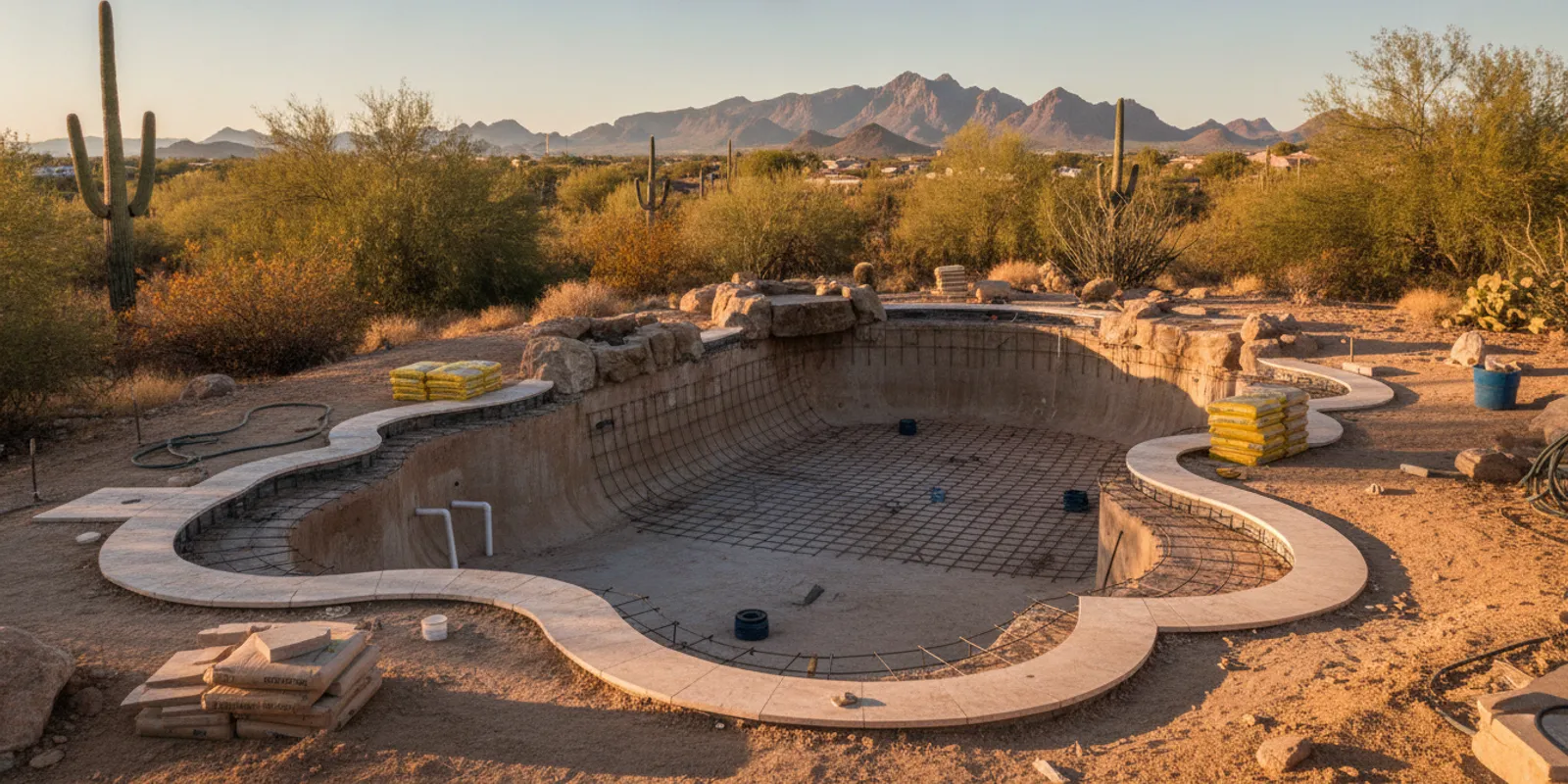
A pool build is a sequence of decisions and activities, not just excavation followed by filling the pool. The project moves through design, site planning, approvals, construction, and finish work. Delays or changes in an early stage can affect the stages that follow.
In the Phoenix East Valley, seasonal weather can influence outdoor work. Summer heat is intense, and monsoon-season storms may interrupt some construction activities. Cooler months can be more comfortable for planning and outdoor work, but they are also a popular time for homeowners to prepare projects. A calendar advantage does not replace an approved plan or an available construction slot.
Modern Pools notes an average project timeline of 13–22 weeks, though an individual schedule depends on the design, property, approvals, and project conditions. That is a planning reference, not a promised completion date. Discuss the specific sequence and assumptions for your home during an estimate conversation. The pool construction process guide explains the broad stages to consider.
Which season is best for starting a pool?
Think about season as a set of tradeoffs rather than a guarantee. The table compares common starting windows. Exact conditions and builder schedules vary from year to year.
| Starting window | Potential advantages | Planning points | Often suits homeowners who |
|---|---|---|---|
| Fall | Can leave time to complete design and approvals before the hottest months. | Ask about current project capacity and the steps that must happen before excavation. | Want to begin planning early for a future warm-weather swim season. |
| Winter | May provide a practical opportunity to advance a project before spring demand increases. | Confirm how weather, holidays, review periods, and material choices affect the schedule. | Have a clear brief and are ready to make decisions. |
| Spring | Longer daylight and warmer weather make the backyard feel closer to use. | Starting later may mean the project continues into summer; do not assume a fast completion. | Can accept a flexible first-use date and have approvals in progress. |
| Summer | Can work for homeowners whose schedule is flexible and whose project is ready to proceed. | Heat and monsoon conditions can affect outdoor work; discuss site protection and schedule contingencies. | Are planning ahead rather than expecting immediate completion. |
For many homeowners, fall is a sensible time to begin conversations, not because every pool should start then, but because early planning creates time to settle design choices and work through review steps. If you want to compare a specific city’s planning considerations, see the Chandler pool construction planning guide or the Scottsdale pool builder page.
How far ahead should you plan for a target swim date?
Start with the date you want the backyard ready, then allow time for more than construction. You will need to define the project, review the property, complete design decisions, address city and HOA requirements where applicable, and coordinate the builder’s schedule. These steps do not always happen in a neat, uninterrupted line.
- Choose a realistic use date. Decide whether your goal is a particular holiday, the start of summer, or simply a completed project when the work is ready. A fixed event date leaves less room for schedule changes.
- Gather property information. Note the lot boundaries, existing structures, access route, utility locations if known, and any community or HOA requirements. Bring questions rather than assuming the yard can accommodate every feature.
- Start a design conversation. Identify the pool’s purpose, approximate size, spa interest, desired features, seating, shade, and how people will move between the home and pool.
- Allow time for review. Permit and HOA processes differ by jurisdiction and community. Ask which approvals apply and who is responsible for each submission. The Arizona pool permit guide is a useful starting point, but your project team should confirm requirements for the actual property.
- Confirm a schedule with the builder. Ask what must be complete before the start date is firm, what could change the sequence, and how updates will be shared.
Use the overall 13–22 week project range only as an initial conversation point. It does not include a guaranteed allowance for every design, municipal review, HOA decision, weather interruption, or homeowner selection. A good schedule discussion makes those dependencies visible rather than hiding them behind a single finish date.
It also helps to distinguish the date you first speak with a builder from the date work starts on site. An estimate conversation can lead to property review, design development, scope decisions, and approval submissions before excavation is scheduled. Ask which of these are complete, which remain open, and what information is needed to move each one forward. That makes a target start date easier to evaluate.
When you compare schedules, look for the assumptions behind the dates. Ask what happens if a design choice, approval, or site condition takes longer than expected. You can also ask how the team will communicate a revised milestone, whether work can proceed in another area, and which homeowner decisions could keep the sequence moving. A clear explanation is more useful than a confident date without context.
If you are combining a pool with an outdoor kitchen or other backyard work, ask whether those items are planned in the same scope and how their sequence interacts with pool construction. Confirm where access, material staging, and finished surfaces fit into the plan. These questions help you compare complete project schedules rather than focusing only on the first day of excavation.
What can delay a pool build, even in the right season?
Season is only one factor. Several practical details can shape the project’s start and progress:
- Design changes after planning: Changes to pool dimensions, elevations, features, or the surrounding layout may require additional coordination or revised plans.
- Approval timing: City review and HOA review are separate processes where both apply. Ask for the relevant requirements early and allow for questions or requested revisions.
- Access and site constraints: Narrow gates, walls, overhead obstructions, grade changes, or limited equipment access may affect how work is organized. Raise these details during the property review.
- Selections and availability: Tile, finishes, equipment, and other specifications should be decided early enough to coordinate ordering and installation. Ask how selection deadlines affect the schedule rather than assuming every option is immediately available.
- Weather: Extreme heat and storm conditions can affect safe work and outdoor activity. Ask how the builder handles schedule updates when weather interrupts a task.
- Homeowner decisions: Late choices about a spa, lighting, automation, decking, or landscape connections can complicate coordination. Decide what matters most before finalizing the plan.
Timing can also change when a pool is part of a larger backyard transformation. If the project includes hardscape or planting, an outdoor kitchen, or fire and water features, establish how these trades and installation stages fit together. Review the available pool and outdoor living services and hardscape and landscape options to shape the scope. A single coordinated plan can help clarify dependencies, but each component still needs a defined scope and sequence.
Should you build before summer or after it?
Choose based on your priorities and readiness. Starting before summer may be appealing if the project is already designed, approvals are in hand, and the builder confirms the schedule supports your goal. If those pieces are not ready, rushing to start for a particular season can create pressure without guaranteeing that the pool will be finished by your preferred date.
Starting after summer can give you time to plan ahead for the next warm season. It may also make room to coordinate a wider outdoor living project. But fall and winter calendars are not automatically open. Confirm the builder’s availability and ask what decisions or approvals you can complete now.
There is no need to settle for an all-or-nothing choice. You can begin consultations and design work well before excavation. That gives you a chance to compare scope, understand the property, and decide whether to proceed when timing and readiness align. For a sense of how planning and price scope connect, the pool package comparison outlines published package starting points. Modern Pools lists its Basic Pool Package at $37,999 and Oasis Pool & Landscape Package at $51,999, both plus permits and taxes; Serenity and Resort packages are custom-priced. Confirm the current package scope and project-specific details directly before making a decision.
What should you ask at an estimate conversation?
Use the conversation to understand both the project and the route to a workable schedule. Modern Pools describes its approach as owner-involved, with direct oversight and transparent package pricing. Ask for clear answers about the scope and timing of your own property.
- What is the likely sequence from design and approvals through construction and finish work?
- What information do you need about my property before you can refine the schedule?
- Which permit and HOA steps apply, and who prepares or submits the required materials?
- Which selections should I make first, and what is the latest practical point to finalize them?
- What could affect the start date or completion sequence, including weather and site access?
- Which features are included in the package under discussion, and which are separate or custom?
- How will I receive schedule updates and understand a change to a planned milestone?
Clear scope matters as much as the month you begin. Compare proposals using the same pool features, equipment, site work, surrounding improvements, and approval assumptions. Modern Pools highlights automation systems, LED lighting, and variable-speed pumps among premium features included in its base packages; confirm the exact inclusions for the package and design being considered. Its Phoenix pool estimate visit guide can help you prepare for that discussion.
For confidence in contractor credentials, Arizona homeowners can consult the Arizona Registrar of Contractors, the state agency responsible for contractor licensing and consumer resources. Verify the contractor and license information as part of your own due diligence.
How can you make the schedule more predictable?
You cannot control every review period or weather interruption, but you can make decisions and communication more orderly.
- Set priorities in writing. List must-haves, nice-to-haves, and features you are willing to defer. This helps the design conversation focus on what matters.
- Share constraints early. Tell the builder about travel dates, events, access restrictions, and any deadlines that could affect site visits or decisions.
- Keep one current decision list. Record selections, open questions, responsible people, and due dates. Ask the project team how they track approvals and changes.
- Confirm what a milestone means. Ask whether a date refers to design completion, permit submission, excavation, equipment startup, or another stage.
- Plan the surrounding space with the pool. Decking, circulation, shade, planting, and outdoor cooking areas can affect one another. Consider the full backyard early, even if you phase some work.
- Stay flexible about first use. A project schedule is a sequence with dependencies, not a promise that the pool will be ready for a particular weekend.
Modern Pools serves homeowners in Phoenix East Valley communities including Scottsdale, Chandler, Mesa, and Tempe. Its broader Scottsdale pool design guide and Arizona backyard ideas offer related planning topics as you decide how the pool should connect with the rest of your yard.
Get in touch to plan your pool
Frequently asked questions about the best time to build a pool in Phoenix
Is winter a good time to build a pool in Phoenix?
Winter can be a useful time to advance a project, especially if your design and approvals are ready. Check the builder’s schedule and ask how weather, holidays, and any outstanding review steps affect the plan.
Can a pool be built during a Phoenix summer?
A summer start may be possible, but heat and monsoon conditions can affect outdoor work and timing. Ask the builder how those conditions are handled and avoid assuming a summer start means the pool will be ready by a particular date.
How early should I contact a pool builder?
Contact a builder as soon as you have a target season or swim date in mind. Early conversations give you time to understand the property, scope, design choices, approvals, and contractor availability before you commit to a schedule.
How long does a Phoenix pool project take?
Modern Pools gives an average project timeline of 13–22 weeks. Individual timelines vary with design, approvals, site conditions, weather, selections, and project scope, so ask for a schedule based on your property rather than treating the range as a guarantee.
Make the decision in a useful order
Choose your intended use date, clarify the project scope, check the property and approval requirements, and then compare the schedule a builder can support. Fall and winter may offer a helpful head start for some East Valley homeowners, while a different season may better fit a ready design or flexible timeline. The best start is one supported by realistic expectations, clear decisions, and a coordinated plan.