

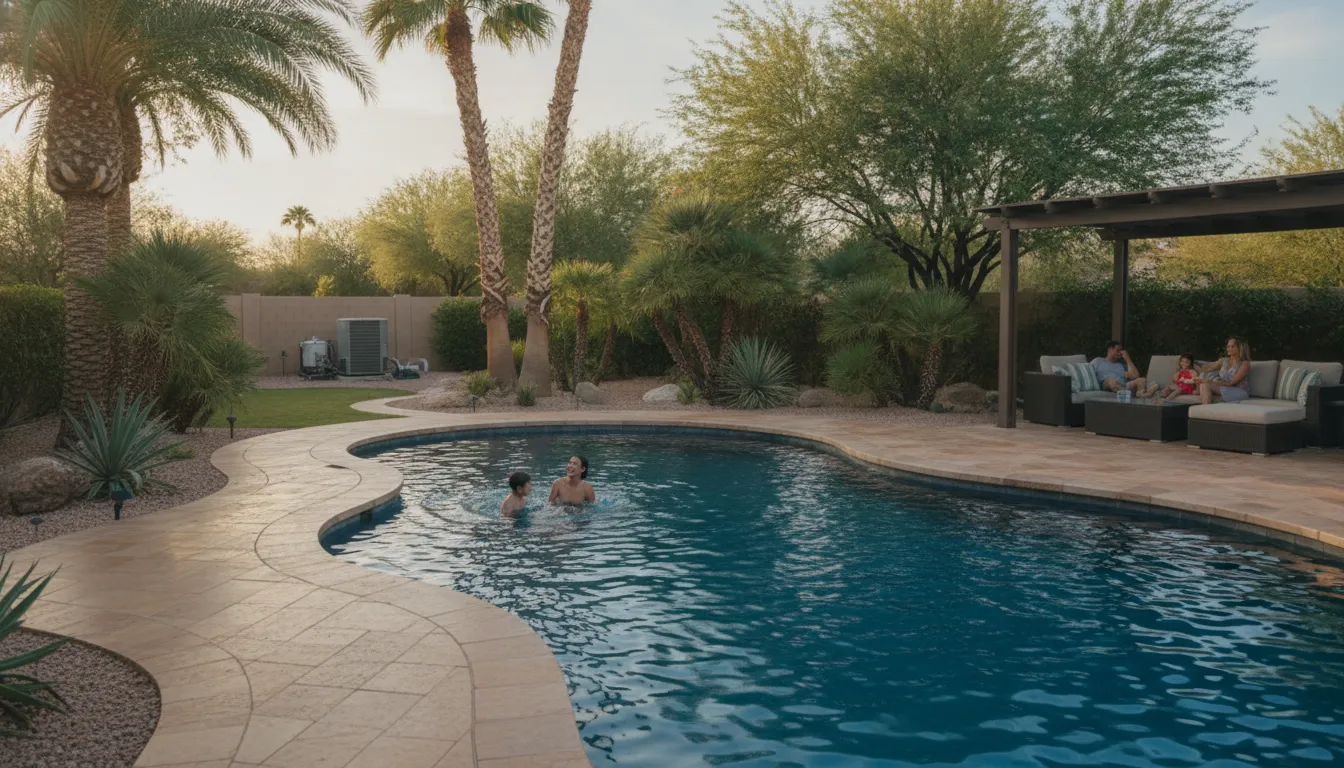
Arizona pools often run through long stretches of swimming weather, so convenience depends on more than turning equipment on and off. This guide explains how the right pool automation system Arizona homeowners can plan for their backyards makes daily operation easier. A well-planned system can coordinate operation while making it easier to adjust the pool for a swim, an evening gathering, or time away from home.
Book Estimate for your Arizona pool automation plan.
Pool Automation System Arizona Homeowners Can Plan With Confidence
A pool automation system in Arizona can connect pumps, heaters, sanitizing equipment, lights, and water features through one control interface. Depending on the equipment and design, it may also allow phone-based control and useful schedules. The right setup improves visibility and convenience, but compatibility and installation details determine what it can actually manage.
That makes automation part of the broader planning process, alongside equipment selection, layout, and electrical design. This complete guide to custom pool construction provides helpful context before we look more closely at what the system controls and why it matters in an Arizona backyard.
What Is a Pool Automation System in Arizona?
A pool automation system uses a central controller to coordinate connected equipment, including pumps, heaters, sanitizing or chemistry equipment, lights, and water features. Homeowners can manage compatible components through a control panel or smartphone app. In Arizona, this helps simplify pool care and comfort across a long swimming season.
Instead of operating each component separately, the controller brings key functions into one system. The exact capabilities depend on the equipment selected, how it is wired, and whether the components are compatible. A qualified pool builder should review those details during design rather than treating automation as a one-size-fits-all add-on.
What can a central controller coordinate?
A controller acts as the operating point for the pool’s connected equipment. Depending on the design, it can coordinate circulation, heating, sanitizing equipment, lighting, and decorative features such as waterfalls or bubblers. Pentair describes modern automation as allowing smartphone control of pool equipment from the homeowner’s location, when the system and components support that connection.
- Set schedules for filtration and circulation.
- Adjust or schedule heating for pool and spa use.
- Operate compatible LED lights and water features.
- View or manage equipment through a panel or mobile app.
Why does Arizona’s climate make automation useful?
Phoenix East Valley homeowners may use their pools through much of the year. That extended season creates more opportunities to manage filtration, heating, lighting, and water features on a consistent schedule. Automation can make those routines easier to repeat. It may also help homeowners avoid running equipment longer than the planned program requires. It does not replace water testing, maintenance, or professional oversight, but it can reduce daily guesswork.
Automation is also a design decision. Equipment location, electrical planning, Wi-Fi coverage, desired controls, and future features can affect the best setup. Discussing those needs while planning a custom pool makes it easier to build a coordinated system instead of trying to connect mismatched components later. Review the pool package inclusions to see how technology fits into a broader backyard plan.
How Does Phone Control Work for a Pool?
A connected pool automation system lets you manage compatible pumps, heaters, lights, spa functions, and water features through a mobile app or a wall-mounted control panel. The controller communicates with each connected component, while Wi-Fi or remote access lets you check status and adjust settings from home or away. The exact experience depends on the equipment selected during design.
At home, a wall panel provides a convenient central point for controlling the pool without searching for a phone. The app adds flexibility when you are inside, away from the property, or preparing the backyard for guests. Smartphone and tablet control for pumps, heaters, and lighting is a common feature of modern systems. But the controller must be properly connected to the equipment for those commands to work.
What can you control from an app or panel?
Control options vary by system, but a thoughtfully designed setup can coordinate several daily functions:
- Filtration: Set circulation schedules that match expected use and seasonal conditions.
- Heating: Start or adjust pool or spa heating when the connected heater supports remote control.
- Spa mode: Switch valves, pumps, and heating into a spa-focused configuration when those components are compatible.
- Lighting and water features: Turn on connected lights, waterfalls, bubblers, or other features for evening use.
- Status and alerts: Review available equipment information and receive notifications supported by the controller.
How do schedules and scenes simplify ownership?
Schedules automate repeatable tasks, such as running filtration at set times or warming the spa before a planned evening. Scenes combine several commands into one action. A night swim scene might activate pool lighting and selected water features. A vacation mode could adjust normal operating schedules while the property is unoccupied. These are planning examples, not universal presets. Available scenes depend on the controller, wiring, valves, heater, lights, and other equipment in the design.
What compatibility questions should homeowners ask?
Phone control is not automatically available for every pump, heater, light, or water feature. Ask the builder which components will be connected, whether the system uses local Wi-Fi or remote cloud access, and what happens if the internet connection is interrupted. Also confirm where the wall panel will be installed, which alerts are included, and whether future equipment can be added without replacing the controller.
For an Arizona homeowner, the most useful system is not necessarily the one with the longest feature list. It is the one that fits the pool equipment, backyard routines, and desired level of control. Review the complete equipment and connectivity plan with the builder before construction so the app, wall panel, and programmed scenes work together as intended.
Why Do Variable-Speed Pumps Matter in Arizona?
Variable-speed pumps let a pool circulate water at different speeds instead of running at one fixed output. In Arizona’s long swimming season, that flexibility supports steady filtration while avoiding unnecessary high-speed operation. When paired with automation, the pump can follow a schedule that matches water use, heat, and equipment needs.
Phoenix East Valley pools often see extended use across spring, summer, and much of fall. A pump schedule should reflect that reality, but it does not need to run at maximum speed all day. Lower-speed circulation can handle routine filtration for longer periods. While higher speeds can be reserved for tasks that need more flow, such as heating, cleaning, or operating connected features. The right settings depend on the pool’s size, plumbing, filter, sanitizer, water features, and how the household uses the backyard.
How does pump scheduling support efficiency?
Automation provides a practical way to coordinate those operating periods. A typical design may use longer, quieter filtration cycles at a lower speed, then add a timed higher-speed window when the pool needs extra circulation. Scheduling can also help separate equipment demands. For example, the pump may increase flow during a heating cycle and return to a lower setting afterward. This approach supports consistent water movement without treating every hour as a peak-demand period.
The energy comparison is significant, but it needs to be stated precisely. The Modern Pools knowledge base reports that variable-speed pumps can use 80% to 90% less energy than single-speed pumps. That is a pump-to-pump comparison, not a promise that a homeowner’s total electric bill will fall by the same percentage. Actual results vary with run time, speed settings, pool size, equipment condition, weather, heating, and other household loads.
What should Arizona homeowners verify during design?
Equipment requirements can also matter when a pump is being replaced. Rules may depend on the equipment, project scope, and applicable jurisdiction. Have the installer confirm the current requirements for your specific pool and replacement plan rather than relying on a general statement.
- Confirm the pump is variable-speed and compatible with the planned automation controller.
- Set a baseline filtration schedule for the pool’s size, plumbing, and filter system.
- Reserve higher speeds for heating, cleaning, water features, or other verified flow needs.
- Review seasonal adjustments for Arizona heat, swimming frequency, and extended use.
- Track water clarity and equipment performance after programming, then refine settings as needed.
A well-designed pool automation system in Arizona should make these decisions easier to manage, not hide them behind a single on-or-off setting. During design, the goal is a schedule that protects water quality, supports the equipment, and uses energy thoughtfully throughout the season.
What Can Automation Do for LED Lighting and Water Chemistry?
A pool automation system can coordinate LED lighting, water features, circulation, and selected chemistry equipment from one control interface. In an Arizona backyard, that can make evening use more convenient and help owners notice changing conditions sooner. It does not make the pool maintenance-free. Water testing, equipment care, and professional oversight still matter.
Coordinate lighting and water features
Lighting and water features are often what make a pool feel finished after sunset. When compatible components are connected to the automation controller, homeowners can schedule or activate LED lights, waterfalls, bubblers, and similar features without walking to the equipment pad.
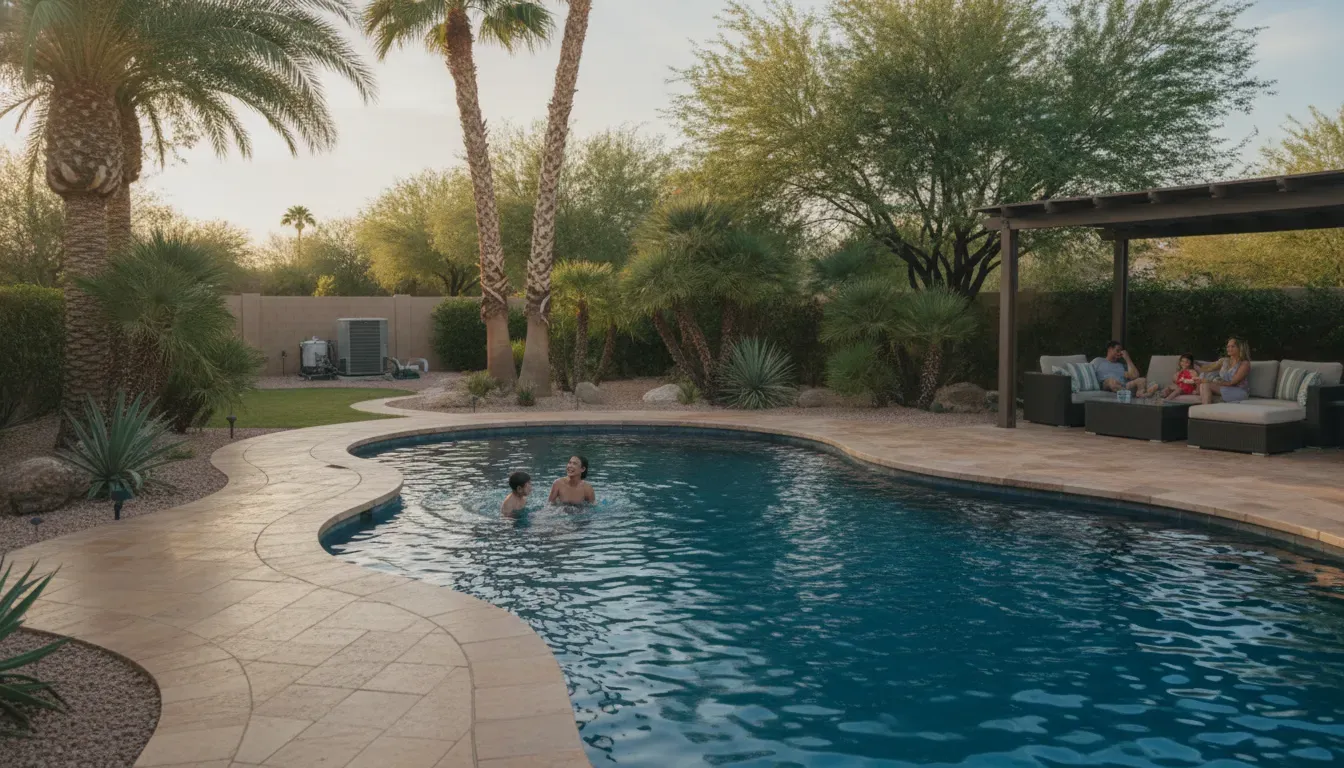
That control can support practical routines as well as entertaining. For example, a homeowner might set the lights to come on near dusk. They could activate a water feature during an evening gathering or turn both off remotely when the backyard is no longer in use. The exact colors, scenes, schedules, and equipment combinations depend on the products selected and how the system is designed. Pool automation is most useful when the controls match the way the household actually uses the space.
Monitor chemistry and support more consistent care
Some connected pool systems can monitor common water parameters and support automated chemical dosing. Those capabilities may reduce the amount of manual checking and provide alerts when readings move outside a preferred range. A notification can prompt the owner to investigate before a small change becomes a larger water-quality problem.
- Review water-condition readings from a connected control interface.
- Receive alerts about conditions that need attention.
- Coordinate compatible dosing equipment with the broader circulation schedule.
- Keep filtration and related equipment operating according to the programmed plan.
Research into connected pool technology describes reporting on chemical levels and automated dosing as ways to reduce guesswork. Those features should be treated as support tools, not as a substitute for sound pool care. Sensors need to be installed correctly, calibrated as required, and evaluated against the actual condition of the water.
What automation cannot replace
Automation does not eliminate water testing, cleaning, filter service, inspections, or repairs. Owners still need to confirm that readings make sense, maintain chemical supplies, and respond to alerts. A professional should review the system when equipment is added, compatibility is uncertain, or water chemistry remains difficult to balance.
Safety also depends on more than an app or alert. Proper circulation, functioning equipment, responsible chemical storage, and regular attention all remain part of ownership. During design, discuss which lighting, water-feature, monitoring, and dosing functions are genuinely useful for your household. That approach creates a more reliable system than selecting features simply because they can be controlled remotely.
What Automation Comes Standard in Modern Pools Packages?
Modern Pools packages include a phone-controllable automation system and a variable-speed pump. Together, these inclusions give Phoenix East Valley homeowners a simpler way to manage core pool equipment, set schedules, and review the system from a mobile device. The final controls depend on the equipment selected for the project.
That distinction matters when comparing a pool automation system Arizona homeowners can use every day. “Automation included” should identify what the controller operates, how it connects, and which features are ready at completion. It should not be a vague label that leaves important scope questions unanswered.
What should you confirm is included?
Modern Pools takes a package-focused approach, so homeowners can review the intended scope before booking an estimate. The package inclusion should be discussed alongside the pool design, equipment layout, and desired ownership experience. Ask questions such as:
- Does the included automation system control the pool pump from a phone?
- Can it schedule filtration or other routine equipment cycles?
- Which connected equipment is part of the planned system, such as a heater, spa, lights, or water features?
- Is the required controller, wiring, communication hardware, and setup included?
- What happens if a preferred equipment brand or future upgrade requires a compatibility review?
The answers may vary with the pool, spa, lighting plan, and other selected components. Phone control is useful only when the equipment is properly connected and configured. Wi-Fi coverage, controller placement, and the homeowner’s preferred control experience should be considered during design rather than treated as afterthoughts.
How does the variable-speed pump fit the package?
A variable-speed pump is a standard inclusion in Modern Pools packages. Its speed can be adjusted for different circulation needs, which gives the automation system more useful control than a simple on-or-off schedule. In an Arizona climate where pools may be used across much of the year, thoughtful scheduling can support consistent operation while helping homeowners manage how the equipment runs.
Energy performance still depends on the pool’s size, plumbing, settings, run time, and other equipment. The inclusion should therefore be understood as a foundation for efficient control, not a promise of a specific utility-bill reduction. A qualified design discussion can connect the pump, automation controls, and daily use patterns to the backyard transformation you want.
For a side-by-side view of package scope, review the pool package inclusions. If you are planning a new pool or spa, the new pool and spa builds page can provide additional context on how equipment decisions fit into the broader construction process. With 36+ years of combined experience, Modern Pools brings owner-involved attention to those decisions while keeping the focus on clear scope and practical use.
Basic vs. Full Smart-Home Pool Integration
A basic setup automates essential pool equipment, such as filtration, heating, and a variable-speed pump. A fuller smart-home design can coordinate the pool, spa, lights, and water features with broader household routines. The right choice depends on equipment compatibility, Wi-Fi coverage, wiring, and how you want to use the backyard.
| Planning area | Basic automation | Fuller smart-home integration |
|---|---|---|
| Control scope | Core scheduling and remote control for connected equipment. | Pool, spa, lighting, water features, and selected household routines. |
| Equipment coordination | Filtration, pump operation, and heating can work from one control point when compatible. | Multiple systems can respond together, such as spa heating with jets and lighting. |
| Scenes | Simple schedules for filtration, heating, or lights. | Personalized scenes for entertaining, evening swimming, or leaving home. |
| Expansion | Best when the equipment list is defined and limited. | More flexible for future features, provided the controller and infrastructure support them. |
Control scope should match the way you use the backyard
Basic automation is often the practical starting point for a homeowner who wants fewer manual tasks. You might schedule filtration, adjust heating, or turn connected lights on from a phone. Remote control is useful in the Phoenix East Valley, where outdoor spaces can be part of daily life across much of the year. It also gives you a clear view of which functions are connected instead of adding technology that rarely gets used.
A fuller setup is designed around coordination. One scene could prepare the spa, water features, and landscape lighting for an evening gathering. Another could set a quieter schedule when the backyard is not in use. These scenes are planning concepts, not universal promises. The available controls depend on the selected equipment, controller, and compatible smart-home ecosystem.
Plan the infrastructure before selecting features
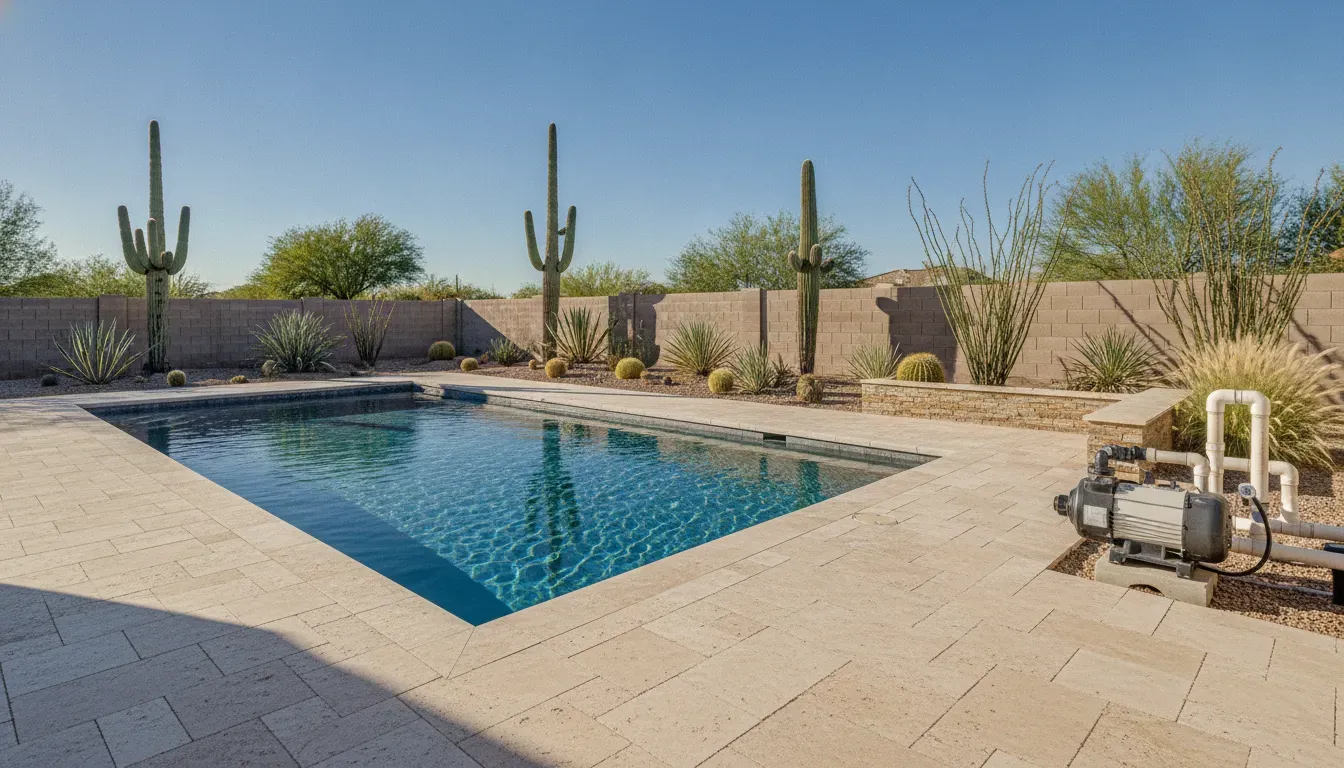
Compatibility deserves attention before equipment is ordered. The automation controller, pump, heater, lighting, chemical equipment, and water features must communicate correctly. Wi-Fi strength at the equipment pad can affect remote access, while wiring routes and electrical planning influence what can be added cleanly. A design should also account for service access, weather exposure, and future expansion.
During design, ask which functions you want on one screen, which should run automatically, and which require a deliberate manual command. Confirm whether existing equipment can be integrated or whether a remodel needs new controllers and actuators. That conversation helps create a reliable new pool and spa build rather than an attractive collection of disconnected devices.
Book Estimate for a pool automation system designed around your Arizona backyard.
Compatibility is the deciding design question
The most advanced control experience is only useful when it works consistently. Review equipment brands, communication protocols, Wi-Fi coverage, wiring, and app requirements as one system. Modern Pools can use that planning discussion to clarify the control scope before construction, so the technology supports your routines, entertaining plans, and long-term backyard transformation.
Book Estimate to review your pool automation options before construction.
Frequently Asked Questions
How much does a pool automation system cost?
There is no single price because the total depends on the equipment being controlled, wiring, connectivity, and the level of integration you want. A design review should account for pumps, heating, lighting, water features, chemistry equipment, and any smart-home connections. Ask for a clear list of included components so you can compare scope, not just a headline number.
Which pool automation system is best?
The best system is the one that works with your equipment and matches how you use the pool. Review compatibility with the pump, heater, lights, spa, water features, and chemistry equipment, along with Wi-Fi coverage and the control interface. A simple schedule-based setup may be enough for one homeowner, while another may value scenes and broader smart-home coordination.
Can you add pool automation to an existing pool?
Often, yes. An upgrade may connect compatible pumps, heaters, lights, spas, or water features to a central controller or app. The existing equipment, wiring, panel, and network should be evaluated first. If components are incompatible or outdated, the project may require additional equipment rather than a controller-only upgrade.
Are pool automation systems worth it?
For many Arizona homeowners, automation can make year-round pool ownership easier by simplifying schedules, remote control, lighting, and equipment coordination. It can also support more consistent operation of variable-speed pumps. It does not make a pool maintenance-free, however. Owners still need appropriate oversight, cleaning, testing, and professional service when needed.
Plan Your Arizona Pool Automation System
A thoughtful automation plan can make pool ownership easier to manage while matching your equipment, backyard routines, and smart-home goals. Modern Pools can help Phoenix East Valley homeowners review the right control approach for a new or updated system, with clear scope before work begins.