An aging pool does not always need to be removed and rebuilt. The pool remodel process phoenix homeowners choose can preserve a sound shell while improving the finish, layout, equipment, safety, and way the backyard works. The key is to make decisions in the right order, so the design, permits, construction, and startup work fit together.
Book Estimate for Your Phoenix Pool Remodel
What Should You Expect From the Pool Remodel Process Phoenix Homeowners Choose?
Answer: The pool remodel process starts with an onsite assessment, then moves through scope definition, design and material selections, permitting, draining and demolition, installation, and water startup. The work may be focused on surfaces, or it may combine structural changes, equipment upgrades, and outdoor living improvements into one coordinated backyard transformation.
A good remodel plan separates needs from nice-to-have features. A rough interior surface, cracked coping, outdated tile, or inefficient equipment may be addressed without changing the pool’s footprint. A family that wants a larger shallow area, a Baja step, an integrated spa, or a more usable entertaining zone may need a broader design and engineering review.
Modern Pools approaches remodeling as a custom project rather than a one-size-fits-all package. Its service scope includes surface refinishing, tile and coping replacement, structural modifications, water features, steps and benches, and equipment modernization. Review the complete Phoenix pool remodel guide for the larger renovation picture. This article focuses specifically on the order of operations.
Step 1: How Does Assessment and Scope Definition Work?
Answer: Assessment and scope definition establish what can be remodeled, what should be repaired, and what the finished pool needs to do. The contractor evaluates the shell, surfaces, plumbing, equipment, drainage, access, and surrounding deck before documenting priorities, allowances, selections, and the work needed to deliver the agreed result.
The first visit should be practical, not just cosmetic. A remodeler looks for:
- Surface wear, rough areas, staining, hollow spots, cracks, or signs of water loss
- Condition of waterline tile, coping, decking, steps, benches, and drains
- Equipment age, pump and filter performance, heater needs, and automation opportunities
- Visible plumbing or electrical concerns that may affect new features
- Access for crews, material delivery, debris removal, and equipment placement
- Drainage, grade changes, walls, gates, landscaping, and other site conditions
Bring a short list of how you use the backyard now and what is missing. Do you want easier maintenance, a safer entry, more shade, better evening lighting, a spa, or a stronger connection between the pool and outdoor kitchen? These answers help the design stay focused and prevent a surface-only solution from missing the real problem.
Scope should be written in plain language. It should identify which surfaces are being removed, which materials are being installed, whether the layout changes, which equipment is included, how permitting is handled, and what startup service covers. Clear scope is one of the best protections against surprises as the project moves from a concept to construction.
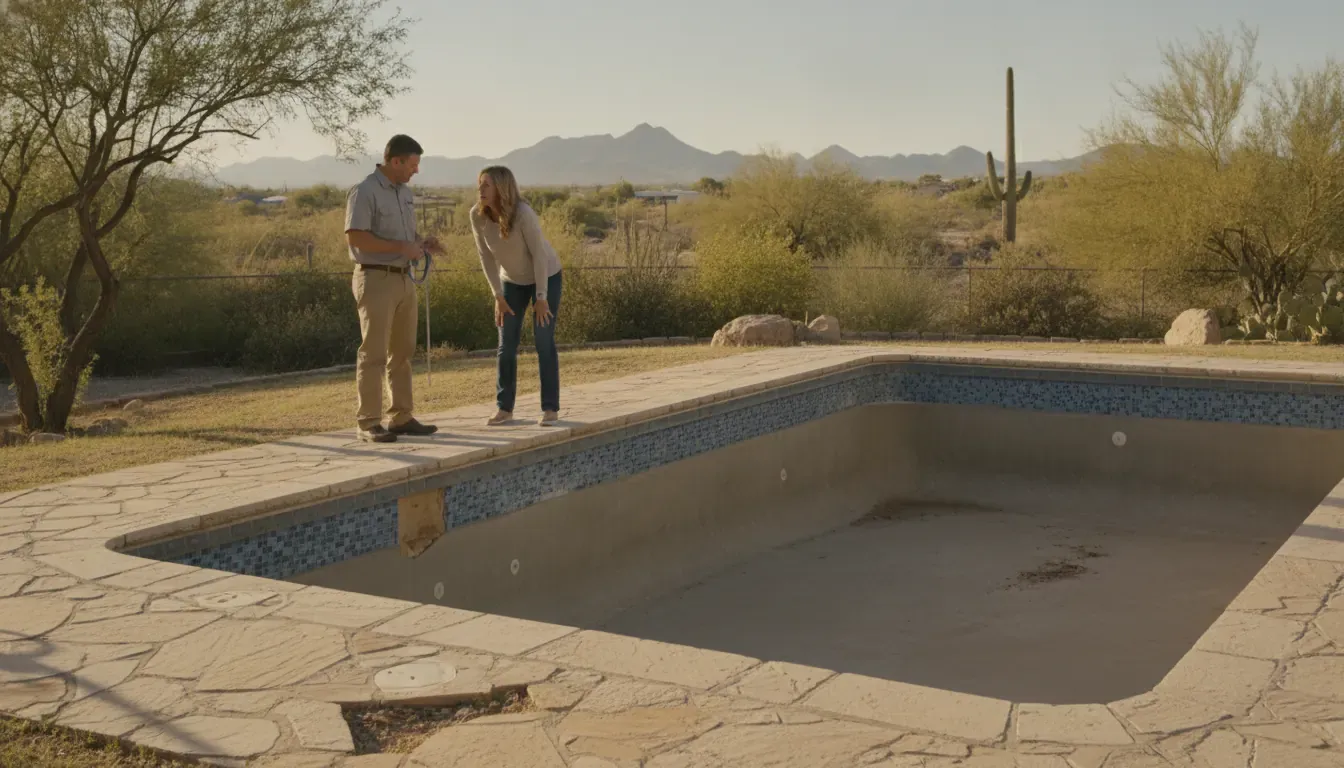
An onsite assessment connects the existing pool condition with the homeowner’s goals.
Step 2: Which Design Choices Matter for Surfaces, Features, and Equipment?
Answer: Design choices should balance Arizona performance, appearance, maintenance, and the way the pool will be used. Select the interior finish, tile, coping, decking, lighting, water features, and equipment as a coordinated system. A remodeler should also show how each selection fits the existing shell and the surrounding backyard.
Surface selection affects color, texture, comfort, maintenance expectations, and the visual character of the water. Common options may include plaster, quartz, or pebble finishes, depending on the existing condition and project goals. The right choice is not simply the most decorative one. It should suit Phoenix sun, heat, chemical exposure, and the owner’s preferred maintenance routine.
Tile and coping create the transition between the pool and the deck. Waterline tile can refresh an outdated pool, while coping replacement can correct worn edges and create a more finished border. Choose both with the home’s exterior, desert planting, and deck material in mind. Strong contrast can define the pool, while a quieter palette can make the backyard feel larger and calmer.
Features should support how the space will be used. Baja steps and benches add flexible shallow-water seating. A spa can extend seasonal use. Sheer descents, bubblers, scuppers, or deck jets add movement and sound, but they also require plumbing, controls, and maintenance planning. LED lighting and automation can improve evening use and make routine operation easier when they are specified for the full system.
Equipment decisions deserve the same attention as visible finishes. A variable-speed pump, updated filtration, heating, and automation may improve efficiency and control, but compatibility with existing plumbing and electrical service matters. Ask for the equipment location, access clearances, controls, and service plan before approving the design.
For a focused comparison of finishes, see pool resurfacing options in Arizona. If the question is whether the existing shell is a good foundation at all, read how to compare a pool remodel with replacement.
Step 3: What Happens During Draining, Demolition, and Prep?
Answer: Draining, demolition, and preparation expose the areas that will receive new work. The crew protects access routes, drains the pool safely, removes the approved finishes or features, clears debris, and prepares the shell and surrounding surfaces. This stage must follow the documented scope, not an improvised demolition plan.
Before draining, confirm who is responsible for water disposal and how the property will be protected. Phoenix-area soil and site conditions vary, and a pool should not be drained casually when groundwater or structural pressure could create a risk. The contractor should explain the drainage plan, access route, crew schedule, and any precautions for the shell and nearby structures.
Demolition may include chip-out of the interior finish, removal of waterline tile, coping, selected decking, old equipment, or features that are being replaced. Not every component needs to be removed. A targeted scope can reduce disruption, while a larger redesign may require more extensive demolition and preparation.
Once surfaces are exposed, the crew can identify conditions that were not visible during the initial visit. That may include damaged plumbing, weak areas, old fittings, or substrate concerns. The right response is to document the finding, explain its effect on scope and timing, and confirm the next decision before installing over it. This is where a clear communication process matters most.
Preparation also includes cleaning, patching, leveling, protecting bond areas, and setting up the sequence for tile, coping, deck, and equipment work. A clean, properly prepared surface gives the new materials a better chance to perform as intended in the Arizona climate.
Talk Through Your Remodel Scope With Modern Pools
Step 4: How Are the New Surface, Features, and Equipment Installed?
Answer: Installation follows the approved sequence for the shell, plumbing, electrical work, finishes, features, and equipment. Crews complete work that must be concealed before applying visible finishes, then install the interior surface, tile, coping, decking, lighting, controls, and selected features. Each trade should be coordinated around the final design.
When the plan includes new plumbing or electrical work, those systems are addressed before the finish closes access. New returns, feature lines, lights, automation controls, or equipment connections need to be placed and tested according to the design. Structural changes, spa additions, or layout modifications may require engineering and inspections, so the work should not be treated as a cosmetic upgrade.
Tile and coping installation require consistent lines, clean transitions, and careful attention to elevations. The coping should meet the deck and surrounding grade in a way that supports drainage and comfortable movement around the pool. In a desert backyard, the deck material also needs to be evaluated for heat, slip resistance, maintenance, and how it meets planting areas.
The interior finish is installed only after the shell and related work are ready. Application and curing requirements vary by material and manufacturer. The contractor should explain when the pool can be filled, which startup chemicals are used, and what the homeowner should avoid during the initial curing or startup period.
Equipment modernization should end with more than a new box beside the pool. Pumps, filters, heaters, valves, automation, and lighting controls should be labeled and demonstrated. Ask who will explain normal operation, what alerts mean, and where future service access is located.
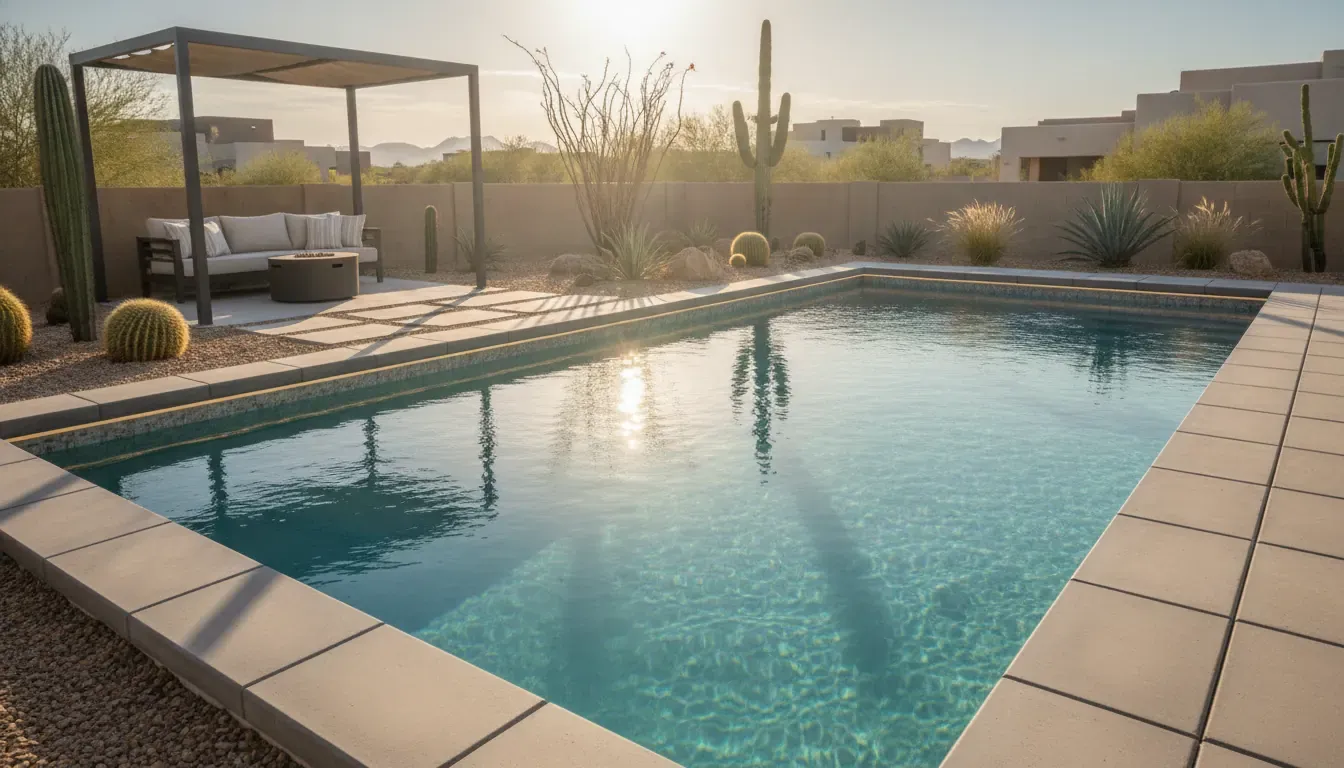
Coordinated finish, coping, lighting, and equipment choices make the remodeled pool work as one system.
Step 5: What Happens During Refill, Startup, and Balancing?
Answer: Refill and startup protect the new finish and confirm that the pool operates correctly. The contractor fills the pool according to the finish requirements, starts circulation, balances the water, checks equipment and features, and explains the first days of care. This step is part of the remodel, not an afterthought.
Do not assume the pool is ready for normal use when the water reaches the operating level. New finishes can have specific startup requirements, and the initial water chemistry may need close monitoring. The startup plan should state who tests and balances the water, how often it is checked, and what the homeowner should do between service visits.
The equipment check should cover circulation, filtration, heating, lighting, automation, valves, drains, and any new water features. Watch the demonstration and ask questions. You should know how to schedule the pump, adjust lighting, use automation, clean baskets, recognize an alert, and contact the right service provider if a problem appears.
Startup is also the right time to confirm the final details. Walk the deck and coping, inspect transitions, review feature operation, and document any punch-list items. A professional closeout makes the handoff clear and gives the homeowner a record of equipment, finishes, care instructions, and warranty information.
How Does the Pool Remodel Process Phoenix Homeowners Plan For Stay on Track?
Answer: A Phoenix pool remodel commonly takes several weeks, but the exact duration depends on scope, permitting, material availability, access, weather, inspections, and the condition discovered after demolition. A focused resurfacing project may move faster than a remodel that changes the layout, adds a spa, replaces decking, or upgrades multiple systems.
The planning period includes the onsite assessment, design revisions, material selections, engineering when needed, and permit coordination. Phoenix-area cities can have different submittal requirements. The City of Phoenix residential pool and spa permit guidance lists application and plan resources. Scottsdale also explains that pool construction and related electrical or plumbing work require appropriate permits and plans through its swimming pool and spa requirements page. Confirm the rules for the city where the property is located rather than relying on a neighboring municipality’s process.
Construction timing is shaped by the work sequence. Demolition and preparation must be complete before new finishes can be installed. Tile, coping, decking, equipment, inspections, and startup each add coordination points. Custom materials or a change made after demolition can extend the schedule, which is why selections and allowances should be settled before work begins.
Arizona weather can affect outdoor work, material handling, and curing conditions. A reputable contractor should provide a realistic range rather than promise an exact completion day before the scope and site are known. Ask for the next milestone, the decision deadline for each selection, and how schedule changes will be communicated.
Modern Pools brings 36+ years of combined experience to custom pool construction and remodeling, with owner-involved oversight and a focus on complete backyard transformations. The goal is not just to make an old pool look newer. It is to make the pool, equipment, hardscape, landscape, shade, and outdoor living areas support the way your household wants to use the property.
Plan Your Phoenix Pool Remodel With Modern Pools
FAQ: Phoenix Pool Remodel Process Questions
Can every aging pool be remodeled?
No. A sound shell may be a strong foundation for renovation, while widespread structural problems, severe plumbing issues, or a footprint that no longer works may make replacement worth evaluating. An onsite assessment can separate visible wear from deeper conditions.
Does a pool remodel require a permit in Phoenix?
Permit needs depend on the work and the municipality. Structural changes, new plumbing or electrical work, spa additions, and changes to barriers may require permits and inspections. Confirm requirements with the city having jurisdiction and have the contractor coordinate the applicable submittals.
What should be selected before demolition begins?
Settle the scope, finish, tile, coping, decking, features, equipment, lighting, automation, access plan, and communication process before demolition. Some decisions can be refined later, but early selections reduce delays and make the installation sequence easier to manage.
How do I choose a pool remodeling contractor?
Look for a contractor who can explain the assessment, written scope, permitting, construction sequence, material performance, startup, and closeout. Review relevant remodeling work, ask who supervises the project, and choose a team that communicates clearly about changes rather than hiding them.
Book Estimate for a Complete Phoenix Backyard Transformation