In a Phoenix East Valley backyard, pool tile has to do more than look attractive in a sample. Intense sun, high heat, dust, minerals, and daily outdoor use make the finish part of the pool’s long-term design. A glass tile pool Arizona homeowners choose can add luminous color and refined detail. The result depends on the complete installation system, not the tile alone.
Book Estimate or call 480-698-8412 to discuss your Arizona pool finish.
A glass tile pool Arizona homeowners select for a premium backyard combines reflective color, a non-porous surface, and carefully planned installation. Glass can create depth around a waterline, spa, spillway, or feature wall. It still requires a sound substrate, pool-rated setting materials, balanced water chemistry, and skilled detailing. Modern Pools helps East Valley homeowners evaluate the finish as part of a complete outdoor living plan.
Modern Pools serves homeowners in Scottsdale, Chandler, Mesa, and Tempe. This guide to custom pool construction in Arizona explains the broader building process. This article focuses on where glass adds value, what it requires in the desert, and how to compare a proposal responsibly.
What makes a glass tile pool Arizona homeowners choose a premium finish?
Glass tile is a premium choice when its reflective appearance supports the pool’s architecture and the installation is planned for submerged use. The finish can interact with sunlight, moving water, and pool lighting. Modern Pools uses that design conversation to help homeowners decide whether a waterline, spa detail, spillway, or feature wall deserves the extra visual emphasis.
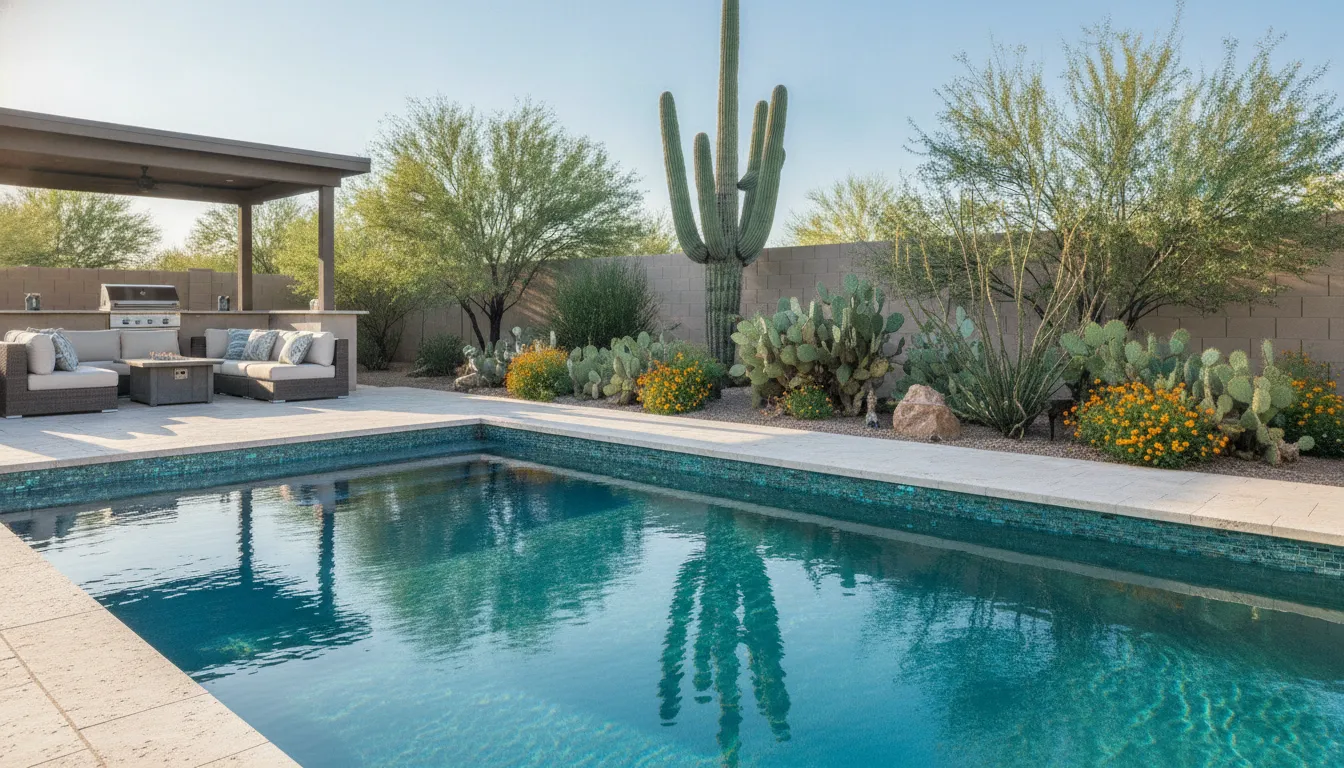
The premium effect comes from coordination. A blue-green blend can connect water to desert-adapted planting and pale travertine. A restrained mosaic can add movement without making a smaller pool feel busy. A narrow accent at a raised spa or spillover can create a focal point while the main pool remains calm.
How does glass change the look of pool water?
Glass reflects and filters light differently from a flat ceramic surface. Changes in color, transparency, and texture can make water appear more dimensional. Bright Arizona sun emphasizes sparkle, while properly placed LED lighting can bring out cooler blue, green, or aqua tones after dark.
Evaluate samples outdoors rather than relying only on a showroom. View them in full sun, partial shade, and evening light. Place them beside the proposed coping, decking, stone, and landscape colors. This shows whether the finish supports the entire backyard.
Why does the Arizona setting matter?
Phoenix-area pools experience ultraviolet exposure, high temperatures, dust, mineral deposits, and regular chemical treatment. These conditions make product selection and installation details important. A University of Arizona tile specification illustrates why setting materials and movement considerations deserve attention in a hot environment.
How does glass tile compare with standard tile in desert heat?
Glass tile offers stronger reflectivity and a distinctive finish, while ceramic or porcelain tile may offer a familiar installation path and broad practical options. Neither material is maintenance-free. Both require proper preparation, pool-rated materials, movement accommodation, sound grout details, and consistent water care. Modern Pools can help compare those tradeoffs against the proposed design.
| Consideration | Glass tile | Ceramic or porcelain tile |
|---|---|---|
| Appearance | Reflective color can add depth, shimmer, and luminous water detail. | Offers broad colors, textures, formats, and a familiar visual character. |
| Heat and movement | Needs a substrate and setting plan that accounts for thermal movement. | Also needs movement accommodation and materials approved for submerged use. |
| Water care | Non-porous tile does not protect grout from poor chemistry or mineral buildup. | Requires regular testing, adjustment, and cleaning as part of the pool system. |
| Best applications | Waterlines, mosaics, raised spas, spillovers, and selected feature areas. | Large fields, borders, steps, transitions, and practical accents. |
What installation details should homeowners ask about?
Ask how the surface will be prepared before tile is set. A useful scope should address substrate condition, waterproofing transitions, setting materials, grout, movement joints, edges, coverage, and quality checks. On a remodel, the installer should identify loose pieces, cracks, mineral buildup, and surface conditions that need attention first.
Does glass tile require different maintenance?
The basic priorities are similar for both tile types. Test and balance the water, keep circulation equipment operating as designed, remove dust and mineral residue before it builds up, and follow the selected product’s care guidance. The City of Chandler pool-care guidance reinforces the value of regular water care.
Which glass tile colors and patterns fit Arizona backyards?
The strongest Arizona palettes connect pool water to the surrounding desert through color, scale, and intentional placement. Blue and green tones can suggest depth. Sandy neutrals, muted terracotta, natural stone, and warm gray can connect tile to travertine, pavers, walls, and desert landscaping. Modern Pools evaluates samples with the full backyard, not in isolation.
Where should glass tile be used?
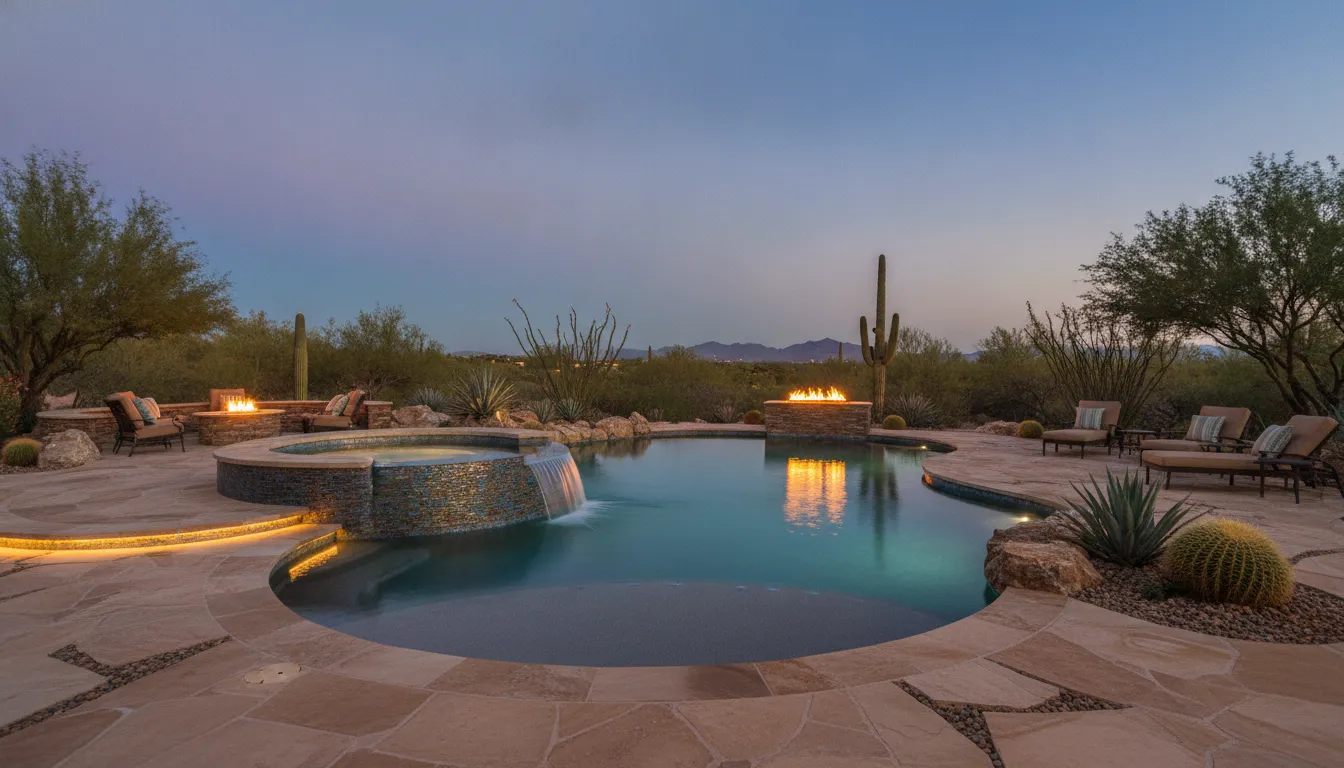
The waterline is often a practical starting point. A consistent band creates a clean transition between water, coping, and deck. Glass can also highlight a raised spa, spillway, tanning ledge, step, or selected feature wall. Limiting detailed material to a few areas can create a more refined result than covering every surface with competing patterns.
Use this Arizona pool design features checklist to consider tile alongside lighting, water features, seating, shade, and landscaping. The finish should support how the family uses the backyard.
How should homeowners evaluate samples?
Ask for the product, format, color blend, grout, coverage, and edge treatment in writing. Small mosaics can emphasize curves and detail. Larger formats may create a quieter field. Review how the pattern ends at corners, steps, benches, and spillways before approving the layout.
What does glass tile add to an Arizona pool’s cost?
Glass tile affects cost through the material, coverage, labor, preparation, layout, and site conditions rather than through one universal upgrade price. A waterline band and a full interior application have very different scopes. Modern Pools recommends a transparent proposal that identifies where the tile goes and which preparation or related hardscape work is included.
- Material: Format, finish, color blend, texture, and mosaic detail affect the product and quantity.
- Coverage: Waterline tile, spa tile, steps, benches, spillways, feature walls, and full-field coverage require different scopes.
- Preparation: Repairs, leveling, waterproofing transitions, demolition, or existing-surface corrections may be needed.
- Setting system: Mortar, grout, joints, and movement details should suit submerged use and the local heat environment.
- Access: Narrow gates, completed landscaping, demolition, and remodel protection can change labor requirements.
For broader planning context, review the Phoenix pool cost guide. The goal is not to choose the lowest line item. It is to select a coordinated finish that earns its place in the overall backyard investment.
Request a transparent glass tile estimate from Modern Pools and bring your preferred samples, coverage ideas, and questions to the planning conversation.
How long can glass tile last in Phoenix’s climate?
Glass tile can remain attractive for many years in Phoenix when it is correctly specified, installed on a sound surface, and maintained with consistent water care. No responsible installer should promise one fixed lifespan for every pool. Modern Pools considers sun exposure, movement, installation quality, chemistry, cleaning, and timely repairs when discussing long-term performance.
- Balance the water regularly. Follow the ranges recommended for the pool’s sanitation system and test after dust storms, heavy use, or significant water additions.
- Clean gently. Remove dust, oils, and mineral residue before deposits become difficult to remove. Use products and tools appropriate for the tile and grout.
- Inspect the finish. Look for loose pieces, cracked grout, discoloration, hollow-sounding areas, or recurring deposits along the waterline.
- Check circulation and automation. Filtration, sanitation, pumps, and automation should work together to circulate and treat water consistently.
A tile system should be evaluated with the rest of the pool. Coping, expansion joints, drains, water features, lighting, and equipment can influence performance and care. This Arizona climate pool design guide offers additional planning context.
What can Modern Pools project examples teach you about glass tile?
Project examples are most useful when they show how glass tile works with pool shape, coping, lighting, hardscape, and desert planting. A gallery image can demonstrate design relationships, but it does not prove that the same product or installation method fits another property. Modern Pools uses examples as a starting point for a site-specific conversation, not as a promise of identical results.
Review the Modern Pools project gallery for relationships between tile, pool shape, coping, hardscape, planting, and lighting. Look for examples that resemble your lot and intended use. Ask which details are practical for your site, which are visual choices, and which depend on engineering or existing conditions.
This article does not invent a named customer case study or claim that every gallery image uses glass tile. Instead, bring the examples you like to a design meeting. A builder should be able to explain the proposed product, coverage, substrate, grout, edge treatment, care requirements, and how the finish fits the entire backyard.
How should you plan a glass tile pool Arizona project?
A successful glass tile pool Arizona project starts with site planning and a documented installation scope, not with a quick color choice. Assess the property, decide where tile will have the most impact, coordinate the finish with the complete backyard, and confirm construction details before work begins. Modern Pools brings that local planning perspective to East Valley homeowners.
Start with the site and complete design
Review access, grading, drainage, utilities, sun exposure, existing hardscape, and the relationship between the pool and home. Scottsdale, Chandler, Mesa, and Tempe properties may also require careful planning for heat, dust, mineral exposure, shade, and year-round outdoor use.
Decide whether glass belongs at the waterline, raised spa, steps, spillway, or feature wall. A focused application may create a more refined result than full coverage. The pool construction process guide shows where design, engineering, material selection, and installation decisions fit together.
Specify materials and quality checks early
Choose tile color, size, texture, finish, grout, edge details, and lighting together. Ask how the substrate will be prepared and which setting system is planned. Project documents should identify coverage, layout, waterproofing transitions, movement joints, and checks before closeout.
Modern Pools provides owner-involved pool construction and outdoor living solutions across the Phoenix East Valley, backed by 36+ years of combined experience. The company operates under Arizona ROC License 357795 KA-5. Homeowners can also review this guide on how to choose a pool builder in Arizona and compare scope, communication, material guidance, and construction planning.
Frequently Asked Questions
Are glass tiles good for swimming pools?
Glass tiles can be a strong choice because they are non-porous, reflective, and available in many colors and patterns. They still require a sound substrate, pool-rated installation materials, balanced water chemistry, and careful detailing around edges, curves, spas, and water features.
What are common problems with glass pool tiles?
Problems usually relate to installation or maintenance rather than the glass face itself. Poor preparation, unsuitable setting materials, movement, loose pieces, damaged grout, mineral buildup, and unbalanced water can affect the finished system.
Do glass pool tiles hold up in Arizona heat?
They can perform well when the product and setting system suit the application. Heat, movement, intense sun, dust, and water chemistry must all be considered. Ask the installer to explain preparation, movement accommodation, grout, and care requirements.
How much do glass tiles cost for pools in Arizona?
There is no single responsible price. Cost depends on the tile, coverage, labor, preparation, layout, access, and whether the project is a new build or remodel. Request a line-item estimate that identifies material and installation scope.
Is a glass tile waterline worth considering in Phoenix?
It can be worthwhile when reflective color and a refined transition matter to the overall design. A waterline may deliver strong visual impact without full-pool coverage. Compare samples outdoors and coordinate the finish with coping, decking, lighting, landscaping, and the home’s architecture.
Book Estimate to review your lot, finish ideas, and complete Arizona backyard plan with Modern Pools.