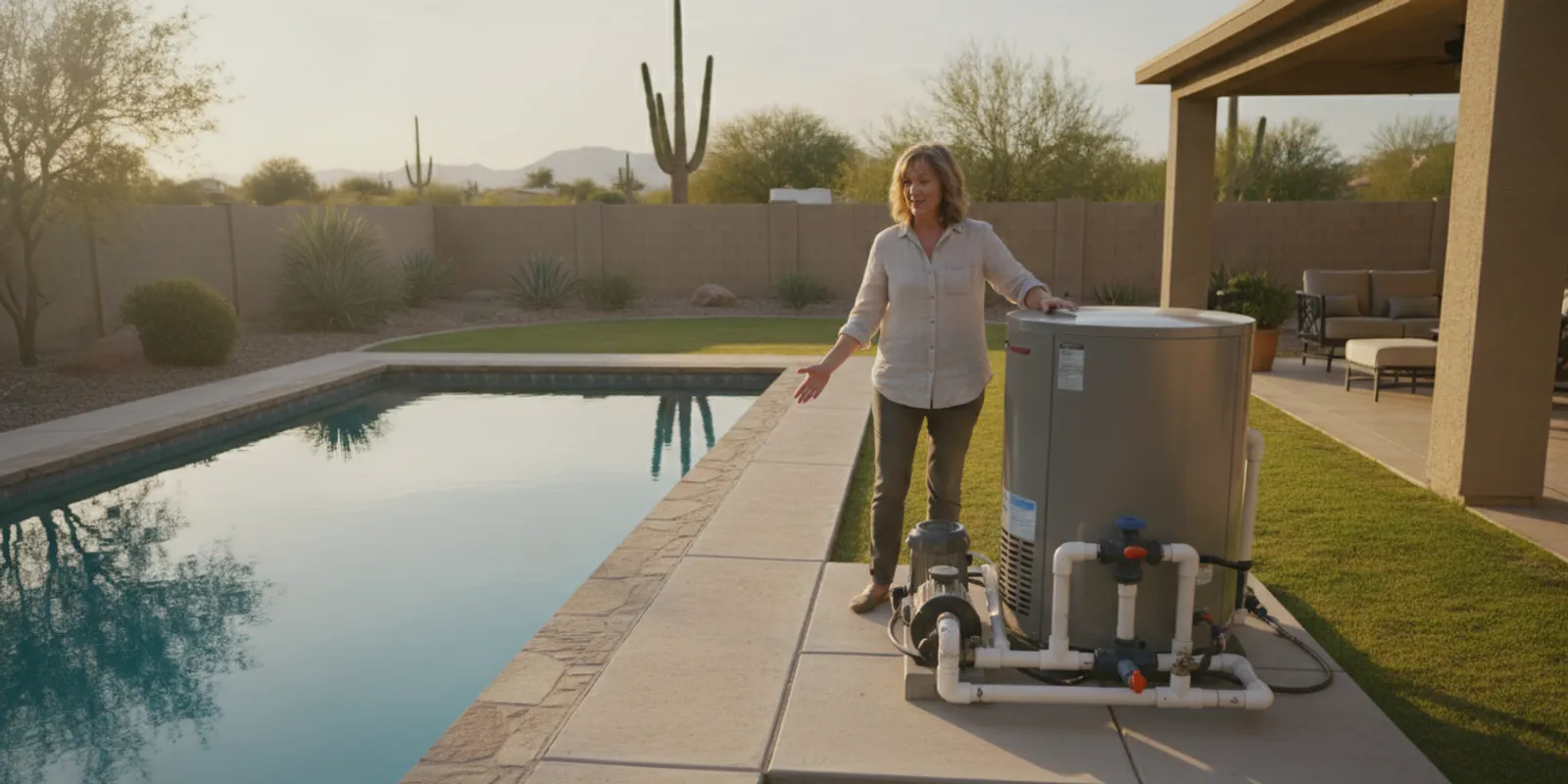
If your pool water is not reaching a comfortable temperature, a pool heater repair in Phoenix may be one option—but the symptom alone does not tell you what failed. Start with safe observations, note when the problem began, and find out whether repair is practical for the heater’s age, condition, and role in the whole pool system.
What can a pool heater symptom tell you?
A heater problem can appear in several ways. The water may stay cool, warming may take longer than usual, or the unit may start and stop. You might also notice a display alert, unusual sound, visible leak, or an odor near the equipment. These observations help a qualified technician narrow down the issue, but they are not a diagnosis by themselves.
Before you call, write down what you see and when it happens. Include whether the pool pump is running, the heater’s displayed setting or alert, and whether the symptom is consistent or occasional. Do not remove covers or try to interpret internal components. A clear symptom history is more useful—and safer—than guessing at a part.
- Water is not warming: Record the water temperature if you have a reliable reading, the heater setting, and how long the issue has been present.
- The unit stops or displays an alert: Note the exact message or code without repeatedly restarting the equipment.
- You hear a new noise or see moisture: Take a photo from a safe distance and describe when it occurs.
- The problem comes and goes: Note the time of day and which other pool equipment is operating.
For background on how equipment choices relate to ongoing operation, see this guide to energy-efficient pool equipment. A heater does not work in isolation; the complete system and the way it is used matter.
What should you check before arranging service?
Keep checks external and simple. Confirm that the heater’s user controls show the intended setting, and look for an obvious interruption such as a scheduled setting you did not expect. If the manufacturer’s manual describes a basic user-level check, follow its directions. Do not open electrical compartments, remove the heater cabinet, adjust gas connections, or bypass a safety device.
It also helps to confirm what the pool system is doing at the same time. Is the circulation pump on? Are there other changes in the equipment area? If you are unsure how the controls interact, leave them alone and explain what you observed when you arrange an assessment. Modern Pools’ pool and outdoor living FAQs can help with general pool-planning questions, but a specific heater fault needs equipment-specific evaluation.
Take safety concerns seriously. If you smell gas, see smoke, or suspect an electrical hazard, keep people away from the equipment and do not attempt a restart or repair. Move to a safe place and contact the appropriate emergency or utility service. For broader consumer product safety information, consult the U.S. Consumer Product Safety Commission. Its general guidance is not a substitute for instructions for your particular heater.
How do the common next steps compare?
The right next step depends on what inspection finds. This table is a planning aid, not a diagnosis or a promise that a particular repair will solve the issue.
| Situation | Reasonable next step | What to have ready |
|---|---|---|
| One unclear symptom, no immediate safety concern | Record the symptom and ask for an equipment assessment | Heater make and model, approximate age, settings, and when the issue occurs |
| A displayed alert or repeated shutdown | Share the exact alert with a qualified service professional; avoid repeated resets | A photo of the display and notes about recent operation |
| Visible leak, unusual odor, smoke, or suspected electrical issue | Keep clear and seek appropriate urgent help; do not operate or open the unit | Only information that can be collected safely from a distance |
| Older unit with recurring trouble or a major repair recommendation | Compare repair scope with replacement and whole-system needs | Written findings, proposed work, equipment condition, and any warranty information |
| Planning a pool remodel or broader equipment update | Coordinate heater decisions with circulation, controls, and project scope | Pool goals, existing equipment details, and renovation priorities |
When is repair worth considering, and when should you compare replacement?
There is no universal age or single symptom that decides whether to repair or replace a heater. Ask for the actual diagnosis and a written description of the proposed work. Then compare the repair’s scope with the unit’s overall condition, its service history, whether the same problem has returned, and whether the proposed work addresses the cause rather than only a visible symptom.
Replacement may be worth discussing when an inspection finds extensive deterioration, repeated failures, unavailable or unsuitable parts, or a repair that does not make sense for the unit’s condition. Those are questions for an assessment, not conclusions to draw from a noise or error display alone. Ask whether any existing manufacturer or installer warranty applies before authorizing work.
Compare the options using the same questions:
- What was tested, and what did the findings show?
- What exactly is included in the recommended repair?
- Is the recommendation based on a confirmed fault or a possibility that still needs testing?
- If replacement is proposed, what equipment and installation scope are included, and what existing connections or controls need review?
- What warranty applies to the equipment and the work, and who handles follow-up questions?
Transparent scope matters. Request clear written details so you can compare like with like, including any separately identified permit or tax items if they apply. Do not assume that two proposals cover the same work simply because both use the word “repair.”
Contact Modern Pools about your pool project
How does the heater fit the rest of a Phoenix pool system?
Phoenix homeowners may use pool heating for particular seasons, schedules, or comfort preferences. The heater should be considered alongside circulation equipment, controls, the pool’s use, and the broader backyard plan. A change to one component can affect what needs to be checked elsewhere, so share details about the entire equipment setup rather than asking someone to assess a heater in isolation.
If controls are part of the question, review the overview of a pool automation system in Arizona. Automation features do not diagnose a mechanical fault, but knowing how equipment is controlled can help you explain the setup. For routine care and seasonal considerations, see the practical Arizona pool maintenance tips.
For a larger upgrade, decide what outcome matters most before comparing equipment: more dependable operation, a different use schedule, simpler controls, or coordination with other planned work. Think about how you actually use the pool rather than choosing equipment by a feature list alone. For example, a homeowner who wants occasional seasonal heating may have different priorities from someone planning frequent use. Share those preferences during an assessment, but let a professional confirm what the existing setup can support.
Before any work, ask how the recommendation relates to the full system. A heater replacement may involve more than selecting a new unit: the existing controls, connections, and operating requirements may need review. Ask what will be inspected, what is part of the stated scope, and whether any other equipment concerns were observed. If a proposal includes an upgrade beyond the original problem, ask why it is recommended and whether it is required now or can be considered separately. Clear answers help you compare options without treating every suggested improvement as an urgent repair.
Modern Pools provides custom pool construction and outdoor living solutions, including pool and outdoor living services. Whether a particular heater repair is within the appropriate scope should be confirmed directly; do not assume every pool project provider handles every equipment fault.
What information should you gather before asking for an assessment?
A little preparation can make the conversation more focused. You do not need to diagnose the heater or dismantle anything. Gather what you already know and let the service professional decide what needs inspection.
- Heater make, model, and approximate installation date, if known.
- The specific symptom, when it began, and whether it happens every time.
- Any display message or code, recorded exactly as shown.
- Recent changes to pool equipment, controls, or operating schedule.
- Any previous repairs, invoices, or warranty paperwork you can locate.
- Photos of the external unit and equipment area, taken from a safe position.
If your question relates to a larger renovation, explain what else you want to change. Modern Pools’ pool remodeling services are relevant for homeowners planning a broader refresh, while a new build has different design and equipment decisions. The Phoenix pool estimate visit guide also outlines useful preparation for a project conversation.
For a new pool or spa, equipment planning can be discussed as part of the overall scope; learn more about new pool and spa builds. Modern Pools’ company background describes its owner-involved approach. Keep the discussion specific: ask what is included, what remains outside the proposed scope, and who will evaluate any specialized heater issue.
What should Phoenix homeowners ask before approving work?
Before authorizing a repair or replacement, make sure you understand the recommendation and the next step. Ask the professional to explain any technical terms in plain language and to separate confirmed findings from items that still need testing.
- What is the diagnosed cause, and how was it confirmed?
- Does the proposed work address the cause or only one symptom?
- Will the work require changes to other equipment or controls?
- What is included in the written scope, and what would require separate approval?
- How will the equipment be checked after the work?
- What safety, operating, or maintenance instructions should I follow afterward?
For a broader backyard project, consider how equipment decisions fit the layout and intended use. The Modern Pools Phoenix pool and outdoor living site outlines its overall services. Use a consultation to describe your goals and clarify whether the issue calls for a pool-equipment specialist, a remodel discussion, or another next step.
Frequently asked questions about pool heater repair in Phoenix
Can I reset my pool heater if it stops working?
Follow only the user-level instructions in the heater’s manual. If it repeatedly shuts down, displays an alert, or has a safety concern, do not keep restarting it or bypass a shutoff; record what happened and request qualified guidance.
Does a heater error code tell me which part to replace?
Not necessarily. An alert can help a technician investigate, but the code alone may not confirm the cause or identify a part to replace. Record the exact display and provide the make and model.
Should I repair an older pool heater?
Age alone is not enough to decide. Compare the confirmed fault, overall condition, repair scope, recurrence history, parts availability, warranty information, and the cost and scope of a replacement proposal.
Can Modern Pools diagnose every pool heater problem?
Do not assume a construction or outdoor-living consultation includes specialized heater troubleshooting. Contact the company to confirm whether your specific equipment concern is within its service scope or needs a dedicated equipment professional.
Contact Modern Pools to discuss your pool plans
A careful symptom record, safe approach, and clear written scope can help you decide what to do next without guessing at the cause of a pool heater problem.