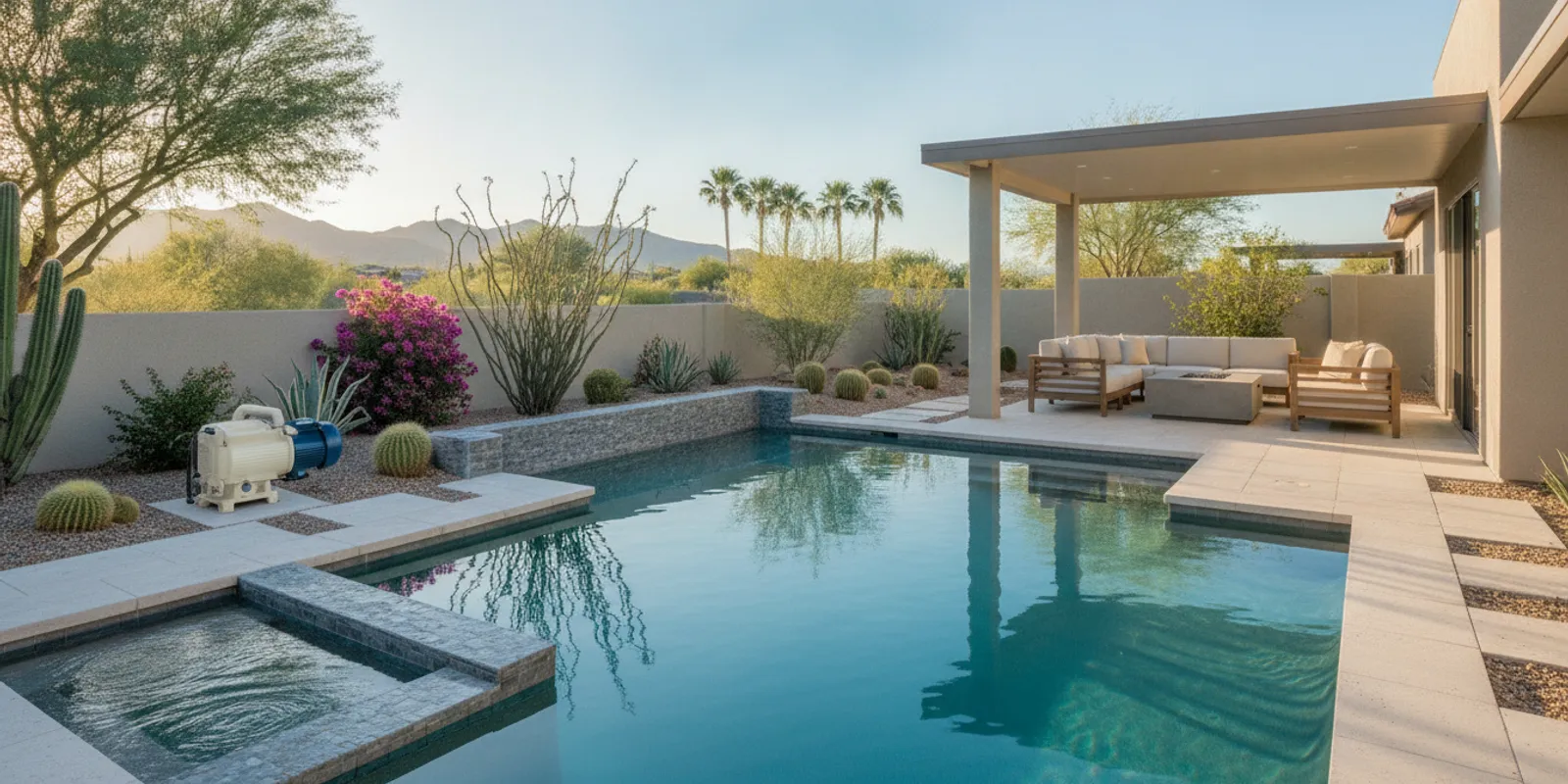
Energy-Efficient Pool Equipment can make a backyard pool easier to operate by matching equipment use to the job at hand, rather than running every feature at full power all the time. For Phoenix-area homeowners, the key decisions often include the pump, lighting and controls—and how those pieces work together. A pool design is a long-term choice, so it helps to compare the equipment plan alongside the pool itself.
Book an estimate for your pool project
What makes pool equipment more energy efficient?
Efficiency is about using the right equipment settings for the task. A pump circulates and filters water. Lighting serves visibility and atmosphere. Automation lets you schedule or adjust certain functions without repeatedly operating equipment by hand. Each component can contribute to a more intentional operating routine, but no single upgrade guarantees a particular bill reduction.
Start with the full system, not just the name on a product. Ask what equipment is included, which controls it supports, how it will be configured and what routine the builder recommends. A pool’s size, plumbing, features and operating needs affect which setup makes sense. In an Arizona backyard, design priorities such as water features, a spa or extended evening use can also shape equipment choices.
Modern Pools lists variable-speed pumps and automation among the premium features included in its pool packages. For a project-specific view of inclusions, compare the pool package features and pricing and ask how a proposed system fits your plans.
Why consider a variable-speed pool pump?
A variable-speed pump can operate at different speeds. That gives the system more flexibility than a pump limited to a single speed. The appropriate speed depends on the task and the pool’s design, so the aim is not simply to choose the lowest setting. The goal is to use a suitable setting for circulation, filtration or a feature when it is needed.
The U.S. Department of Energy’s Building America Solution Center explains that a high-efficiency pool pump can run at different speeds and be programmed to match pump speed to pool operation needs. See its overview of the high-efficiency pool pump for a description of this approach. ENERGY STAR also provides a certified pool pump product finder for comparing listed models.
When discussing a pump, ask the builder or equipment professional:
- What pump type and model are proposed, and is it appropriate for this pool’s circulation needs?
- Which speeds or schedules are planned for normal operation and for any water features?
- How will the controls be set up so the schedule is understandable and practical?
- What should you check if the pool’s use or equipment changes later?
These questions are more useful than relying on a broad claim about savings. The pump must be properly selected and configured for the system, and actual energy use varies with operation and site conditions.
It can help to talk through a few ordinary scenarios instead of asking only for a recommended setting. For example, describe a typical day when the pool is unused, a day when family members swim after work, and an occasion when a spa or water feature is part of the plan. Ask which equipment needs to run in each situation and whether the controls can make those choices easy to manage. This turns an abstract conversation about efficiency into an operating plan you can understand.
Do not change pump settings based on a schedule borrowed from another pool. Plumbing layout, required circulation, connected features and product instructions all matter. If you inherit a pool or replace an existing pump, have the setup reviewed for that particular system. Record the recommended settings and ask how to restore them if a temporary adjustment is made.
How can automation help manage pool operation?
Automation brings selected pool functions into a control system. Depending on the equipment and configuration, it may let a homeowner schedule pump operation or manage compatible features from a control panel or phone. The practical benefit is easier, more consistent operation—not a promise that every connected feature will lower energy use.
Before choosing controls, list what you actually want to manage. Some households mainly want a straightforward pump schedule. Others want convenient control of compatible lighting, a spa or water features. Confirm what is included, what equipment is compatible and whether the interface meets your expectations. Avoid assuming that “smart” means every device is connected or that an app is a substitute for learning the system’s basic controls.
Automation is a distinct equipment-planning question from a full technology feature review. If you want to understand control options in more detail, read the Arizona pool automation overview. During project planning, also consider the custom pool construction process, since equipment choices are easier to coordinate when they are addressed as part of the overall design and build.
Ask for a control demonstration that follows the way your household will use the pool. Have the person showing the system identify the normal schedule, demonstrate how to turn a compatible feature on and off, and explain what to do if a device does not respond. Make sure you know whether a change made on the panel also appears in the phone interface. If several people will use the controls, clarity matters: a simple, understood setup is more likely to be used consistently than a collection of features no one feels comfortable adjusting.
It is also useful to ask what happens when internet access or a phone is unavailable. Learn where the physical controls are and which functions can still be operated locally. Keep login and product information in a secure place, and ask how the system should be handled when access is shared with a household member or service professional.
Where do LED pool lights fit?
LED lighting can provide illumination while giving homeowners options for the look and feel of an evening pool. Consider the number and placement of lights, the areas you want illuminated and how you expect to use the pool after sunset. The right plan balances visibility and ambience with the design, rather than treating lighting as an afterthought.
Ask whether the proposed lighting works with the planned controls, and clarify how it will be operated. A light that is easy to switch on when needed is more useful than a complicated setup that rarely gets used. For ideas and practical considerations specific to lighting, see the guide to LED pool lighting in Arizona.
Lighting is one part of an integrated backyard plan. Look at how pool placement, shade, outdoor spaces and the Arizona climate affect how you will use the area. The Arizona climate pool design guide can help you think through those broader design choices.
Think through lighting in zones. Which parts of the pool need to be visible for the activities you have in mind? Are there steps, a shallow area or a seating edge that should be considered in the lighting conversation? What kind of mood do you want for a quiet evening compared with a gathering? These questions help you discuss placement and control without assuming that more fixtures or more colors automatically make a better plan.
Also clarify how lighting is switched, scheduled or grouped with other compatible functions. If the controls offer several modes, ask for a quick demonstration and decide which ones you are likely to use. Make sure the written equipment scope identifies the lighting components and the agreed control approach, so the final setup can be checked against the plan.
How should the equipment plan work as a system?
Think of the pump, lighting and automation as a coordinated set of choices. The pump handles circulation, the lighting supports visibility and evening use, and controls can make compatible functions simpler to schedule. If each decision is made separately, it is easy to end up with controls that do not operate the equipment you expected or a schedule that does not match how you use the pool.
A useful planning exercise is to describe a normal week in practical terms. When do you expect to swim? Do you plan to use a spa or water feature? Which functions should be scheduled, and which would you rather turn on only when needed? Bring those answers to the design conversation. They help clarify what control features are useful, instead of paying attention to a long list of technology features without a clear purpose.
Ask for a brief walkthrough of the proposed operating plan before the project is complete. You should know how to find the pump schedule, change an appropriate setting, control the lights and identify which functions are automated. Keep the product instructions with your pool records. If a future change to landscaping, equipment or pool features affects circulation or controls, check with a qualified professional rather than assuming the original schedule still applies.
There is no single schedule that fits every pool. Weather, pool use, equipment, design and local conditions all affect operation. Use product documentation and professional guidance for the specific system, then adjust routines based on that advice and actual needs. The aim is a setup that is understandable and deliberate, not a generic schedule copied from another backyard.
A practical commissioning checklist can make the handoff easier:
- Ask the installer to identify each major equipment component and explain its role.
- Write down the intended pump schedule and the reason for any different operating modes.
- Test the controls for the pump, lights and any compatible features you expect to use.
- Locate the manuals, warranty information and the contact path for equipment questions.
- Ask which changes are safe for a homeowner to make and which should be reviewed by a qualified professional.
This checklist is useful whether the pool is new or you are evaluating an equipment update. For an existing system, first note the model information, current settings and the problems you are trying to solve. A professional can then discuss whether a component change, a control adjustment or a broader review is appropriate. Avoid replacing equipment based only on a general claim about efficiency; compatibility and the pool’s actual needs should guide the decision.
How do the equipment options compare?
This comparison is a planning tool, not a promise of a specific utility-bill outcome. Equipment models and configurations differ. Confirm the exact products and scope in your project documents.
| Equipment | What it does | Efficiency-planning question | What to confirm |
|---|---|---|---|
| Variable-speed pump | Circulates pool water and can operate at different speeds | Can speeds and schedules be matched to circulation needs and features? | Model, system fit, settings and operating guidance |
| LED lighting | Illuminates the pool and supports evening use | Can lighting be limited to when and where it is useful? | Placement, control method and compatibility |
| Automation | Schedules or manages compatible equipment and features | Can routine operation be organized around actual use? | Included functions, compatibility and how to operate the system |
Use the table as a prompt for a side-by-side proposal review. One option may include a component while another lists it separately; a control system may operate only certain devices; and a model name alone does not tell you how the equipment will be configured. Ask for the included equipment, relevant models, control functions and homeowner handoff to be stated plainly. If two proposals differ, compare the complete scope rather than judging by one product or a single feature label.
What should Phoenix homeowners ask before choosing equipment?
Use the estimate or design consultation to settle the equipment scope before construction decisions are locked in. A clear discussion can prevent mismatched expectations between what you think is included and what the proposed package actually covers.
- Get the equipment list. Ask for the proposed pump, lighting and control components, with model details where available.
- Review intended operation. Discuss schedules, typical use and how any spa or water features affect the plan.
- Check compatibility. Confirm which components work together and what can be operated through the proposed controls.
- Clarify package inclusions. Compare written inclusions rather than assuming that every feature is standard across pool packages.
- Ask about permits and project coordination. Local requirements and project details vary. Review the relevant steps in this Arizona pool permit guide and confirm what applies to your property.
- Plan the surrounding space. Equipment needs to fit into a usable backyard layout. Coordinate pool equipment decisions with hardscape and landscape plans, including the options shown on the hardscape and landscape services page.
Compare the whole proposal: equipment, features, layout and scope. Published package pricing can help establish a starting point, while permits and taxes are additional for the published Basic and Oasis packages. Serenity and Resort packages are custom-priced. Project needs differ, so review the specific estimate and included features rather than extrapolating from a different pool.
When reviewing the price, separate the questions of what is included and how the system will work. A package comparison can show the published starting figures, but your design, site and selected features determine the project details. Ask for the proposed equipment to be connected to the written scope, then confirm any options or customizations before moving forward. This keeps equipment decisions grounded in a transparent project conversation rather than assumptions about a package title.
Talk through your equipment and design questions
How can you get more value from the equipment you choose?
The purchase decision matters, but the everyday routine matters too. Use the operating guidance for your specific equipment and make sure everyone who uses the pool knows the basics. Keep schedules aligned with the way the pool is actually used, and revisit them if your routine or system changes.
- Learn how to select the pump settings and schedules recommended for your system.
- Use lighting when it serves a purpose, and know how to turn it off when it is not needed.
- Understand which functions automation controls and which still require manual attention.
- Ask who to contact for product documentation or help after installation.
- Discuss changes to pool features or equipment with a qualified professional before altering system settings or components.
A short monthly review can help you notice whether the controls still match your routine. Check whether scheduled functions reflect when you actually use the pool, whether lights are being left on unintentionally and whether a feature is running more often than you intended. Treat this as an observation, not a reason to change settings without guidance. If something seems unusual, note what you see and ask the appropriate equipment professional how to respond.
Keep a simple record of equipment model details, schedule changes and service visits with the pool documents. If a household member adjusts a control, note why and whether the original setting was restored. This small habit can make troubleshooting clearer and help a professional understand what changed. It also reduces guesswork if you revisit the equipment plan months later.
During construction, equipment choices are one element of a broader project. Modern Pools describes its approach as owner-involved, with hands-on project oversight. You can browse the project gallery for examples of backyard work and use a consultation to discuss what fits your property.
Get in touch to plan your pool equipment
Frequently Asked Questions
Does a variable-speed pump always lower a pool’s energy bill?
No specific reduction can be guaranteed. Energy use depends on the pump, pool system, settings and how long equipment runs. A variable-speed pump allows different operating speeds, but selection and configuration matter.
Can automation make a pool completely hands-off?
No. Automation can make compatible functions easier to schedule or control, but homeowners still need to understand system operation and follow equipment guidance. Confirm which functions are actually included in the proposed setup.
Should I choose pool lighting before construction?
It is helpful to plan lighting with the pool layout and controls. Discuss placement, intended use and compatibility during design so the lighting plan supports the way you expect to use the backyard.
What should I compare when reviewing pool equipment options?
Compare the equipment list, system fit, controls, schedules, included features and operating instructions. Review those details in writing alongside the complete pool proposal.
Plan equipment as part of the whole backyard
Variable-speed pumps, LED lighting and automation each serve a different role. The most useful plan connects the equipment to your pool design, operating routine and priorities, with clear expectations about what is included. Modern Pools serves Phoenix East Valley homeowners with custom pool construction and outdoor living solutions, and a consultation can help you discuss the right questions for your project.