
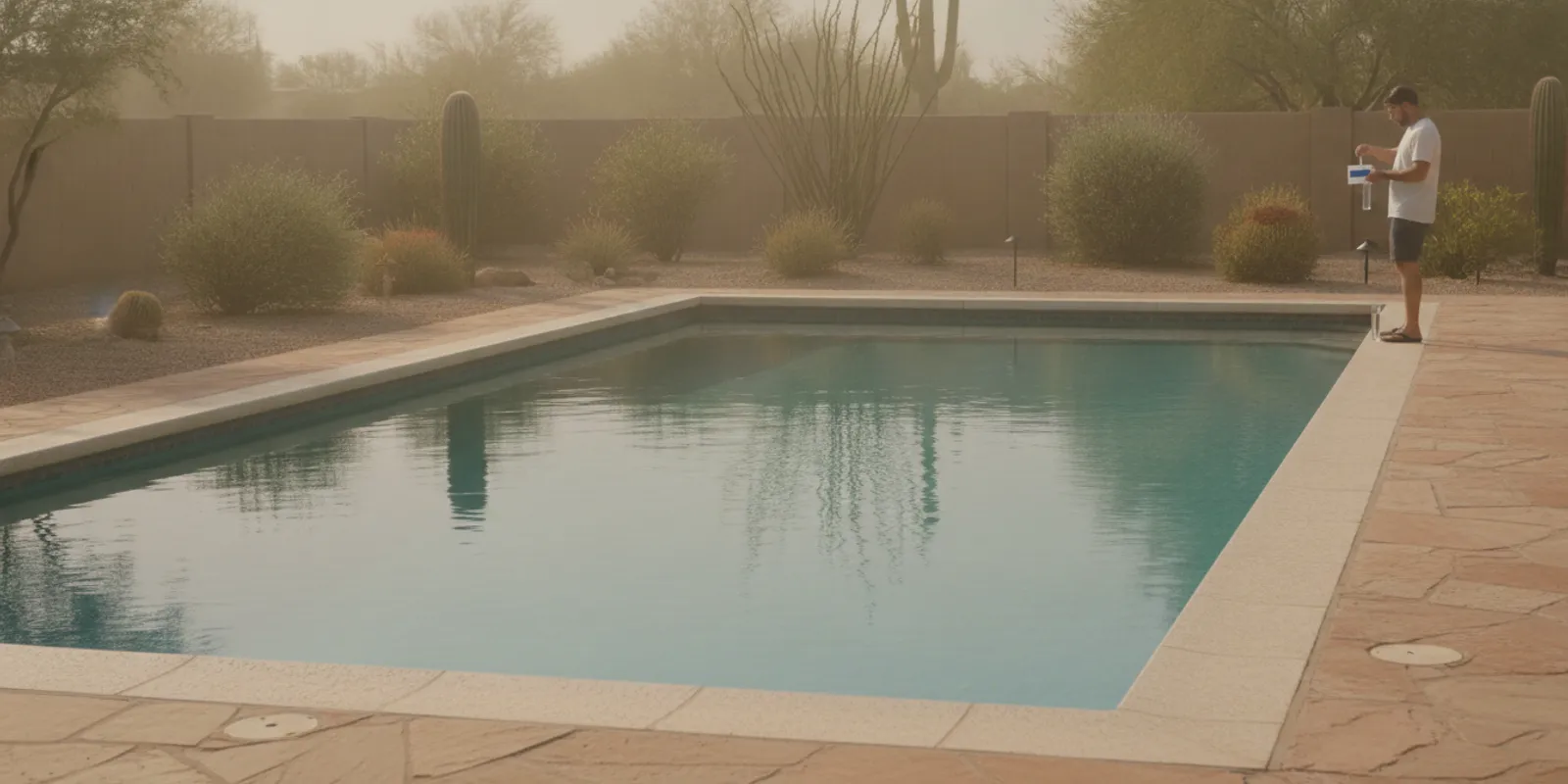
These pool maintenance tips Arizona homeowners can use address the conditions that make routine care feel different here: intense summer sun, blowing dust, high evaporation, and sudden monsoon weather. A simple schedule helps you spot changes early, keep the water inviting, and protect equipment from avoidable strain.
Why does Arizona weather change pool maintenance?
Sun and heat can increase water loss and place heavier demands on circulation and sanitation. Wind carries fine dust, leaves, and other debris into the pool. During monsoon weather, a short storm can add debris quickly and disrupt water clarity. These conditions do not mean every pool needs the same treatment. Pool size, equipment, use, shade, and the manufacturer's instructions all matter.
Think in terms of regular observation rather than waiting for a problem. A quick look at the water, skimmer, and equipment area can reveal a change before it becomes a larger nuisance. Keep notes on water level, cleaning, testing, and any adjustments. That record gives you a useful baseline when the weather changes.
For a broader look at pool ownership questions, browse the pool building and remodeling FAQs. If you are planning a new pool or a wider backyard project, the pool and outdoor living services overview explains the company's service areas.
What should you check each week?
A repeatable weekly routine catches the most visible changes. During hotter, busier periods, check more often when the pool is used heavily, a storm has passed, or water conditions look different. Follow the directions for your test kit and pool products; do not rely on a calendar alone.
- Look across the water. Check for cloudiness, unusual color, floating debris, or a film that was not there before.
- Remove surface debris. Skim leaves, insects, and dust clumps before they sink or collect in corners.
- Empty skimmer and pump baskets. Switch off equipment as directed before opening the pump basket. Refit lids securely and check for damage.
- Brush and vacuum as needed. Pay attention to steps, corners, and areas with limited circulation. The right tool and approach depend on the pool finish and cleaner.
- Test and record the water. Check the readings recommended for your pool and sanitizer system. Adjust only according to product directions or guidance from a qualified pool professional.
- Check circulation. Confirm that the system is running on its normal schedule and that returns are flowing as expected.
What order makes the routine easier?
Work from the surface toward the equipment, then check the water. First skim floating debris so it does not sink. Next inspect and empty baskets as needed, following the equipment instructions. Brush places where dust collects, then vacuum if brushing has moved material onto the floor. Finish by checking circulation and recording test results. This sequence reduces repeat work and makes it easier to notice whether a problem is improving.
Use a simple log with the date, water level, test readings, filter pressure, cleaning, and any product added. You do not need a complicated spreadsheet; a few consistent notes can show whether a reading or equipment behavior is changing from its usual pattern. Keep the product label and equipment manual accessible so you can check the correct directions before adjusting anything.
Do not add chemicals simply because the water looks off. A test helps distinguish a water-balance issue from debris, poor circulation, or a filter concern. Keep chemicals in their original containers, follow label directions, and never mix products together. Store them as directed on the label, away from children and pets, and use the protective equipment specified by the manufacturer.
How can you manage dust and monsoon debris?
Dust can settle on the surface, collect along the waterline, and pass into skimmer baskets. After a windy day, skim the pool and check the baskets rather than assuming the normal weekly visit is enough. Brush areas where fine material gathers, then allow the circulation system to move water through the filter according to its instructions.
After a monsoon storm, inspect the pool before swimming. Remove branches and leaves, check baskets, and look for any change in water clarity or equipment operation. Test the water and make adjustments based on the results and product directions. If the water remains cloudy, you cannot see the bottom clearly, or the system is not circulating normally, keep people out until the issue is resolved.
Filter care depends on the filter type. A cartridge filter needs inspection and cleaning on the schedule and by the method specified for that unit; a sand or diatomaceous earth system has its own service requirements. Avoid backwashing more often than necessary. The City of Chandler notes that one backwash for an average-size swimming pool can use 250 to 1,000 gallons of water, and recommends keeping up with backwashing and cartridge cleaning. See its monsoon pool maintenance and water-saving guidance for the local context.
If your pool needs a broader update, this guide to the Phoenix pool remodel process describes how a renovation differs from routine maintenance.
What should you know about evaporation and water level?
Hot, dry, windy weather can increase evaporation. A small amount of water loss may be expected, but the rate varies with exposure, pool use, weather, and features such as water movement. Check the level consistently, ideally at the same point on the skimmer opening, and make a note when you add water. This gives you a better comparison than relying on memory.
Keep the water at the level recommended for your pool and skimmer. If it falls too low, the system may not draw water properly; if it is too high, skimming can be less effective. Avoid topping off without checking whether the loss seems unusual. A persistent or sudden drop may have several causes, including a leak, splash-out, or a change in conditions.
- Record the level after adding water and check it again under similar conditions.
- Consider whether recent swimming, wind, or water features could explain a change.
- If water loss continues or you see wet areas, cracks, or equipment problems, arrange an inspection rather than repeatedly topping off.
For questions about equipment that can affect circulation and operation, read the overview of energy-efficient pool equipment and the guide to pool automation systems in Arizona.
Which equipment checks help catch trouble early?
Keep the equipment area clear and observe the system while it is running. Do not open electrical panels or attempt repairs beyond your training. Follow equipment manuals, and shut the system down as instructed if you notice a serious fault.
| Check | What to look for | When to check |
|---|---|---|
| Water level | Level stays in the range recommended for the skimmer; no unexplained rapid drop | Weekly and after heavy use or a major weather change |
| Skimmer and pump baskets | Debris buildup, cracked baskets, or a lid that does not seat properly | Weekly; more often after wind or storms |
| Filter | Visible condition and pressure reading compared with the unit's normal baseline | Weekly; clean or service according to the manufacturer's instructions |
| Pump and returns | Normal sound, no visible leaks, and expected return flow | During routine checks |
| Water condition | Clear appearance and test readings within the range specified for your system | Regularly, with extra checks after storms or heavy use |
A filter pressure reading is useful only when compared with that filter's normal clean baseline and instructions. If pressure changes sharply, flow drops, the pump makes an unusual sound, or you see water around equipment, note what happened and contact a qualified professional. Do not keep resetting or running equipment that appears unsafe.
How should pool care change through the year?
Arizona pools face different maintenance demands as weather and use shift. Use this as a planning framework, not a substitute for equipment instructions or water test results.
- Hot, high-use periods: Check water condition and level more frequently. Keep up with skimming and baskets when dust and use increase. Pay attention to the pump and filter during longer run schedules.
- Windy days and monsoon season: Inspect after storms, remove debris, check baskets, and retest water when conditions change. Look for damage around the pool and equipment area.
- Cooler or lower-use periods: Do not assume a pool can be ignored. Continue the circulation, water testing, and cleaning routine recommended for your setup, adjusting only as directed for your equipment and local conditions.
Before stormier weather, make sure the usual cleaning tools are ready and you know how to safely shut down pool equipment if needed. After a storm, remove large debris by hand or with the appropriate tool before it reaches the skimmer or cleaner. Check the pump and filter only as directed by their manuals; do not dismantle equipment to clear a blockage unless you are qualified to do so. Once debris is removed, check the water, confirm that circulation is operating normally, and keep checking until clarity returns. If wind or rain has caused damage, document what you see and arrange an inspection rather than treating it as a water-balance issue alone.
On especially hot weeks, a brief level check between scheduled cleanings can help you catch a change sooner. If you have a cover or water feature, include its use in your notes because it can change water loss or circulation. Compare like conditions from one check to the next instead of drawing a conclusion from a single reading.
When a recurring issue points to worn surfaces, damaged tile, or equipment near the end of its useful service, routine cleaning may no longer be enough. The pool remodeling service page outlines renovation work, while this article on signs a Phoenix East Valley pool may need a remodel can help you distinguish a maintenance task from a larger project.
Talk with the team about your pool
When is it time to call a pool professional?
Ask for professional help when you cannot identify the cause of a persistent change or when a repair involves electrical, plumbing, structural, or specialized equipment work. Examples include:
- Water remains cloudy or discolored despite appropriate cleaning and testing.
- Water level drops repeatedly without a clear explanation.
- The pump loses prime, flow is weak, or the system repeatedly shuts off.
- You notice a new leak, crack, loose fitting, damaged tile, or unusual equipment noise.
- Water readings remain outside the recommended range after following product directions.
Share what you have observed, when it began, recent test results, and any recent equipment changes. That information can make troubleshooting more focused. If the concern involves safe water conditions, avoid swimming until the issue has been assessed and corrected.
Modern Pools describes its approach to projects on the About Us page. For a maintenance or service question, use the contact page to reach the company.
Frequently asked questions about Arizona pool maintenance
How often should I test pool water in Arizona?
Test regularly using the schedule and target ranges recommended for your pool and sanitizer system. Check more often after heavy use, a storm, or a noticeable change in water condition. Follow test-kit and product directions instead of making chemical adjustments by guesswork.
Should I backwash every week?
Not necessarily. The right timing depends on filter type, pressure readings, and the manufacturer's instructions. Backwashing too often can waste water, so use the filter's service guidance and keep it clean in the way its design requires.
Why is my pool losing water during hot weather?
Evaporation, wind, splashing, and water features can all contribute, and conditions vary from pool to pool. Track the level consistently. If the loss is sudden or persistent, have the pool checked for a leak or another issue.
Can I swim after a dust storm?
First remove debris, check circulation, and test the water. Wait if the water is cloudy, the bottom is not clearly visible, or readings are outside the recommended range. Resume swimming only when the water is clear and conditions are appropriate for your system.
Build a routine you can keep
Consistent observation, cleaning, testing, and equipment checks make pool care more manageable through Arizona's changing weather. Keep a short record, follow your equipment instructions, and ask for help when a problem persists instead of guessing at a fix.