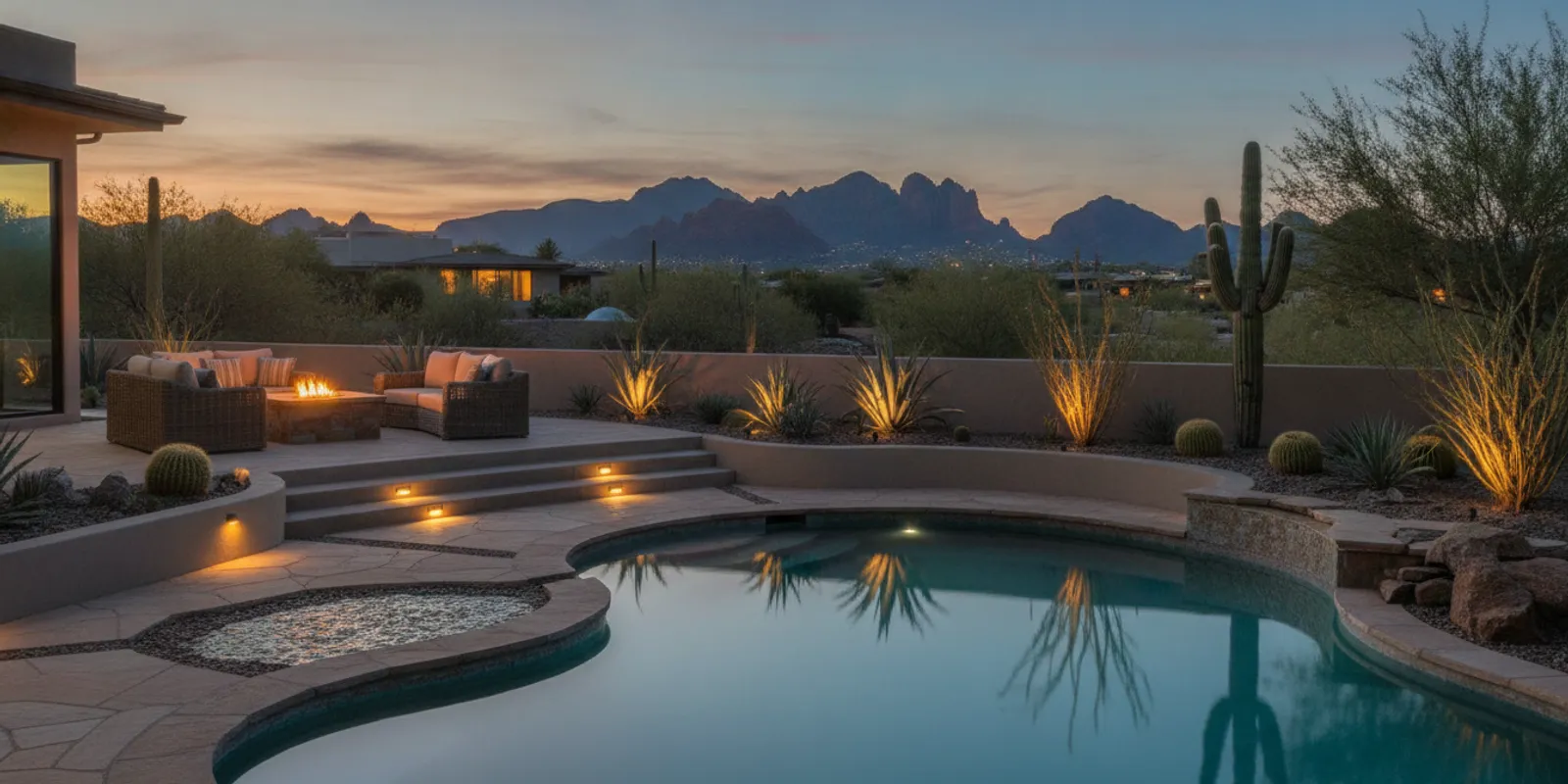
Well-planned pool landscape lighting can make a Fountain Hills backyard easier to use after sunset while giving the pool, paths, and desert planting a calm, connected look. If you are comparing pool builders Fountain Hills AZ homeowners may consider, start by deciding what needs light and how each area will be used—not by choosing fixtures one at a time.
What should pool landscape lighting do in a Fountain Hills yard?
Outdoor lighting has several jobs. It can help people see steps and changes in level, make the pool edge easier to read, support evening dining, and draw attention to a few landscape features. A balanced plan handles practical needs first, then adds visual accents.
Fountain Hills properties vary in lot shape, slope, views, planting, and distance between the home and pool. A design that works in a compact, level yard may not suit a sloped lot or one with long paths and retaining walls. Think of the lighting as part of the complete hardscape and landscape plan, not a final layer added after everything else is built.
- Safe movement: Identify routes from the home to the pool, seating, gates, and cooking areas.
- Clear pool edges: Plan how people will recognize the waterline and surrounding walking surface at night.
- Useful task light: Provide appropriate light where people prepare food, serve dinner, or handle equipment.
- Visual depth: Use restrained accents to reveal planting, walls, or a water feature without making every surface equally bright.
Lighting is not a substitute for required barriers, alarms, supervision, or other pool-safety measures. Treat it as one part of a broader safety-conscious plan.
How do you divide the yard into lighting zones?
Mark the main activity areas on a simple site sketch. Include doors, gates, steps, elevation changes, the pool perimeter, seating, planting beds, and any planned kitchen or pergola. Then decide what each zone needs. This makes it easier to compare a coherent plan with a list of unrelated fixture suggestions.
Pool and water
Pool lighting should support visibility in and around the water and suit the pool’s intended use. Discuss fixture placement and compatibility with the pool design and electrical plan with qualified professionals. More underwater brightness is not automatically better; reflections, glare, and the view from the house matter too.
Paths, steps, and transitions
Use light where people need to see a route or a change in level. Consider the walk from the patio to the pool, the route to a gate, and transitions between paving, steps, and planting. Aim fixtures away from eye level where possible. A clear layout is preferable to placing a light at every possible point.
Planting and architectural accents
Selective accent lighting can show the shape of a tree, a textured wall, or a bed of desert-appropriate plants. Choose a small number of focal points and check the effect from common viewing locations, including the home and pool deck. Lighting every plant can flatten the scene and compete with the pool.
Dining and gathering spaces
Dining areas need comfortable, useful light that does not shine into nearby seating or across the water. If an outdoor kitchen or covered gathering space is part of the project, include its lighting in the overall plan. Modern Pools offers outdoor kitchen services; confirm the specific design and scope for your property.
Which lighting approaches should you compare?
There is no single fixture layout that suits every Fountain Hills pool. Compare the role of each approach and the questions it raises. Exact products, installation requirements, and costs depend on the design and site; this article does not state a lighting-only price.
| Approach | Best suited to | Planning questions |
|---|---|---|
| Pool lighting | Water visibility and evening pool use | How will placement affect glare and views from the home? |
| Path and step lighting | Routes, steps, and changes in elevation | Which transitions need to be visible, and can fixtures be shielded? |
| Landscape accents | A few trees, walls, or planting features | Which features deserve emphasis without over-lighting the yard? |
| Task lighting | Outdoor cooking and dining activities | Where is functional light needed, and where should spill be limited? |
| Controls and zones | Different uses and times of evening | Can pool, path, and entertaining lights operate separately? |
Ask for proposed zones and fixture locations to be shown on the plan. This clarifies what is included, what is optional, and how lighting relates to pool and landscape scope.
How should Arizona conditions shape the plan?
Fountain Hills brings strong sun, heat, dust, and seasonal weather to outdoor spaces. Select outdoor-rated equipment suited to its location and exposure, and follow manufacturer instructions. A qualified design and installation team can identify how fixtures, wiring routes, drainage, and access should work together on the specific property.
Plant growth can change the effect. A fixture aimed at a young tree may be blocked as the canopy develops, while a shrub may eventually cover a low light. Consider mature plant size and leave access for maintenance. When hardscape, planting, and lighting are designed together, routes can be coordinated and fixtures kept clear of later paving or landscape work.
For a broader look at how outdoor spaces can fit desert conditions, review these Arizona backyard ideas. Lighting decisions should still reflect the actual orientation, slope, views, and activities on your lot.
What should you ask a pool and landscape contractor?
Compare proposals by scope and clarity rather than fixture count alone. Ask what is included and who coordinates pool, landscape, and electrical work. Verify applicable credentials and project details independently. The Better Business Bureau directory lists pool repair businesses near Fountain Hills; it can be one starting point for local research, not a substitute for checking qualifications and references: BBB pool repair directory for Fountain Hills.
- Can you show the lighting zones and fixture locations on the design?
- Which routes, steps, pool edges, and gathering areas are addressed?
- What equipment and installation work are included?
- How will glare from the house, seating, and water be considered?
- Which tasks require a licensed or otherwise qualified trade professional?
- How will wiring and fixtures coordinate with paving, planting, pool construction, or remodeling?
- What is the plan for controls, maintenance access, and replacing components?
For a new build, discuss lighting during design and construction planning. For an existing pool, decide whether the work is standalone or part of a wider renovation. Modern Pools offers new pool and spa builds and pool remodeling; confirm which service scope fits your needs.
How can you shape the plan before fixtures are selected?
Start with a walk-through at dusk, when existing shadows and glare are easy to notice. Follow the route from the back door to the pool, then walk to the gate, seating, dining area, and equipment access. Write down where the ground changes level and where people naturally pause. A short set of observations is more useful than a long wish list of fixture styles.
Next, make a simple zone sketch. Mark the pool, deck, steps, path edges, planting, walls, and gathering spaces. Use a different mark for each purpose: circulation, task lighting, pool visibility, and accents. This helps avoid a common planning problem: trying to make one type of fixture solve every need. A path light can help define a route, for example, but it is not a replacement for functional light at a cooking surface.
Then rank the zones. Label each one essential, useful, or optional. If the first design exceeds the desired scope, this ranking gives the team a practical way to discuss revisions. Preserve critical movement and task needs first; review accent features one by one. This is more transparent than removing fixtures at random or judging a proposal only by the number of lights.
Finally, review the proposed arrangement from more than one viewpoint. Check it from the kitchen or living room, from the pool deck, and from the main path. A fixture that looks subtle from one angle may shine directly toward another seat or reflect strongly on the water. Ask for adjustments before installation rather than assuming the final effect will match a daytime drawing.
How do design and construction decisions affect lighting?
Lighting is easier to coordinate when the team considers it alongside the pool layout, paving, planting, drainage, and outdoor-living features. The location of a step, wall, or seating area changes where light is useful. In turn, fixture locations and wiring routes can affect where paving is cut or where planting is placed. A shared plan reduces the chance that one trade’s work blocks or disrupts another’s.
For a new pool, bring lighting preferences into early design conversations. Consider how the pool will be viewed from inside the home and where people will enter or leave the water. If you are also planning a spa, water feature, or kitchen, list those uses before the plan is finalized. Modern Pools describes its work as custom pool construction and outdoor living solutions; the proposed scope should state how the parts of your project will be coordinated.
For an existing pool, begin with the conditions that are already there. Note the position of the pool equipment, existing electrical components, deck edges, drainage, and any areas that are difficult to access. Do not assume existing infrastructure can be reused or that a new fixture can be installed without affecting other work. Have qualified professionals review the site and explain what must change.
When comparing a pool project and lighting as a combined investment, keep unlike prices separate. Modern Pools publishes a Basic Pool Package at $37,999 plus permits and taxes and an Oasis Pool & Landscape Package at $51,999 plus permits and taxes. These are package prices, not prices for lighting alone; confirm current inclusions and whether a desired feature is in the package or separately scoped. Serenity and Resort packages are custom-priced.
How can you compare proposals fairly?
Two proposals may describe the same goal with different equipment, assumptions, or divisions of responsibility. Ask each provider to document the scope in a way you can compare line by line. A useful proposal identifies the zones, fixture locations, equipment, installation work, controls, and any work handled by another trade.
- Drawings: Are fixture locations and intended zones shown clearly?
- Equipment: Does the proposal identify what is being supplied and where it will be used?
- Electrical coordination: Is responsibility for wiring, connections, and required reviews stated?
- Site work: Does the scope describe any access, paving, planting, or restoration work?
- Controls: Can the homeowner understand which lights operate together?
- Exclusions: Are items not included named, rather than left for assumptions?
- Care: Are maintenance access and replacement considerations explained?
Ask questions before comparing totals. One estimate may include associated restoration while another may not; one may show separate controls while another groups all fixtures. Clarifying those differences is more useful than treating the lowest number or largest fixture count as automatically best. The goal is an informed comparison, with the proposed work and responsibilities made clear.
How can lighting fit a complete backyard transformation?
Before selecting fixtures, agree on the experience you want. Some households prioritize easy movement between the home and pool. Others want a quiet view from indoors, a comfortable dining area, or a few carefully lit landscape features. Listing those priorities helps keep the design focused.
Bring a site plan or photos, note where people walk and gather, and flag areas that feel too dark or too bright now. If planning more than lighting, coordinate the sequence: pool layout, hardscape, planting, outdoor kitchen or shade structures, and electrical planning may affect one another. Modern Pools describes an owner-involved approach and 36+ years of combined experience. Ask how project oversight and coordination would apply to your specific scope.
For related planning, explore the company’s pool and outdoor living services, project gallery, pool and remodeling FAQs, and pool design ideas. These resources can help you prepare questions about the overall project without replacing a site-specific review.
Frequently asked questions about pool landscape lighting in Fountain Hills
Should pool, path, and landscape lights use separate controls?
Separate zones can let you use only the lighting needed for a particular activity or time of evening. Ask the designer to explain the proposed controls and which areas will operate together.
Can lighting be added to an existing pool?
It may be possible, but the approach depends on the existing pool, electrical setup, deck, and project scope. Have qualified professionals inspect the site and explain options before choosing fixtures or assuming existing infrastructure can be reused.
Is more light always safer around a pool?
No. The goal is useful visibility without avoidable glare or harsh contrast. Lighting supports a broader safety plan but does not replace supervision, barriers, or other required protections.
How can I compare lighting proposals?
Compare the documented zones, locations, equipment, installation scope, controls, coordination responsibilities, and exclusions. Ask each provider to clarify any item that is not stated so you can make an informed comparison.
A clear plan connects pool, pathways, planting, and gathering areas into a backyard that feels considered after sunset as well as during the day.