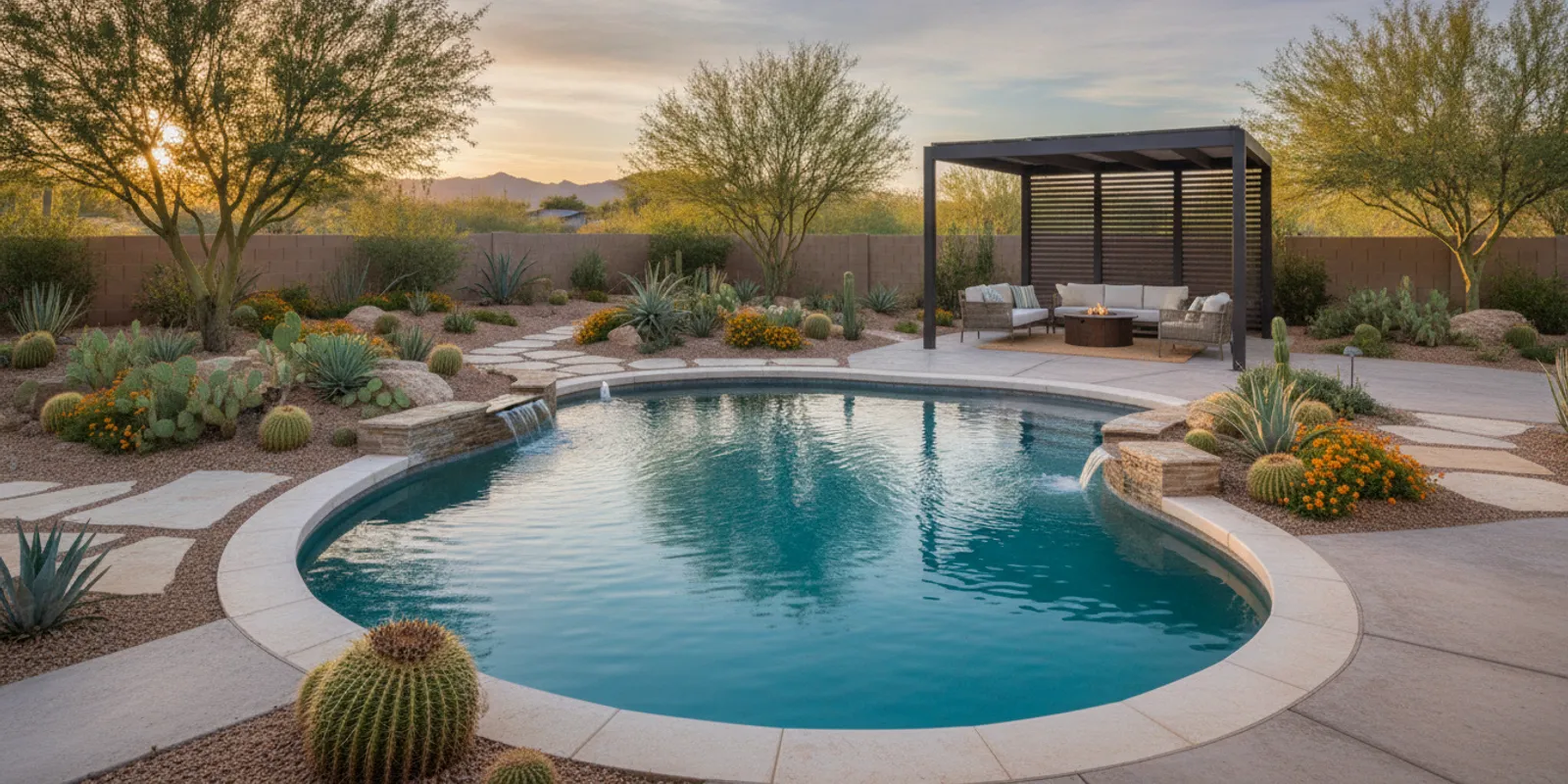
Desert landscaping with a pool in Phoenix works best when the pool, planting beds, shade and drainage are planned as one outdoor space. The right layout can frame the water, make outdoor areas more comfortable and keep plants from competing with pool access. Start with how your household will use the yard, then map the sun, slopes, circulation routes and maintenance needs before choosing plants or finishes.
What should you plan before choosing plants?
Begin with a simple site plan, even if it is only a measured sketch. Mark the pool and its equipment, doors, windows, existing trees, walls, gates and changes in elevation. Add the places where people will sit, walk, eat, play or enter the water. These uses determine where planting can fit without crowding the daily routine.
Then observe the yard at different times of day. In Phoenix, a spot that feels comfortable in the morning may receive intense afternoon sun. Note where the house, walls and existing structures cast shade, and which areas stay exposed. Include views from inside the home as well as from the patio: a carefully positioned planting bed can soften a wall or create a focal point seen through a window.
- Keep clear routes between the house, pool entry, seating and gate.
- Identify pool equipment and service access that must remain reachable.
- Mark existing drainage paths rather than assuming new beds can redirect them.
- List the views you want to preserve, soften or screen.
- Decide who will maintain the plants and how much routine care is realistic.
If the pool is still at the planning stage, coordinate landscape choices with the pool layout instead of treating planting as a last step. A new pool and spa plan can account for circulation, seating and the relationship between water and outdoor living areas. Homeowners comparing design directions may also find the Scottsdale pool design guide useful for considering lot and lifestyle needs.
How can you divide the yard into planting zones?
Think in zones rather than filling every open strip with plants. A useful plan separates the immediate pool edge from the broader garden, and gives each area a clear purpose. This makes the yard easier to navigate and gives the landscape a deliberate visual rhythm.
- Pool-edge zone: Keep this area open enough for safe movement, cleaning and access. Choose low-profile, tidy plants only where the site and pool design allow them.
- Patio and seating zone: Use shade and planting to make outdoor seating feel connected to the pool without blocking circulation.
- Perimeter zone: Taller, well-placed plants or a layered bed can soften boundary walls and help establish privacy.
- Transition zone: Use a limited set of plants, textures or colors to connect the pool deck to the rest of the yard.
Leave room for mature plant size, not just the size of nursery containers. A small plant can eventually cover a path, press against a wall or spill debris into the water. Ask a knowledgeable local nursery or landscape professional about mature dimensions, roots, thorns, fruit, leaf drop and seasonal behavior before settling a plant into a tight location.
Which low-water plants belong near a Phoenix pool?
Low-water landscaping is not the same as planting nothing but gravel or choosing a plant solely because it is described as drought-tolerant. The goal is to match plants to the exposure, soil and irrigation available in each zone, then group plants with similar needs. This can make care more manageable and help avoid applying the same amount of water to plants that need very different conditions.
Look first at desert-adapted options suited to the site’s sun and space. Regional examples can include desert marigold, brittlebush, fairy duster, Texas sage or desert spoon, but suitability depends on the exact location and the plant’s mature form. Check whether a chosen variety is thorny, attracts pollinators, drops leaves or produces fruit before putting it beside a pool entry, dining area or main walkway. A plant that looks appealing in a display may be less practical in a high-traffic spot. Also consider what happens after seasonal growth or pruning. Keep plants that may attract pollinators away from areas where people regularly enter the pool or eat, and avoid thorny forms beside narrow walkways. If a selected plant will shed flowers, seed pods or foliage, consider placing it where the debris is easier to manage and less likely to collect in the water. These are placement questions, not reasons to rule out an entire plant category; the same species may work well in one part of a yard and poorly in another.
Consider repeating a small palette instead of mixing many unrelated species. Repetition creates visual order, while a few contrasting shapes or seasonal accents provide interest. Use plants with a lower, more open form beside paths and reserve taller or denser growth for the perimeter, where it can help screen a view without crowding the pool.
For additional context, the Arizona Department of Water Resources is a government resource for statewide water information. For a particular yard, confirm plant selection and irrigation decisions with a local landscape professional who can evaluate site conditions.
How should irrigation and maintenance shape the planting plan?
Plan irrigation with the plant zones, rather than treating it as an afterthought. Different parts of the yard may have different sun exposure, soil conditions and water needs. Grouping plants with similar requirements makes it easier to discuss an irrigation layout and avoid treating a sunny perimeter bed like a shaded seating area. The specific system and schedule should be based on the property and the advice of a qualified local professional.
Keep irrigation components in mind as you place paths, seating and planting. Valves and controls need access, and watering should not create persistent puddles or make walkways slick. Inspect the direction and reach of irrigation so that water is going where the plants need it, not regularly splashing seating or running across the pool deck. If a proposed planting bed changes the existing grade, ask how that change affects water movement before installation.
Set a realistic maintenance standard at the start. Some homeowners enjoy pruning and seasonal planting, while others want a simpler arrangement with fewer upkeep tasks. In either case, avoid choosing plants based only on a photo or a label. Ask what routine care the specific plant needs after establishment, how often it may need pruning, and whether it is likely to drop material near the water. These answers help match the design to the time and attention you want to give it.
A simple maintenance walk-through can be part of the handoff: identify irrigation controls, show how to reach valves and equipment, and note which plants need seasonal attention. This is especially useful when the pool, patio and planting are completed in separate stages. A clear plan helps the landscape remain intentional as new work is added, rather than creating a patchwork of unrelated beds and watering routines.
Where should shade go without closing in the pool?
Shade affects how comfortable the yard feels and how much of the pool area you can use during the day. Plan shade around where people will sit, eat or watch swimmers, rather than trying to cover every part of the pool. The best location depends on sun angles, home orientation, lot constraints and the desired balance between open sky and shelter.
Use the site sketch and observations from different times of day to locate the hottest seating areas. A shade structure can provide a defined outdoor room; planting can soften its edges or screen a neighboring view. Trees may offer another layer of shade, but their mature size, root behavior and seasonal debris need careful review before they are placed near the pool, hardscape or underground services.
Consider how shade elements fit with the rest of the backyard, not as isolated additions. A pergola-versus-ramada comparison can help frame questions about the type of covered area you want. If you are exploring a broader outdoor living plan, review the available pool and outdoor living services and think about how seating, cooking and pool access should connect.
How should drainage and hardscape transitions work?
Water should move away from places where it could collect, undermine surfaces or make a regular route uncomfortable. Pool decks, planting beds and adjacent hardscape all affect how water travels, so their elevations and edges should be considered together. Do not assume that adding a raised planter or decorative border will improve drainage; an incorrectly placed edge can interrupt an existing flow path.
Before work begins, identify where roof runoff, irrigation and surface water currently go. Discuss proposed grading, drains and discharge locations with the appropriate project professional. Keep the area around pool equipment and access points clear, and avoid directing runoff toward the house or neighboring property. Local permitting or site conditions may affect what is allowed, so verify requirements for the specific project.
Hardscape transitions also shape how the yard feels underfoot and how naturally people move between uses. A consistent edge, a change in surface texture or a planting strip can signal where the pool deck ends and a garden begins. Keep transitions simple where people walk barefoot or carry food, and avoid placing loose or irregular elements in key routes. Think about the view from the house and the approach to the water as well: a narrow planting strip, a low border or a change in surface can mark the transition without creating a visual barrier. Ask how each proposed edge will be cleaned and how water will pass it, especially where the deck meets a planting bed. The hardscape and landscape service page provides a starting point for considering how landscape elements can complement a pool project.
How can planting create privacy and visual balance?
Privacy planting works best when it answers a specific view problem. Identify the sightline from a nearby window, patio or boundary, then use plants at the height and density appropriate for that view. A layered arrangement can soften a wall without making the whole yard feel enclosed. Keep gates, paths, lighting and equipment visible and accessible.
Balance is about distributing visual weight, not making every side of the pool identical. If a large feature or structure dominates one end, a planted bed or seating area on the other side may help the yard feel settled. Repeating a few forms around the space can tie the design together. Leaving some open areas is equally important: negative space keeps the pool in view and helps the landscape feel calm rather than crowded.
Use a restrained palette of foliage shapes and colors, then decide where a stronger accent belongs. For example, a focal plant may work at the end of a view or near a seating area, while smaller repeats guide the eye along a border. Check mature size, maintenance and seasonal change before committing. If the landscape is part of a larger renovation, a pool remodel plan can help coordinate updated pool finishes and surrounding outdoor areas.
How do the main landscape approaches compare?
There is no single planting formula for every Phoenix yard. Compare approaches by the work they do, the space they need and the upkeep you are prepared to handle.
| Approach | Best fit | Planning points | Ongoing considerations |
|---|---|---|---|
| Open, low planting near pool | High-traffic edges and clear views | Keep paths, entry and service access open; choose plants for the exact exposure | Monitor irrigation and remove any growth that encroaches on routes |
| Layered perimeter beds | Softening walls or addressing selected sightlines | Allow for mature width and height; preserve access and drainage paths | Pruning and seasonal cleanup vary by plant choice |
| Shade-focused seating zone | Outdoor dining, lounging or a comfortable place to watch swimmers | Study sun, structure location, circulation and pool views | Maintain the shade element and manage nearby plant growth |
| Mostly hardscape with accent planting | Homeowners who prefer a simpler planting plan | Plan surface transitions, runoff and a few well-placed focal areas | Keep the selected plants healthy and inspect hardscape edges |
What should you decide before the design is finalized?
Before plans are set, review the landscape and pool together. Confirm that the drawing reflects how you expect to use the yard and that it makes maintenance and access visible rather than leaving them as assumptions.
- Can people reach the pool, seating and gates without squeezing past plants or furniture?
- Are pool equipment, irrigation controls and service areas accessible?
- Does the plan account for mature plant size, debris, roots and seasonal changes?
- Where does water flow today, and how will proposed surfaces and beds affect it?
- Which areas need shade or privacy, and which views should remain open?
- Are plant groupings and irrigation needs clear enough to discuss with the landscape professional?
- Do the pool, hardscape, planting and any outdoor kitchen or shade structure feel like one connected space?
Homeowners in the East Valley can look at project photos in the Modern Pools gallery to gather ideas for how a pool relates to its surrounding yard. As you compare possibilities, focus on the overall layout and how each space might be used rather than trying to copy a single feature without considering your lot.
Contact Modern Pools to discuss your backyard plan
Frequently asked questions about desert landscaping with a pool in Phoenix
Should I put plants right beside the pool?
Not necessarily. Keep the immediate edge open where people walk, enter the water or access equipment. If you add planting close to the pool, choose it for the exact location and consider mature size, debris, roots and maintenance before installation.
Are drought-tolerant plants maintenance-free?
No. Low-water plants still need suitable placement and establishment care, and their ongoing needs differ. Group plants with similar water needs, confirm local suitability and plan for pruning or seasonal cleanup where needed.
Can trees provide shade around a pool?
They may be part of a shade plan, but a tree’s mature size, roots, location and debris should be reviewed first. Place trees based on the site and desired shade, not only on how they look when newly planted.
When should I plan the landscaping?
Plan it while the pool and outdoor spaces are being designed, even if planting will happen later. Early coordination helps preserve access, account for drainage and place shade and privacy elements where they support the layout.
Get in touch to plan your pool and outdoor living space
A well-planned Phoenix pool landscape balances open circulation, carefully placed shade, suitable planting and thoughtful transitions, so the entire backyard works as one comfortable outdoor space.