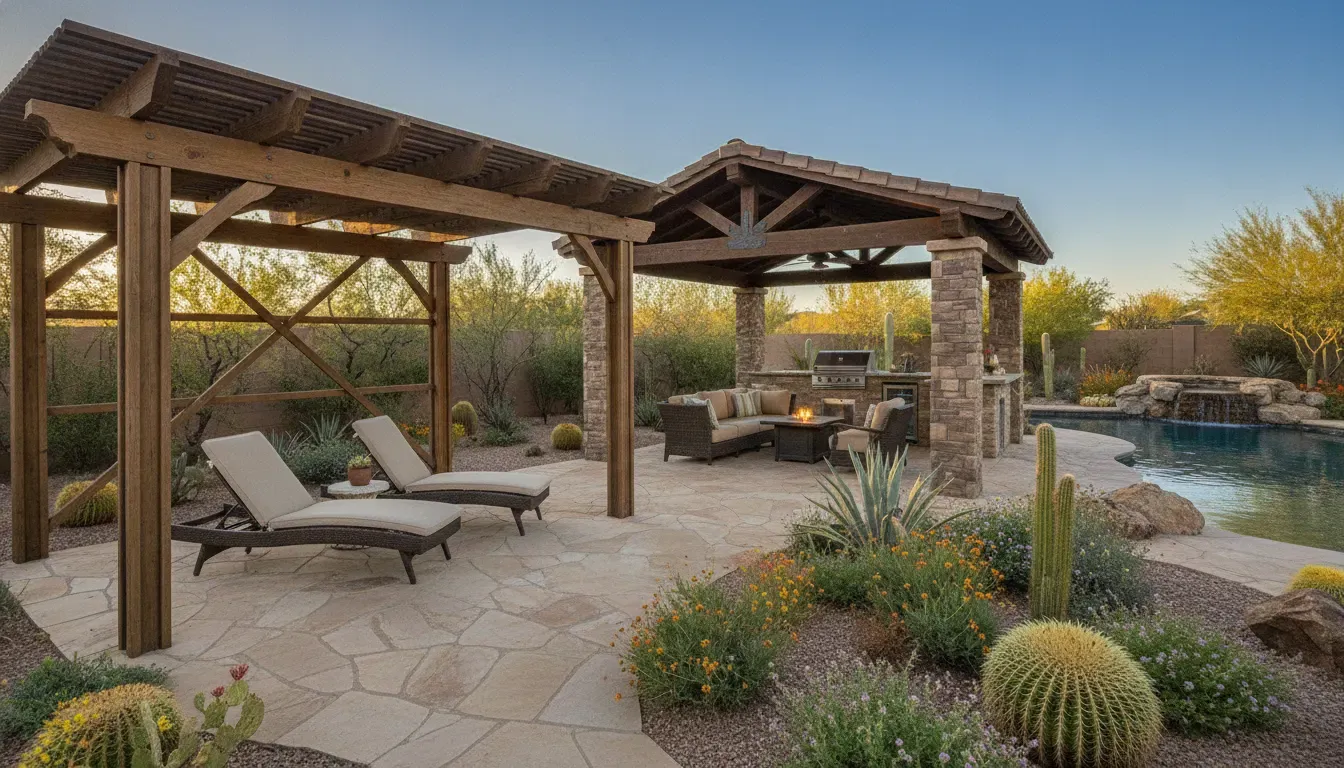
Trying to choose between a pergola vs ramada in Arizona? The best shade structure depends on how much sun protection you need, when you use the backyard, and whether the structure will cover an outdoor kitchen, pool seating, or another everyday living area. A pergola filters light through an open or slatted roof. A ramada uses a solid roof for more complete shade and weather protection. This comparison also fits into a larger outdoor living and backyard transformation plan.
What does pergola vs ramada in Arizona really mean?
In Arizona, a pergola usually provides filtered shade, while a ramada provides full overhead coverage. A pergola has posts and beams, louvers, or slats that allow some sky and sunlight through. A ramada is typically a freestanding or attached shade structure with a solid roof. The distinction matters because Phoenix homeowners are not only choosing a look. They are choosing how comfortable and usable the space will be during intense afternoon sun.
The terms can vary by builder and municipality, so confirm the exact design, roof assembly, and permit path for your property. For planning purposes, this comparison is a helpful starting point:
| Consideration | Pergola | Ramada |
|---|---|---|
| Roof | Open beams, slats, or adjustable louvers | Solid roof, often insulated or finished for outdoor use |
| Shade | Filtered or partial shade | More complete shade |
| Best use | Poolside lounging, pathways, morning coffee, and visual definition | Outdoor kitchens, dining, entertaining, and protected seating |
| Feel | Open, airy, and connected to the sky | More sheltered, room-like, and weather protected |
| Planning | Roof style, orientation, posts, drainage, and attachment details | Roof structure, drainage, utilities, engineering, and greater visual mass |
Neither structure is automatically better. The right choice is the one that matches your backyard routine, the available footprint, the home's architecture, and the level of comfort you want in the hottest part of the day.
Which pergola design options work for Arizona backyards?
Arizona pergolas work best when their orientation, roof openness, and materials are selected for the desert sun rather than chosen only for appearance. An experienced designer can use the pergola to shape shade at specific times of day while preserving airflow and an open view. That is especially useful when the structure is part of a larger pool deck or outdoor-living plan.
Open-beam pergolas
Traditional beams create a strong architectural frame and cast changing shadows across the patio. This style suits homeowners who want a lighter structure over a walkway, a small seating area, or a transition between the house and pool. The amount of shade depends on beam spacing, roof orientation, and the sun's position, so a beautiful drawing does not automatically produce comfortable afternoon coverage.
Adjustable-louver pergolas
Adjustable louvers can open for airflow and close when the sun is intense. They may also be coordinated with lighting or other outdoor-living features, depending on the selected system. Ask about wind, drainage, maintenance, motor protection, and how the louvers respond to monsoon conditions before choosing this design.
Pergolas connected to a home or pool deck
An attached pergola can extend the home's living area or create a deliberate transition to the pool. A freestanding pergola can define a lounge, fire feature, or dining zone without making the entire yard feel enclosed. In either case, plan post placement around walking paths, pool safety, equipment access, and sightlines from the house.
For a broader look at how shade, kitchens, pools, hardscape, and landscaping can work together, see Modern Pools' outdoor living and backyard transformation guide.
When does a ramada make more sense in the Phoenix heat?
A ramada is usually the stronger choice when the goal is dependable shade during bright afternoon sun or a protected area for dining and cooking. A solid roof can make a space feel more like an outdoor room, particularly when it includes lighting, ceiling fans, an insulated roof assembly, or weather-conscious finishes. It also gives homeowners more flexibility about when they entertain.
Consider a ramada when:
- You want a reliable retreat from direct overhead sun near the pool.
- You plan to use an outdoor kitchen, bar, dining table, or lounge throughout the day.
- You want lighting, fans, or other utilities protected within a defined ceiling.
- You entertain in different seasons and want more shelter from dust, light rain, or wind.
- Your design benefits from a stronger architectural anchor or a room-like destination in the yard.
A ramada is not automatically cooler simply because it has a roof. Roof color, insulation, ventilation, orientation, ceiling height, surrounding hardscape, and the amount of reflected heat all affect comfort. A well-planned design addresses the complete microclimate instead of treating the roof as a standalone product.
How do wood, aluminum, and vinyl compare in Phoenix?
Material selection affects heat response, maintenance, longevity, appearance, and how naturally the shade structure fits the home. Compare the complete assembly, not just the visible posts or roof finish. A material that looks attractive in a sample may need different detailing once it is exposed to strong sun, dust, irrigation overspray, and monsoon weather.
| Material | Strengths | Questions to ask |
|---|---|---|
| Wood | Warm, natural character and broad design flexibility | What sealing, staining, inspection, and repair schedule will the structure need? |
| Aluminum | Low-maintenance options, consistent appearance, and many roof configurations | Does the system include insulation, drainage, appropriate coatings, and manufacturer-backed heat and wind guidance? |
| Vinyl or composite-style systems | Clean appearance and reduced routine painting or staining | How does the product handle UV exposure, expansion, color retention, repairs, and structural spans? |
Wood can complement a desert-modern or rustic backyard, but its finish is part of the long-term ownership plan. Aluminum may be a practical fit for homeowners who want a cleaner maintenance profile, but the specific roof assembly matters more than the label alone. Vinyl and composite-style products should be evaluated for structural performance and long-term color stability in the local climate.
For any material, confirm footings, fasteners, drainage, roof pitch, flashing, and the way the structure connects to existing hardscape. A shade structure should look intentional from every angle and should not create a drainage problem next to the pool or home.
Talk with Modern Pools about a shade structure that fits your backyard plan
What should you compare when estimating pergola vs ramada cost in Arizona?
The cost difference between a pergola and ramada depends on the scope of the complete project, not just the roof material. A smaller open pergola may involve fewer structural and utility requirements, while a ramada can add a solid roof, drainage, ceiling finishes, lighting, fans, kitchen protection, and more substantial footings. Custom design, access, and coordination with a pool or hardscape can change the scope further.
When comparing proposals, ask whether each one addresses:
- Design, layout, engineering, and any required structural calculations.
- Footings, posts, beams, roof assembly, flashing, and drainage.
- Electrical planning for lights, fans, appliances, and automation.
- Gas, plumbing, or venting requirements for an outdoor kitchen.
- Demolition, grading, hardscape repairs, and site access.
- Permit coordination, HOA submittals, inspections, and final documentation.
- Finish materials, coatings, warranties, maintenance expectations, and cleanup.
Be cautious when comparing a kit or basic structure with a fully integrated backyard transformation. The lower initial scope may not include footings, utility work, finish work, or the connections needed to make the structure function with the rest of the yard. A transparent estimate should show what is included and what remains an allowance or homeowner responsibility.
Use this sequence before choosing a structure:
- Mark the areas that need shade and note whether you use them most in the morning, afternoon, or evening.
- Decide whether filtered light is enough or whether cooking, dining, and pool seating need solid overhead coverage.
- Compare the roof, posts, drainage, utilities, finishes, permits, and cleanup as one complete scope.
- Review the design from the house, pool, and yard so the structure supports circulation and does not block important views.
This approach keeps the decision focused on daily comfort rather than a structure name alone. It also makes proposals easier to compare because each builder is responding to the same use, site, and finish requirements.
Do pergolas and ramadas need permits in Arizona?
Permit requirements depend on the city, structure size, attachment, utilities, setbacks, and the details of the proposed work. Phoenix's official work exempt from permit guide notes that certain one-story detached accessory structures under 200 square feet, including similar uses such as ramadas and gazebos, may be exempt from a building permit. The same guidance says exempt work still must comply with applicable codes and that utility installations may require permits.
Phoenix also publishes a residential patio covers guideline with design and submittal information. An attached patio cover, a larger ramada, an electrical connection, or a structure near a property line may follow a different path from a small detached shade structure.
Before construction, confirm the current requirements with the city or town that has jurisdiction over the property. Scottsdale, Chandler, Mesa, and Tempe may apply different rules. Also review HOA design standards, setbacks, drainage, visibility, and any pool-barrier implications. Permit planning is part of good design, not a final detail to solve after materials arrive.
How do shade structures pair with pools and outdoor kitchens?
The best shade structure is planned as part of the outdoor-living flow, with shade, circulation, cooking, swimming, and seating working together. A pergola can frame a pool view or define a light-filled lounge. A ramada can protect the dining area or outdoor kitchen, creating a dependable destination when the sun is high. Some backyards benefit from both: a solid-roof ramada for the primary retreat and a smaller pergola for visual transition or filtered shade.
Plan the relationship between the structure and the rest of the yard by asking:
- Where will people walk from the house to the pool and kitchen?
- Which seating area needs shade in the morning, afternoon, and evening?
- Will roof posts obstruct pool views, equipment access, or service paths?
- Where will rainwater drain during a monsoon?
- Will lighting, fans, cooking utilities, and pool automation need coordinated electrical planning?
- Will hardscape, planting, and the structure feel like one backyard rather than separate installations?
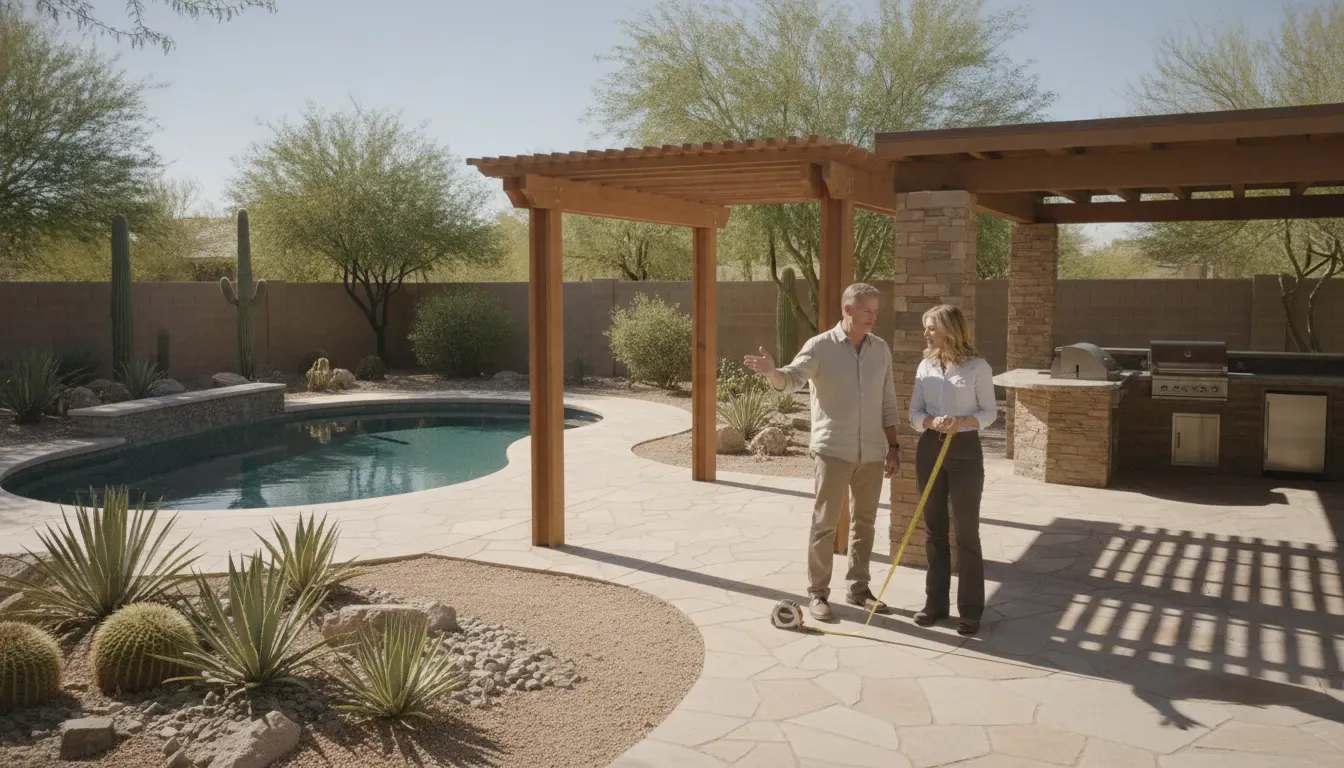
Modern Pools builds outdoor kitchens and pergolas in Phoenix as part of broader outdoor-living solutions. If a pool is part of the same project, reviewing shade placement during the early design stage can prevent awkward post locations, heat-exposed seating, and expensive changes later. Homeowners can also review custom pool and spa build options when planning a complete backyard transformation.
Book Estimate for a coordinated Arizona backyard design
Frequently asked questions
Is a ramada better than a pergola in Arizona?
A ramada is usually better for complete overhead shade and daytime comfort. A pergola may be the better fit when you want filtered light, an open view, stronger airflow, or a lighter structure over a smaller seating area. The best option depends on orientation, use, roof design, and the rest of the backyard plan.
What is the main difference between a pergola and a ramada?
A pergola generally has an open or slatted roof that filters sunlight. A ramada generally has a solid roof that provides more complete shade and weather protection. Local terminology can vary, so compare the actual roof assembly and included features in each proposal.
Can a ramada cover an outdoor kitchen?
Yes. A ramada can provide a defined roof over an outdoor kitchen, dining area, or lounge. The design still needs appropriate clearances, ventilation, utility planning, drainage, and materials selected for the appliances and local conditions.
Does a pergola provide enough shade for a Phoenix pool deck?
It can provide useful filtered shade, especially when designed around the sun's path, but an open-beam pergola does not block sunlight as completely as a solid roof. If the goal is a dependable afternoon retreat, compare a ramada or an adjustable-louver system as well.
How should Arizona homeowners start planning a shade structure?
Start with how you use the backyard, then map sun exposure, circulation, pool and kitchen locations, utilities, drainage, setbacks, and HOA rules. A design consultation can turn those requirements into a structure that is comfortable, code-conscious, and integrated with the entire outdoor living area.
Whether you choose the airy character of a pergola, the protection of a ramada, or a combination of both, Modern Pools can help plan the shade structure as part of a complete Phoenix East Valley backyard transformation. Book Estimate with Modern Pools.