

In the Phoenix East Valley, choosing a pool sanitizer is not just a matter of personal preference. Extreme heat, evaporation, dust, and hard water all affect how your pool feels and how much attention it needs. The right system should fit your routine, your comfort priorities, and your long-term equipment plan.
Book your free estimate with Modern Pools
For most homeowners comparing saltwater vs chlorine pool arizona options, saltwater offers more consistent chlorine production and a softer-feeling swim, while traditional chlorine usually has a lower initial investment and straightforward control. Neither system is chlorine-free, and both still require proper testing and pH balance.
That choice becomes easier when you understand what each system actually does, how Arizona conditions change maintenance, and where upfront and ongoing costs differ. If you are still planning the broader project, our Complete Guide to Custom Pool Construction in Arizona provides helpful context. First, let us clarify the practical difference between the two options.
Saltwater vs. Chlorine: The Quick Answer for Arizona Homeowners
A saltwater pool uses a salt chlorine generator to turn dissolved salt into chlorine on site, while a traditional chlorine pool relies on manually added chlorine products. Both systems still sanitize with chlorine, and both need regular testing and pH control to stay effective and comfortable.
For Phoenix East Valley homeowners, the practical choice usually comes down to convenience and comfort versus lower initial equipment cost and hands-on control. Here is the quick comparison:
What each system is: Saltwater is a chlorine-generating system, not a chlorine substitute. The generator uses electrolysis to produce chlorine from salt. Traditional chlorine uses measured doses of liquid, tablets, or another chlorine product.
Ongoing effort: Saltwater offers a steadier chlorine supply and reduces the need for frequent manual dosing, but it still needs regular water testing, salt-level checks, and periodic generator-cell cleaning. Traditional chlorine gives the owner direct control, though it requires more active management of chlorine and pH. The CDC recommends testing and maintaining both chlorine and pH, regardless of the system selected.
Water feel: Many homeowners choose saltwater for a softer, less harsh-feeling swim, especially when the system is correctly balanced. It is not accurate to promise that saltwater eliminates irritation, because water chemistry and individual sensitivity still matter.
Initial cost: A salt chlorine generator is generally an equipment upgrade, so saltwater typically costs more at installation. Traditional chlorine usually has the lower initial investment because it does not require the generator and cell.
Best fit: Saltwater often suits homeowners who value convenience and swimmer comfort. Traditional chlorine suits homeowners who prefer a familiar setup, lower upfront equipment cost, or precise manual control.
Arizona conditions add maintenance considerations to either choice. Heat and evaporation can concentrate chemicals and lower the water level, while dust storms can add debris that affects water balance. Hard water also makes equipment and water testing especially important, including periodic inspection of a salt cell for mineral buildup. Neither system is maintenance-free, but automation and efficient equipment make routine care easier. The right decision matches how you use the pool and how much hands-on care you want to manage in the desert climate.
How Saltwater Systems Work in Desert Heat
A saltwater system is still a chlorine pool. Its salt chlorine generator uses electrolysis to convert dissolved salt into chlorine inside the cell, so the sanitizer is produced on site rather than dosed by hand. In Arizona heat, steady production helps, but it does not remove the need for testing and water balance.
Keep the water level balanced: Evaporation changes concentration, so topping off the pool and retesting after significant water loss matters.
Monitor chlorine and pH: Consistent generation helps, but testing remains essential. The CDC recommends pool pH between 7.0 and 7.8 and at least 1 ppm of chlorine. See CDC pool water guidance.
Plan for maintenance: Salt cells need periodic cleaning because calcium can build up, especially in hard-water conditions.
With automation and high-efficiency equipment, either sanitation approach can work well in an Arizona pool. The right choice depends on how you value consistent production, hands-on maintenance, and long-term system planning.
What Saltwater vs Chlorine Pool Arizona Really Costs
For Arizona homeowners, the price difference is about when you spend, not which system is universally cheaper. Saltwater costs more at installation because it includes a salt chlorine generator, while traditional chlorine usually starts lower but calls for more hands-on chemical management over time.
| Factor | Saltwater | Traditional chlorine |
|---|---|---|
| Upfront installation | Higher initial cost because the salt chlorine generator is an equipment upgrade. | Lower initial cost with manual chlorine-feeding equipment. |
| Ongoing chemicals | Often lower chemical spending because the generator produces chlorine on-site. | Typically higher chemical spending, with regular additions and weekly balancing. |
| Maintenance | Less frequent chemical dosing, though salt levels and water balance still need monitoring. | More active testing and balancing of chlorine and pH, often weekly. |
| Major replacement | The generator cell commonly needs replacement after about 5 to 7 years. | No salt cell replacement, though pumps and other equipment still require service. |
These are typical ranges, since your final cost depends on pool size, equipment options, and current vendor pricing in the Phoenix East Valley. Modern Pools keeps pricing transparent, with no hidden charges, so you can compare both systems and get exact numbers during a consultation. If you already have a pool, review the costs of upgrading to a saltwater system during a remodel before deciding. For a clear, itemized view of your project, explore what goes into a custom Arizona pool build.
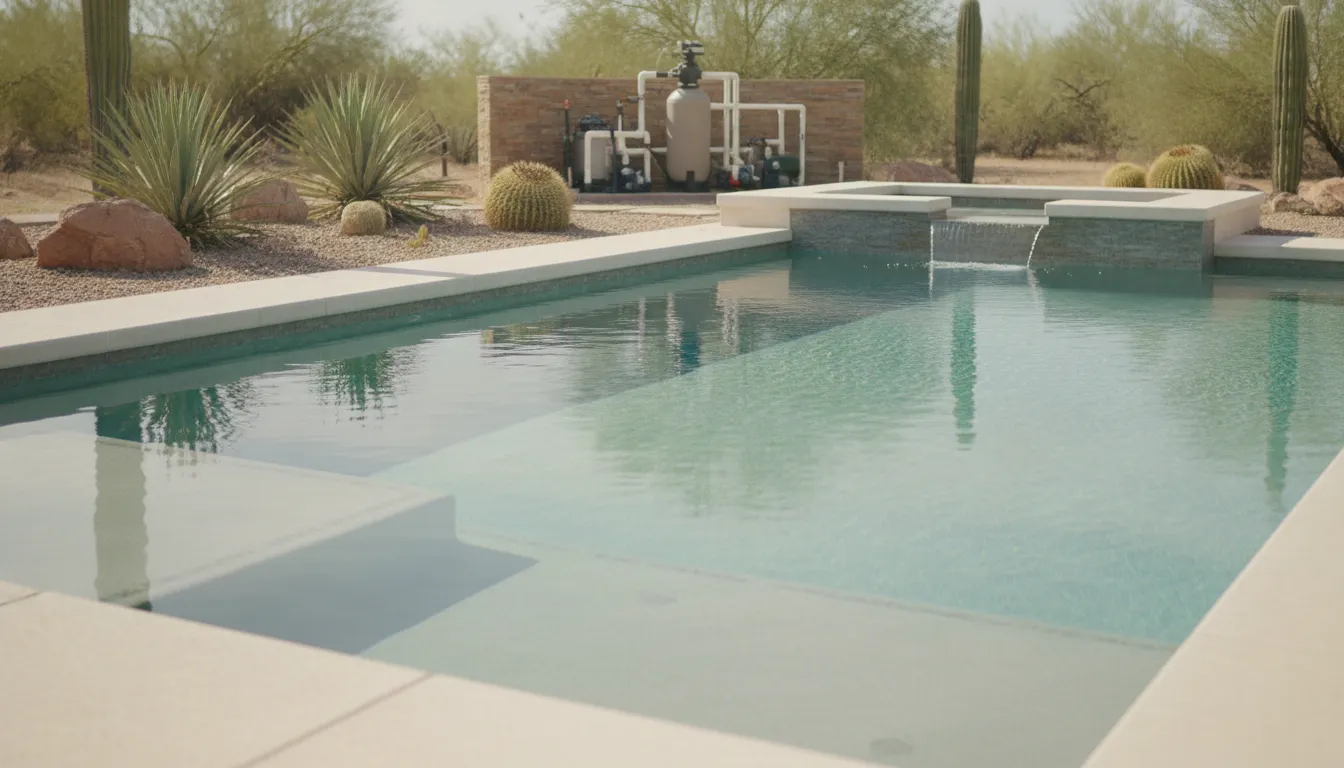
Whichever sanitizer you choose, seeing the full pool and equipment plan in context helps you compare saltwater and chlorine fairly. The system is part of a larger desert-adapted design.
Health and Skin Considerations in Arizona’s Dry Climate
Arizona heat and low humidity can leave skin feeling dry before you even swim. Some homeowners find a saltwater pool feels softer and gentler on skin, but that comfort is not a guarantee, and a saltwater system is not chlorine-free. Consistent chemistry matters more than the equipment label.
Saltwater: A salt chlorine generator produces chlorine more consistently, which may reduce noticeable irritation when the system is correctly adjusted.
Traditional chlorine: It can be just as safe and comfortable when chlorine and pH are tested and balanced consistently.
Either method: CDC guidance recommends a pool pH of 7.0 to 7.8 and at least 1 ppm of chlorine. These ranges help the sanitizer work effectively and help protect swimmers from germs: CDC pool water guidance.
Swimming itself is excellent aerobic exercise and an important life skill, though it should not be presented as a treatment for a medical condition. People with sensitive skin or conditions such as atopic dermatitis should discuss their routine with a healthcare professional, rinse after swimming, moisturize, and monitor how their skin responds. In the saltwater vs chlorine pool Arizona decision, consistent maintenance matters more for health and comfort than the label on the equipment.
Book an estimate to compare costs for your pool
Equipment Longevity in Arizona’s Hard Water
Arizona’s hard water can deposit calcium on pool components, especially as evaporation concentrates minerals. That makes water balance and routine equipment care essential for either system. Regular salt-cell cleaning and pH testing help protect both the generator and the plumbing.
Clean the salt cell periodically: A salt chlorine generator cell can collect calcium buildup and needs periodic cleaning to keep chlorine production working properly. Saltwater does not eliminate maintenance, even though it can reduce the need for frequent manual chlorine dosing.
Keep pH in range: The CDC recommends pool pH between 7.0 and 7.8. Low pH can make pipes more vulnerable to corrosion, while high pH reduces chlorine’s germ-killing effectiveness. Regular testing and adjustment protect both the plumbing and the sanitation system. See the CDC’s pool water guidance.
Prioritize circulation and control: High-efficiency variable-speed pumps support consistent circulation, helping distribute sanitizer through the pool while using energy more efficiently. Automation can monitor and manage either saltwater or traditional chlorine equipment, making it easier to respond to Arizona heat, evaporation, and changing water conditions.
Modern Pools includes high-efficiency equipment and automation in its packages, giving homeowners a stronger foundation for long-term performance. The right system still depends on the pool design, water conditions, and maintenance routine.
Which Saltwater vs Chlorine Pool Arizona System Modern Pools Recommends
There is no universal winner in the saltwater vs chlorine pool arizona decision. Modern Pools builds and maintains both systems well. The right fit depends on your comfort preferences, maintenance tolerance, and budget priorities, and our team helps you weigh those factors against your own project.
Our recommendation starts with your priorities, not a preset package. Saltwater may be a strong fit if you want steady chlorine production and fewer manual chemical additions. Traditional chlorine may make more sense if keeping upfront costs lower is important or you prefer to adjust sanitizer levels directly. Both systems still require proper testing, pH management, and routine care. Saltwater is not chlorine-free, since its generator produces chlorine from dissolved salt.
What Modern Pools brings to either system
System selection is only one part of reliable pool performance in the Phoenix East Valley. Modern Pools brings 36+ years of combined experience to custom pool and backyard projects, with owner-involved oversight from the initial design conversation through construction and ongoing maintenance. That hands-on accountability helps keep the equipment, water features, finish materials, and operating plan working together.
High-efficiency variable-speed pumps: These support dependable circulation while helping manage energy use.
Automation: This makes it easier to monitor and manage either sanitization method.
LED lighting: This adds practical visibility and a more finished nighttime experience.
3D design renderings: These help you understand the complete backyard transformation before construction begins.
These features are especially valuable in Arizona, where extreme heat, evaporation, dust, and hard water can place additional demands on pool equipment and water chemistry. Modern Pools designs pools specifically for Arizona’s climate instead of treating the backyard as if it were in a different region.
How the consultation works
During a Modern Pools consultation, we review how you expect to use the pool, how much maintenance you want to handle, your comfort preferences, equipment needs, and your project priorities. We then walk through saltwater and traditional chlorine options, including how each integrates with automation and the rest of the equipment set. You receive transparent, published pricing and a clear scope with no hidden charges. The decision is based on the complete project rather than an artificially low starting number.
For a broader look at design, construction, equipment, and planning, explore our Complete Guide to Custom Pool Construction in Arizona. The best system is the one that fits your priorities and is designed, installed, and maintained correctly.
Still weighing the tradeoffs? Book a free estimate
Frequently Asked Questions
Are saltwater pools healthier than chlorinated pools?
Neither system is automatically healthier. Both depend on properly maintained chlorine and pH levels to control germs. The CDC recommends pool pH between 7.0 and 7.8 and chlorine of at least 1 part per million. A saltwater system may feel gentler on some swimmers because it produces chlorine steadily, but water quality depends on testing, circulation, and correct adjustments. CDC pool water guidance supports regular monitoring for either system.
Is a saltwater pool cheaper than a chlorine pool?
Traditional chlorine usually has a lower initial equipment cost. A saltwater system costs more upfront because it includes a salt chlorine generator, while ongoing chemical handling may be more convenient. Saltwater cells also have a finite service life and eventually need replacement. Your Arizona pool design, usage, evaporation, and automation choices all affect the long-term cost, so compare the complete system rather than only the installation price.
What is the downside of a saltwater pool in Arizona?
The main tradeoffs are higher initial cost, periodic cell cleaning, and the need to monitor salt and water chemistry. Phoenix-area heat and evaporation can concentrate minerals and chemicals, while hard water can contribute to calcium buildup on the generator cell. Saltwater is not maintenance-free. Proper water-level management, pH testing, and equipment care are especially important in Scottsdale, Chandler, Mesa, and Tempe.
Are saltwater pools really chlorine-free?
No. A saltwater pool still uses chlorine as its primary sanitizer. Its generator uses electrolysis to convert dissolved salt into chlorine in the water, reducing the need for frequent manual dosing. The salt is the raw material, not the sanitizer. You still need to test chlorine and pH regularly, whether the pool feeds chlorine through a generator or through manual additions.
Ready to Choose the Right Pool System?
Saltwater and chlorine pools can both work well for Arizona homeowners, but the best fit depends on your comfort, maintenance preferences, equipment, and backyard plans. Modern Pools can help you compare those factors clearly and review options that fit your project.
Book your free estimate with Modern Pools
Call us at (480) 698-8412 to talk through which sanitization choice fits your Arizona backyard, your routine, and your budget.