What type of pool is best for Arizona? The answer depends on how you will use the water, what your property can accommodate, and how the pool should connect to the rest of your yard. Before choosing a shape or feature, compare Arizona pool options against your household’s priorities and the complete project scope. That gives you a more useful starting point than choosing a design from a photo alone.
What should the pool do for your household?
Begin with a typical week. Think about who will use the pool, how often, and what you want to be able to do in it. A pool designed for cooling off and relaxing may need a different arrangement from one intended for exercise or larger gatherings. Write down your top two or three uses before discussing dimensions or features.
- Everyday cooling: Consider convenient entry, a comfortable place to sit in the water, and a nearby area for shade and towels.
- Swimming for exercise: Ask how the proposed length, width, and depth profile affect a clear swimming path. Steps, benches, and play areas can change how much water remains available for uninterrupted movement.
- Family use: Discuss entry points, sightlines from the home, and how people will move between the pool and the patio. These are planning questions, not substitutes for supervision or required safety measures.
- Entertaining: Consider how many people may gather around the water and where dining, seating, and circulation can fit without crowding one another.
Make the list specific. “We want to entertain” is less useful than “We usually host six to eight people, want a shallow place to sit, and need a clear route to the dining table.” Specific routines help a designer distinguish essential features from attractive extras. If a spa is a priority, discuss whether it should connect to the pool and what controls and equipment the proposed scope includes.
How does the Arizona lot influence the best design?
Measure the usable yard before you fall in love with a pool outline. Mark the house, doors, existing walls, gates, mature trees, and hardscape you intend to keep. Note where you see sun and shade at different times, and identify the likely route from the house to the water. A rough sketch and a few clear photographs can make an initial conversation more productive.
Then think about the whole footprint, not only the water’s edge. The pool needs to work with deck space, access paths, drainage, equipment placement, and any planned outdoor rooms. A compact lot may call for a simple shape and careful circulation. A wider property might allow more separation between swimming, dining, and planting areas. Neither arrangement is automatically better; the right choice depends on the site and how you will use it.
Properties in Scottsdale, Chandler, Mesa, and Tempe vary, so do not assume a layout that works on one lot will fit another. Ask how site access, grading, utilities, setbacks, and local review could affect the proposed plan. Rules can depend on the property and jurisdiction. The Arizona pool enclosure statute is a relevant starting point for understanding state requirements, but confirm applicable barrier and permitting requirements with the authority for your address.
Modern Pools offers hardscape and landscape services, which can be part of a broader backyard plan. Even if you are not ready to specify every landscape detail, identify what should remain open, shaded, or planted. That gives the pool and surrounding surfaces a better chance of feeling connected rather than added in separate stages.
Which layout and pool features deserve the closest comparison?
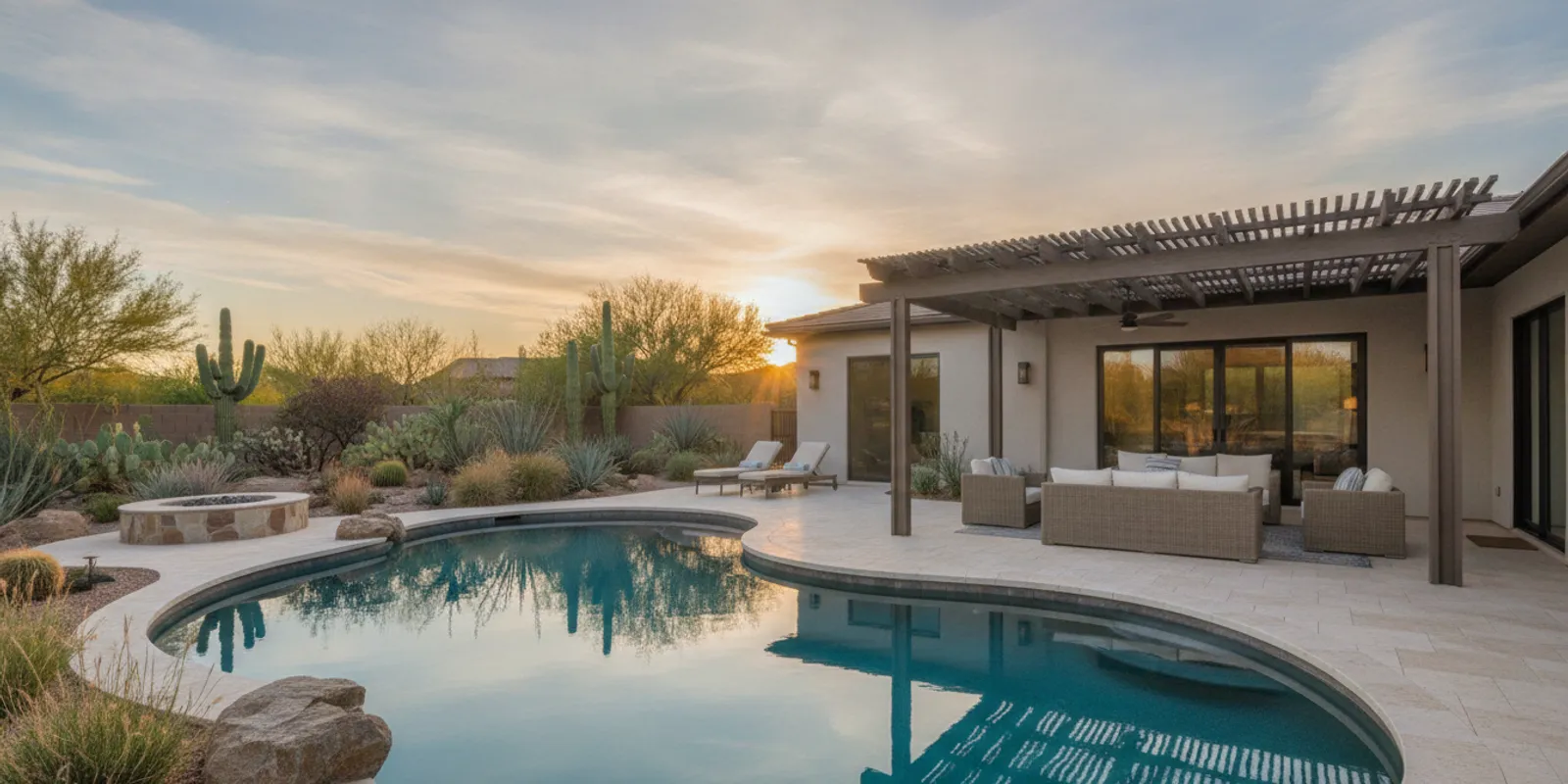
Shape should follow use and site conditions. A rectangular layout can make the swim area and circulation easy to understand. A curved or freeform plan may suit an informal landscape. An integrated spa, a tanning ledge, or a water feature can change the feel of the space, but each also affects design, construction scope, controls, and ongoing care. Compare specific proposals rather than assuming one shape or feature suits every Arizona home.
| Planning choice | May fit when | Questions to ask |
|---|---|---|
| Simple geometric pool | You want a clear swim area and defined edges for circulation. | How do steps and benches affect usable water? What deck width is included? |
| Curved or freeform pool | You want a softer transition between the water and an informal landscape. | Does the outline fit the usable yard and planned planting? How does it affect patio space? |
| Pool with an integrated spa | A separate warm-water feature is part of your routine. | Which equipment, controls, and access details are included in the scope? |
| Pool with custom features | You want a distinct visual element, such as an infinity edge or glass-tile work. | What design, engineering, equipment, maintenance, and cost details need separate definition? |
Use the table as a question list, not a ranking. For example, a family that values open swim space may choose a straightforward footprint over several built-in features. A household that mostly sits and talks in the water may give more weight to bench placement and an integrated spa. Ask how each option changes the proposal, then decide whether the added function matters enough to include.
If construction material is a central question, compare the actual methods and specifications available for your project instead of treating a material label as a complete answer. Modern Pools’ new pool and spa build information provides context for discussing custom pool construction. A focused comparison should account for the proposed structure, finish, shape, site, and builder’s written scope.
How should you choose a finish and equipment plan?
A finish changes the visual character and feel of the water. Look at samples in conditions similar to your yard and consider how the color may read in direct sun, shade, and at different depths. The surrounding deck, coping, tile, and planting also influence the overall appearance. Bring examples you like, but explain what you like about them: a subtle waterline, a particular tone, or a clean transition to the patio.
Glass tile can create a detailed accent or a distinctive waterline, but it should be treated as a specific design choice rather than a default. Ask where it will be used, what the material and installation scope includes, and how it coordinates with other selected surfaces. The glass tile pool guide can help you prepare questions about that finish.
Equipment is another part of the comparison that is easy to overlook when attention is on the pool’s appearance. Ask for a written equipment list or clearly defined specifications. Discuss circulation and filtration, controls, lighting, and whether automation or variable-speed pump equipment is included or offered as an option. The right arrangement depends on the design and your priorities; avoid assuming an item is part of a package unless the written details say so.
- Confirm which lights and control functions are included.
- Ask how the pool and spa, if included, will be controlled.
- Clarify what maintenance questions to consider for the selected finish and equipment.
- Check whether the specified equipment matches the proposal’s stated pool features.
For a household that wants simple operation, it can be useful to discuss automation early. For someone focused on the nighttime appearance, lighting placement and how it works with steps or features may deserve more attention. Compare the practical benefits and the written scope, not just the number of options listed.
How should the pool work with the rest of the backyard?
Plan the route from the back door to the water and the places where people will spend time when they are not swimming. Shade, seating, outdoor dining, planting, and lighting all influence how usable the yard feels. Sketch those zones alongside the pool. This can reveal that a smaller water area with a comfortable patio serves your routine better than a larger pool that leaves little room to gather.
Some homeowners want a pool and a simple open patio. Others are considering a larger backyard transformation with an outdoor kitchen, pergola, landscape, or fire and water features. Modern Pools provides outdoor kitchen and pergola services and fire and water features. If those elements matter to you, mention them before the pool layout is treated as final. Early coordination helps the project conversation account for circulation and how the areas relate.
Look through the project gallery for ideas, but use images as prompts rather than templates. Make notes about what you would adapt to your own home, such as the relationship between the patio and pool, rather than copying a whole design. If you already have a pool, a new-build plan may not be the right path; see the pool remodeling information to consider that distinct starting point.
How can you compare pool packages and project scope?
A published package price gives you a concrete point of reference, but it is only useful when you understand what it covers. Modern Pools publishes a Basic Pool Package at $37,999, plus permits and taxes. Confirm the current written package details for the project you are considering. Do not assume that a feature shown in an image, or discussed as a possible option, is included unless the scope states it.
For a fair comparison, put proposals side by side and review the same categories. Record what is included, optional, separately scoped, or not specified. A simple worksheet can keep the conversation focused:
- Pool definition: Note the dimensions, depth profile, layout, and any spa or built-in features.
- Finishes: List the pool surface, tile, coping, and deck details that have been selected or allowed for.
- Equipment: Write down the specified circulation, filtration, controls, automation, and lighting.
- Site work: Ask what assumptions apply to access, preparation, drainage, and permitting.
- Outdoor living: Separate pool scope from landscape, hardscape, shade, kitchen, or fire-feature work.
- Price clarity: Confirm what the package price covers and how permits, taxes, options, and separately scoped work are shown.
This exercise is not about finding the longest feature list. A feature matters when it serves your routine and is fully described. If one proposal includes a light or control that another does not, ask how that difference changes function and scope. If two proposals use different assumptions about deck or site work, resolve that before treating the totals as comparable.
Modern Pools emphasizes transparent, published pricing. The Basic Pool Package is the published price noted above; Serenity and Resort packages are custom-priced, so request the current written details for the scope you are considering rather than relying on an old figure or an informal estimate. The pool and spa FAQs offer additional planning context. You can also review the company’s background and approach, including its 36+ years of combined experience.
Get in touch to discuss your project
What should you prepare before a planning conversation?
You do not need a finished drawing to start. Bring a concise record of the property and your priorities. A little preparation helps keep an estimate conversation focused on the questions that will affect the design and package scope.
- Make a rough yard sketch showing the house, approximate dimensions, gates, walls, and existing hardscape.
- Take photos of the yard from several angles, including the route a crew may need to access the work area.
- Write down the two or three main uses for the pool and any features that are essential rather than optional.
- Collect examples of shapes, finishes, or outdoor spaces you like, and add a short note explaining what appeals to you.
- Decide whether the first discussion is about a pool alone or a coordinated pool and outdoor-living plan.
- List questions about site conditions, permitting, package inclusions, equipment, and items that may need their own scope.
Modern Pools serves Phoenix East Valley homeowners, including Scottsdale, Mesa, Chandler, and Tempe. Its services overview can help you see which parts of an outdoor project may be discussed together. For more preparation ideas, use the Phoenix estimate visit guide. Clear questions and a useful sketch can help turn a broad idea into a more defined conversation.
Frequently asked questions
Is there one pool design that works best across Arizona?
No. Yard dimensions, site conditions, household routines, finish preferences, and outdoor-living goals differ. Choose by how the design fits your property and intended use, then confirm applicable local requirements.
Should I decide on the pool material before the layout?
Material is one part of the decision. Start by describing how you will use the pool and what the yard can accommodate, then compare construction methods, finishes, and written specifications for the actual project.
Does the published Basic Pool Package price include permits and taxes?
The published Basic Pool Package price is $37,999, plus permits and taxes. Ask for current written package details and confirm the scope for your property before making a decision.
Can I plan a pool and an outdoor kitchen together?
Yes. You can raise both goals in the initial planning conversation so the layout can account for circulation, dining, shade, and the relationship between the spaces.
The best pool choice is the one that fits your lot, serves the way you live, and has a clearly defined scope. Compare the details before settling on a design, and let the pool and the rest of the backyard work as one considered plan.