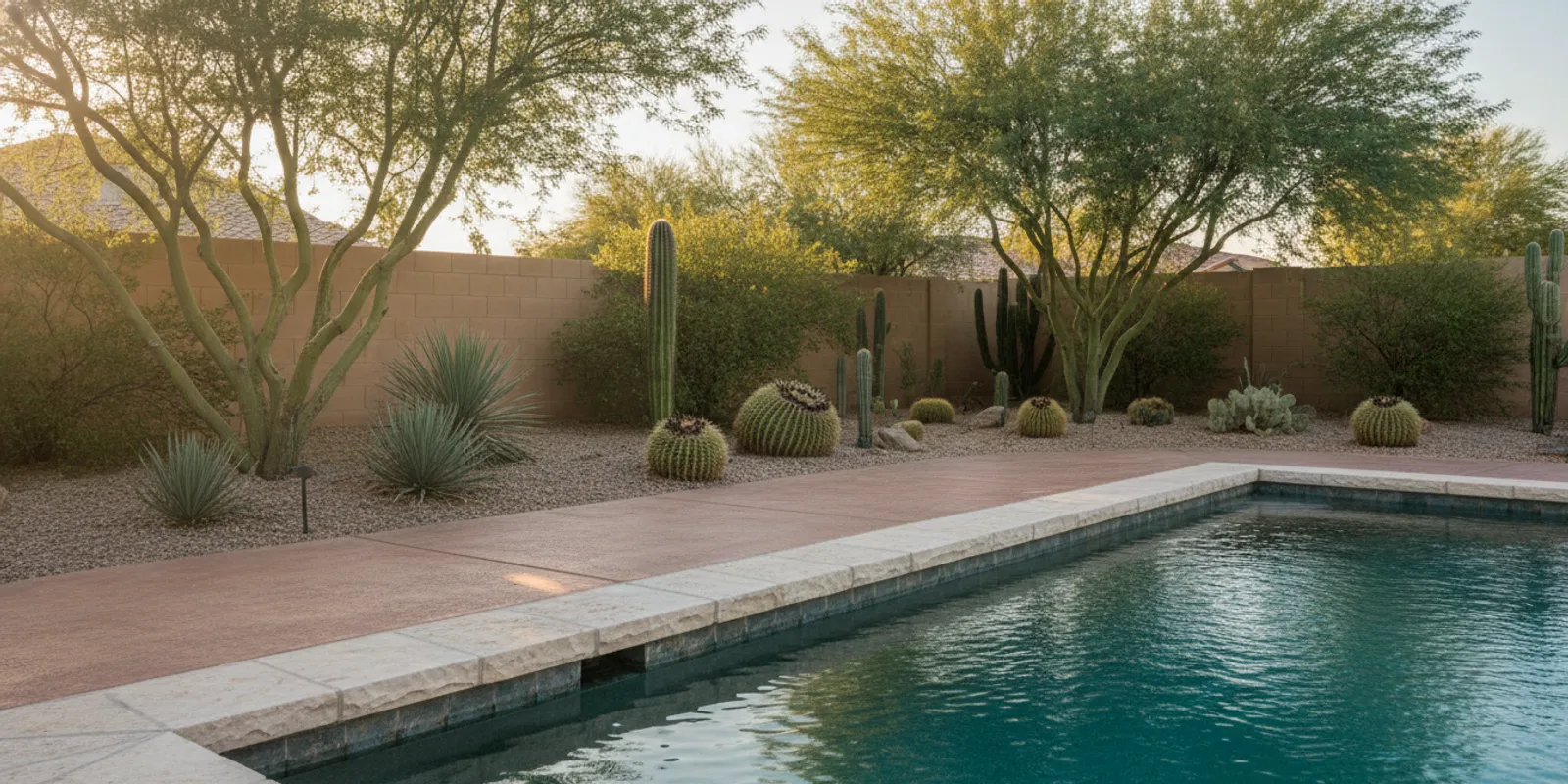
Pool coping repair in Phoenix starts with understanding what has moved, cracked, or come loose—and whether the cause is limited to the pool edge or involves the adjoining deck. A visible defect deserves a closer look, but it does not automatically mean the entire edge needs replacement. This guide explains what to inspect, how coping connects to tile and deck, and what to ask before planning a repair.
What does pool coping do?
Coping is the finished edge around the top perimeter of a pool. It creates a transition between the pool structure and the deck, gives the edge a defined appearance, and provides a surface people encounter when entering, exiting, or sitting near the water. It is also one part of a larger assembly: coping, waterline tile, pool shell, and deck meet in a relatively small area, and their condition can affect how the edge looks and performs.
That relationship matters during repair. A crack visible in the coping might be isolated to one piece, or it might be associated with movement, a weak bond, or a problem at the deck transition. The appearance alone cannot reliably identify the cause. A careful assessment considers the pattern and location of damage, the condition of neighboring pieces, and whether the deck or tile shows related changes.
If your pool needs more than a small edge repair, review the scope of pool remodeling and renovation services. A broader remodel can provide a coordinated look when multiple connected surfaces need attention.
What coping problems should Phoenix homeowners look for?
Walk around the pool and look for changes rather than relying on one isolated mark. Note where each issue appears and whether it repeats along a run of the pool edge. Photos taken from the same position over time can help you describe whether a condition is changing.
- Cracks: A single hairline mark and a widening or recurring crack are not the same situation. Look for cracks that cross a piece, continue into nearby areas, or appear to be growing.
- Loose or shifting coping: Pieces that rock, move, or no longer sit level need professional evaluation. Avoid testing them by forcing or prying at the edge.
- Gaps or separation: A widening joint or visible separation between the coping and adjoining surface may indicate movement or a failed connection. Record its length and location.
- Uneven edges: A raised, sunken, or newly uneven section can create a trip or contact hazard and may point to movement beneath the finish.
- Chipped or sharp areas: Damaged edges can be uncomfortable or unsafe to touch, especially where people enter and exit the pool.
- Changes near the waterline tile: Loose, cracked, or displaced tile beside coping damage can be a clue that the interface needs assessment as one area, rather than treating each surface in isolation.
Arizona heat and seasonal weather are part of the local setting, but they do not prove why a particular pool edge has changed. The cause can vary by pool, installation, surrounding deck, and maintenance history. Describe what you observe and let a qualified contractor assess the assembly before deciding on a repair.
How can you tell whether the deck or tile is involved?
Start by looking at the boundary lines. Does the coping appear damaged while the deck remains level and intact? Is there a gap where coping meets the deck? Does a crack continue into the deck surface, or do nearby waterline tiles appear loose? These observations help frame the discussion, but they are not a substitute for inspection.
The pool edge has several adjoining components, and work on one may affect the finish or alignment of another. If tile also needs attention, compare the scope with a dedicated guide to pool tile replacement options in Arizona. The question here is not which finish to select, but whether the coping condition is separate from, or connected to, the tile and deck condition.
Ask the contractor to identify the boundaries of the proposed work in plain language. For example: Which coping pieces are included? Will adjacent tile or deck joints be disturbed? What will be inspected after removal, if removal is part of the plan? How will the edge transition be finished? A clear scope makes it easier to compare proposals without assuming that two contractors mean the same thing by “coping repair.”
When might a repair make sense, and when should you discuss replacement?
A focused repair may be worth discussing when the concern is limited to a small area, surrounding coping remains stable, and the contractor can identify a repair approach that fits the existing pool edge. The appropriate repair depends on what is damaged and why. A contractor should explain whether the issue is cosmetic, a localized connection problem, or a sign of movement that needs a broader solution.
Replacement or a larger renovation may merit consideration when problems recur, multiple areas are loose or uneven, damage extends across connected surfaces, or the existing edge cannot be matched or repaired to the intended result. Replacement is not automatically the better choice: it can involve more work at the pool-deck interface and may affect adjacent finishes. The condition of the underlying assembly and the homeowner’s goals should guide the scope.
| What you observe | What to ask about | Planning implication |
|---|---|---|
| One localized crack or damaged piece | Can the cause and limits of a localized repair be identified? | Discuss a focused inspection and repair scope; do not assume nearby areas are unaffected. |
| Several loose, shifted, or uneven sections | Is there movement beneath the coping or at the deck transition? | Ask whether broader removal or replacement should be evaluated. |
| Coping and tile both show damage | How will the edge and waterline finishes be coordinated? | Plan the connected work together and clarify which surfaces are included. |
| Damage continues into the deck | Where does the coping work end, and what deck work is included? | Request a defined boundary and sequence for work at the transition. |
| Sharp, raised, or unstable edges | What steps should be taken to keep people away from the affected area? | Prioritize evaluation and avoid using or touching the unstable section until advised. |
This table is a conversation guide, not a diagnosis. The same visible symptom can have different causes. For a larger pool update, homeowners can also review the pool remodel process in Phoenix to understand how a broader scope may be planned.
What should a coping repair estimate explain?
Before the visit, make the area accessible and gather any available notes about when you first noticed the change. Take a few wide photos that show where the affected coping sits in relation to the pool and deck, then take closer photos of cracks, gaps, or loose pieces. Do not remove material or try to reset a piece to make the issue easier to see. If the condition changes after rain, pool use, or other events, note what you observed without assuming that event caused it.
During the assessment, ask the contractor to walk the perimeter with you and distinguish visible symptoms from confirmed causes. A useful conversation can include what will be evaluated, what may only become clear once work begins, and how you will discuss any additional findings before making a decision. Timing can depend on the proposed scope, coordination with adjoining surfaces, and project scheduling, so ask what sequence is anticipated rather than relying on a general timeline from another pool.
Before comparing proposals, make sure each one addresses the same work. A useful estimate or consultation should make the observed condition, proposed scope, and limits understandable. Ask for direct answers to questions such as:
- Which exact sections are being repaired or replaced, and how were they selected?
- What do you believe is causing the damage, and what could not be confirmed without opening the area?
- Could the work affect adjacent waterline tile, the pool shell, or the deck? If so, how is that handled?
- What is excluded from the proposed scope, and how would a newly discovered condition be discussed before work proceeds?
- How will you protect the pool and nearby outdoor surfaces during the work?
- What will the finished edge look like where new work meets existing coping or deck?
- What preparation should the homeowner make, and what should remain out of use during the work?
- What is the expected sequence, and what factors could affect scheduling?
Ask for the scope and any assumptions in writing. If one estimate covers only a few pieces and another includes a longer run and adjacent tile work, the totals do not represent a like-for-like comparison. The goal is not to choose the longest scope or the shortest one. It is to understand what condition each proposal addresses and what result it is intended to deliver.
Homeowners can learn more about Modern Pools’ owner-involved approach and browse the project gallery to consider how pool edges fit into complete outdoor spaces. The gallery can help you discuss visual goals; it should not be treated as proof that a particular repair method is right for your pool.
How should coping work fit into a Phoenix backyard plan?
Consider how the pool edge connects to the rest of the outdoor area. A repair may be a contained maintenance decision, while a larger renovation can be a chance to coordinate coping, tile, deck, and adjacent landscape features. Either way, define the main goal before selecting finishes: address a safety concern, restore a disrupted edge, update the look, or coordinate a wider backyard transformation.
When several outdoor elements are part of the project, review the available pool and outdoor living services and hardscape and landscape options. If the work involves a remodel, it can help to see how other decisions are planned in a local context, such as this guide to pool renovation planning in Scottsdale.
Pool coping work does not have to become a complete backyard project. But when adjacent surfaces are already due for attention, coordinating them in the planning stage can help clarify the intended transitions and avoid treating connected decisions as unrelated tasks.
What questions should you ask before hiring a contractor?
Choose questions that reveal how the contractor evaluates the pool edge, defines the scope, and communicates during the project. Arizona homeowners can also use the Arizona Registrar of Contractors as a starting point for contractor licensing information and verification.
- What experience do you have assessing coping alongside pool tile and deck transitions?
- Will you explain the observed condition and the reasoning behind the proposed scope?
- How will the work area and pool be protected, and what should we expect during the project?
- How do you document the work included and any exclusions?
- Who will communicate with us if conditions differ from what was visible during the initial assessment?
- Can you provide the appropriate license details and explain how to verify them?
Modern Pools serves Phoenix East Valley homeowners with custom pool construction, remodels, and outdoor living solutions. To understand the company’s remodel focus, visit the pool remodels page, or use the pool building and remodeling FAQs to review related homeowner questions.
A clear assessment connects the visible coping issue to the surrounding pool edge, tile, and deck, then explains a scope that fits the condition and your goals. With those details in hand, Phoenix homeowners can make a more informed decision about repair, replacement, or a coordinated remodel. Clear scope and careful coordination help protect the finished look of the pool edge and the surrounding backyard.