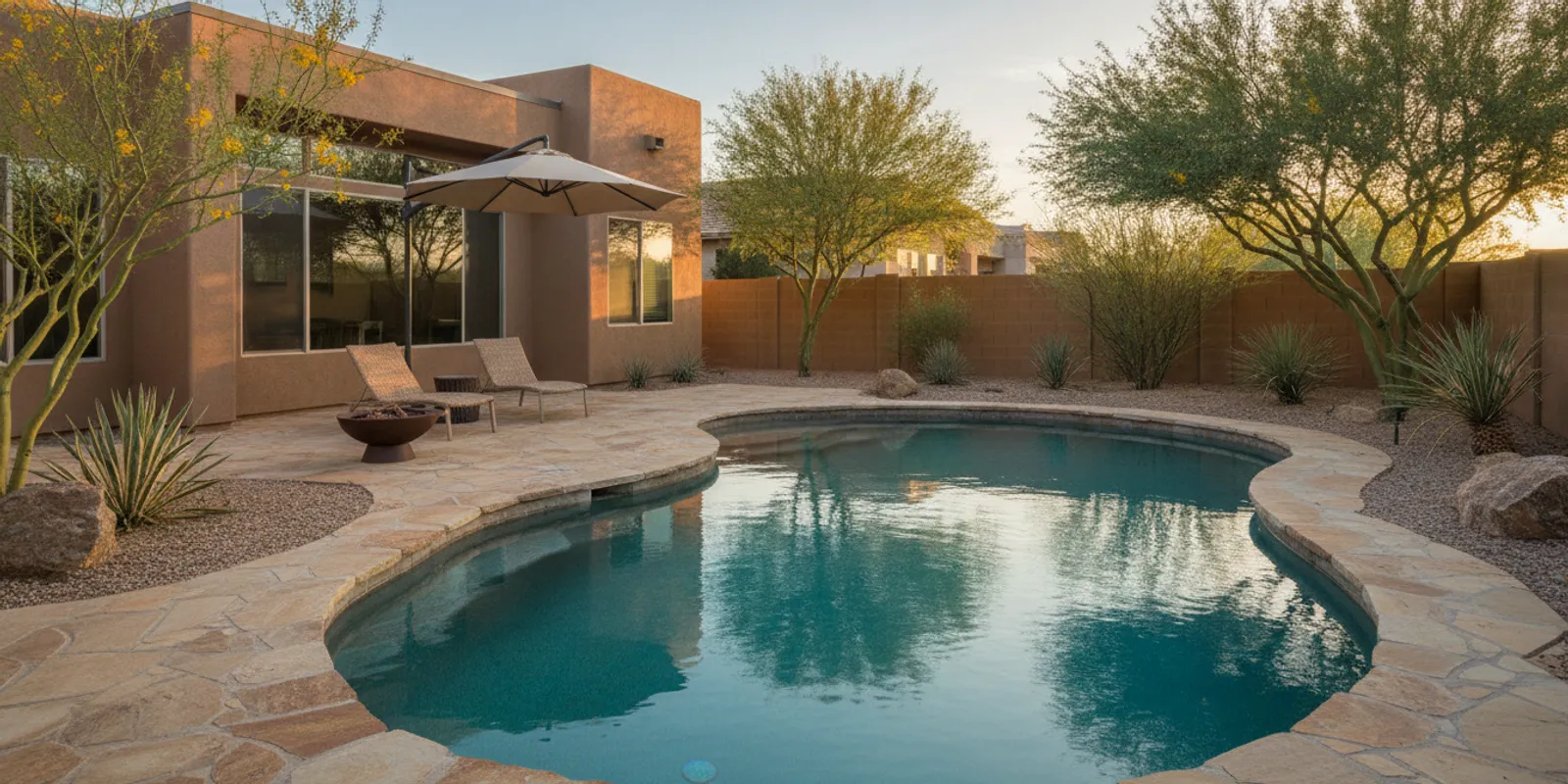
A natural pool in Arizona can mean a swimming pond that uses planted or biological filtration, or a conventional pool designed to blend with the landscape. These are different systems, even when photos make them look similar. If you are exploring a natural pool in Arizona, begin by deciding which experience you want and what your property and maintenance routine can support.
Book an estimate for your backyard
What does “natural pool” mean?
The phrase is used for more than one kind of project. A swimming pond generally separates the area used for swimming from a planted regeneration zone intended to help filter and condition water. The plants and water circulation are part of the system. The MIT resource on swimming ponds and natural pools discusses their design and ecosystem considerations. Because its focus is California, use it as general background rather than guidance about Arizona design or local requirements.
A natural-style conventional pool takes another route. It uses a conventional pool structure and water-care approach, while shape, finishes, stone, planting, and surrounding spaces create a softer, more organic appearance. It can feel integrated with a garden without being a planted swimming pond. A hybrid concept may borrow naturalistic shapes or landscape details while retaining conventional pool equipment and treatment.
Before comparing estimates or inspiration images, ask the designer to identify the actual water system. Find out what provides circulation and filtration, whether a planted area is part of the design, and what water-care routine is expected. The label alone does not answer those questions.
Which approach fits the way you plan to use the water?
Start with ordinary use, not the photograph that first caught your attention. A household that swims often may prioritize a clear, open swimming area and straightforward access. Someone who wants a garden retreat may place more value on the relationship between water, planting, and seating. Entertaining, exercise, children’s use, and available yard area can each change the layout.
| Approach | What it generally involves | Questions to resolve |
|---|---|---|
| Swimming pond | A swimming area paired with a planted or biological filtration area | How much room does the complete system need? What care and water-quality practices are required? |
| Natural-style conventional pool | A conventional pool with natural-looking shape, materials, planting, and outdoor spaces | Which elements create the desired look? What equipment and pool-care routine are included? |
| Hybrid concept | A conventional pool plan using selected naturalistic forms or landscape details | Which features are structural, which are decorative, and how will each be maintained? |
Use the table to frame a conversation, not as a technical specification. Ask for a drawing that distinguishes swimming area, planted area, circulation, equipment, paths, and seating. If a proposed concept uses the word “natural,” request a plain-language explanation of what makes it so.
Modern Pools focuses on custom pool construction and outdoor living solutions. The available company information does not confirm a specialized planted swimming-pond system, so ask directly whether that particular system is within project scope. A natural-looking conventional pool is a separate conversation from a pond with a biological regeneration area.
How should an Arizona property shape the plan?
In the Phoenix area, the pool is part of an outdoor space that people use in strong sun, hot afternoons, and cooler evenings. The design should account for the site and the way people move through it. Review the yard as a whole rather than selecting plants and finishes after the pool layout is fixed.
- Track sun and shade. Note where afternoon sun falls and where shade already exists. Think about whether seating should be close to the water, near the house, or in a separate quieter area.
- Look at wind and debris. Nearby trees, exposed edges, and open corridors may affect cleaning needs. Ask where leaves, dust, and other debris are likely to collect and how the design makes those areas accessible.
- Check access and circulation. Mark the route from the house to the water, the space needed around the pool, and the location of gates or side-yard access. A beautiful concept can be awkward if people have to cross a busy seating or cooking area to reach the water.
- Plan planting for the actual system. Ask which plants suit the site and whether they are decorative or part of water filtration. Consider root growth, dropped leaves, maintenance access, and the distance between planting and swimming.
- Place equipment with service in mind. Find out where pumps or other components would sit, how technicians can reach them, and how noise or access might affect nearby seating.
- Plan evening use too. Consider paths, lighting, and places to sit after the strongest sun has passed. Lighting and circulation should be coordinated with the pool design rather than treated as afterthoughts.
For more on local design considerations, see Modern Pools’ articles on pool design for the Arizona climate and pool design in Phoenix. Those guides offer broader pool-planning context; your own layout still depends on the property, chosen system, and applicable review process.
What maintenance questions should you ask?
“Natural” does not mean maintenance-free. A planted zone can involve plant care and attention to its own balance. A swimming pool also needs an appropriate plan for circulation, cleaning, and water quality. The exact routine depends on the specific design, so avoid assuming that advice for one kind of pool applies to another.
Ask the designer to separate routine work from occasional or seasonal tasks. For example, routine work might involve checking equipment and removing debris; less frequent work might include attention to planting or service access. Ask who is expected to do each task and whether the care plan differs after windy weather or a storm. Avoid accepting a vague assurance that upkeep is easy without understanding what “easy” means in practice.
- Which components need regular inspection or cleaning?
- For a planted zone, who cares for the plants and how is their condition assessed?
- What should the homeowner do when water clarity changes?
- What water testing or treatment routine is recommended for this exact system?
- How does the plan address dust, leaves, and debris after weather changes?
- Where is equipment located, and what clearance is needed to service it?
- Which tasks can the homeowner reasonably handle, and which call for professional service?
Request the answers in writing, ideally as part of the proposal or a care guide. If two proposals describe different systems, their maintenance expectations may differ too. Compare those responsibilities alongside the visual design, not after construction decisions are made.
How can you compare proposals and published pricing fairly?
Compare the scope rather than a label or bottom-line figure alone. One proposal might cover a conventional pool with natural stone and landscaping. Another might describe a pond-style system with a separate planted zone. Those projects do not provide the same design or care obligations, so a direct price comparison can mislead unless the scope is clear.
- Ask for a system description. The proposal should say what kind of water system is planned and identify the swimming, planted, and circulation areas where relevant.
- Separate pool work from landscape work. Confirm which planting, hardscape, shade, lighting, and seating are included, and which would be a separate decision.
- Review equipment and service access. Ask what each listed component does, where it will be installed, and how it can be reached for care.
- Clarify site and approval responsibilities. Ask who identifies applicable permitting or HOA requirements and how known site constraints may affect the plan. Do not assume a generic estimate resolves local requirements.
- Compare care obligations. Write down routine and seasonal tasks for each option and decide whether the expected work fits your household.
- Read inclusions and exclusions together. Look for what is specified, what is not included, and which choices may change the design or scope. Compare like with like rather than relying on a label.
Modern Pools lists a Basic Pool Package at $37,999 plus permits and taxes. That published figure is for the conventional pool package described by the company; it is not a price for a natural swimming pond or every naturalistic landscape plan. Ask for the current package inclusions and confirm how your requested features fit the project. Clear scope matters more than trying to apply one package figure to a different system.
If your idea extends beyond the pool, consider how the surrounding work fits the same plan. Modern Pools provides information about hardscape and landscape services, fire and water features, and outdoor kitchens. These options may help frame a complete backyard transformation, but confirm which elements can be combined for your specific project.
Contact Modern Pools to discuss your project
How do you turn inspiration into a buildable concept?
Collect a few reference images, then label the specific detail you like in each. Perhaps one shows an irregular outline, another a stone edge, and another the way a seating area meets the water. Separating the desired feature from the entire photograph helps the designer understand what you want without assuming every detail will suit your yard.
Prepare a short project brief before a design conversation:
- Approximate yard dimensions, photos from several angles, and known access limitations.
- Your main uses: everyday swimming, exercise, entertaining, a garden setting, or a mix.
- Whether you mean a planted swimming pond or a conventional pool with a natural look.
- The design elements you want most, ranked in order of importance.
- A preliminary investment range and any features you would consider postponing.
- Questions about system type, maintenance, permits, equipment, and what an estimate includes.
For instance, if your priority is an organic appearance but your household expects frequent swimming, say so. The discussion can then focus on the shape and landscape details you value while making the water system explicit. If your priority is a planted ecosystem, begin by asking whether a suitable designer and builder can provide that system and explain its ongoing care. Those are different starting points, and identifying yours early helps prevent mismatched expectations.
Modern Pools describes an owner-involved approach and serves Phoenix East Valley homeowners. You can learn more on the About Us page, browse the project gallery, and review the pool and remodeling FAQs. Images can help you describe preferences, while a site-specific conversation is needed to establish what is practical for your property.
Explore custom pool and spa builds
Frequently asked questions about natural pools in Arizona
Is a natural pool the same as a swimming pond?
Not necessarily. Some people mean a pond-style system with a planted or biological filtration zone. Others mean a conventional pool with natural-looking shape, finishes, and landscaping. Ask what system the proposal actually describes.
Does a natural pool need maintenance?
Yes. The tasks depend on the design, but water care, equipment, planting where present, and surrounding surfaces all need attention. Ask for routine and seasonal responsibilities before choosing a system.
Can a conventional pool have a natural look?
Yes. Shape, stone, planting, and how the pool connects to outdoor spaces can create a softer appearance. That look does not make the pool a planted swimming pond, so confirm the system and care routine separately.
Does Modern Pools build planted swimming ponds?
The available company information describes custom pool construction and outdoor living work, but does not confirm a specialized planted swimming-pond service. Contact the team to ask whether your desired system is within scope.
Choose the system before choosing the look
A useful natural-pool plan starts by defining the water system, not by settling on a label. Decide whether you want a planted swimming pond or a conventional pool with a natural style, then compare the space, care, equipment, and scope each option requires. With those details clear, you can have a more productive conversation about a backyard design that fits your Arizona property and routine.