Choosing Phoenix pool upgrades is easier when you separate decisions that affect construction from features that can be selected later. In-floor cleaning, heating, saltwater conversion, colored lighting and water features do not all have the same schedule. The key question is whether a choice needs plumbing, conduit, power or space that will be difficult to add after the shell and deck are complete.
Book an estimate to plan your pool features
Why decide on some pool upgrades before construction?
Some features are easiest to plan while the pool is still on paper. Equipment routes, plumbing lines, light locations and feature connections can be coordinated with the design before excavation and construction begin. Once concrete, decking and landscaping are in place, a change may mean additional demolition or rerouting. That does not make every early decision permanent, but it makes early planning useful.
Start with the feature's physical requirements, not just its appearance. Ask whether it needs a dedicated line, a power connection, a control-system setting, extra equipment space or a location in the pool shell. Then ask the builder which decisions need to be final before each construction milestone. The answer can differ by design and selected equipment.
For a broader view of the sequence, review this pool construction process guide. If you are still shaping the overall plan, the Arizona climate pool design guide can help you connect comfort, shade and day-to-day use.
Which upgrades should you plan before the dig?
“Before the dig” is a useful shorthand, but it is not always the final deadline. Some decisions can be made during design, while others must be confirmed before plumbing, electrical work, shell construction or deck installation. Use the table as a planning prompt, then have your builder identify the actual deadline for your pool.
| Feature | Decide early? | Why timing matters | What to confirm |
|---|---|---|---|
| In-floor cleaning | Yes, during design | It may require dedicated plumbing and carefully planned floor fittings before the pool shell is complete. | System layout, fittings, circulation design, equipment needs and how the chosen finish affects placement. |
| Pool heating | Plan the provision early | Equipment location, plumbing connections and electrical or gas requirements can affect the equipment plan. | Heating method, utility requirements, clearances, controls and whether the pool will be heated regularly or occasionally. |
| Saltwater system | Discuss before equipment is specified | Compatibility and equipment layout matter; the conversion itself may be possible later, but planning avoids assumptions. | Sanitation system, controls, cell placement, maintenance expectations and compatibility with other equipment. |
| Colored LED lighting | Confirm locations and wiring early | Light niches, conduit, wiring routes and controls are easier to coordinate before the shell and surrounding finishes are complete. | Number and placement of lights, color options, controller compatibility and what is included in the written scope. |
| Water feature | Plan the plumbing and structure early | A feature may need a water line, pump capacity, structural support or connections through the pool wall. | Feature type, location, flow needs, sound, splash pattern, controls and the impact on nearby surfaces. |
The table is a decision aid, not a substitute for a project-specific plan. Ask for a marked-up design or scope showing where each selected feature connects, what equipment it uses and when the decision becomes fixed. That makes it easier to compare the complete plan rather than a feature name alone.
Is in-floor cleaning worth planning into a new pool?
In-floor cleaning uses built-in pop-up heads to move debris toward collection areas as water circulates. It can be appealing if you want cleaning equipment integrated into the pool rather than relying only on a separate cleaner. The trade-off is that the system is designed into the pool floor, so the plumbing layout and head locations need attention before the shell is finished.
Ask how the proposed system is expected to work with the pool's shape and circulation plan. A simple rectangle and a freeform design may not call for identical placement. Request a clear explanation of what areas the system is meant to serve, what maintenance remains, and how it will work alongside filtration and any other cleaning method. Avoid assuming that “automatic” means maintenance-free.
- Plan now: whether to include the system, the plumbing approach and the floor-head layout.
- Clarify in writing: equipment, controls, what the installation covers and what routine care remains.
- Compare fairly: consider the whole pool-care setup rather than judging by a single feature.
If you are evaluating a new pool around its package and scope, the pool package comparison guide offers another way to frame the questions. For pricing context, Modern Pools lists a new-pool base package from $37,999, plus permits and taxes; confirm the current package scope and any selected additions directly in your written estimate. No upgrade price is assumed here.
Should you plan for a pool heater in Phoenix?
Phoenix's long warm season does not mean every household uses a pool the same way. Think about the months and times of day you want to swim, whether you expect to use a spa, and how often you would run a heater. Those habits help you decide whether heating belongs in the project now or is a lower priority.
Even if you are not ready to select a heater, discuss the equipment pad, connection requirements and control options during design. The suitable arrangement depends on the selected equipment and site. A future installation may be feasible, but confirming the route and space early can help prevent a later feature from conflicting with other equipment or landscaping.
Ask the builder to describe any electrical, gas, ventilation, clearance or utility requirements that apply to the specific heating option under consideration. Do not assume all heater types share the same needs. Also ask what operating guidance and equipment documentation you will receive. A choice that fits your use pattern and site is more useful than choosing a heater simply because it is available.
Can you add a saltwater system later?
A saltwater pool still uses a sanitation process; the system produces chlorine from salt in the water. It is not a chlorine-free pool. Some owners prefer the feel or routine of this approach, while others choose a conventional setup. The best fit depends on preferences, equipment compatibility and the care routine you are prepared to follow.
A salt system may be an upgrade that can be considered after the initial build, but do not rely on that assumption without checking the proposed equipment and plumbing plan. Ask whether the selected controller and other components are compatible, where the cell would be installed, and what changes a later conversion would involve. Confirm the salt system's maintenance requirements and any material-care guidance with the equipment manufacturer and pool professional.
For a fuller discussion of the trade-offs, see saltwater versus chlorine pools in Arizona. The useful decision is not whether one approach is universally better; it is whether the system fits your household and the specific pool design.
What should you decide about colored pool lighting?
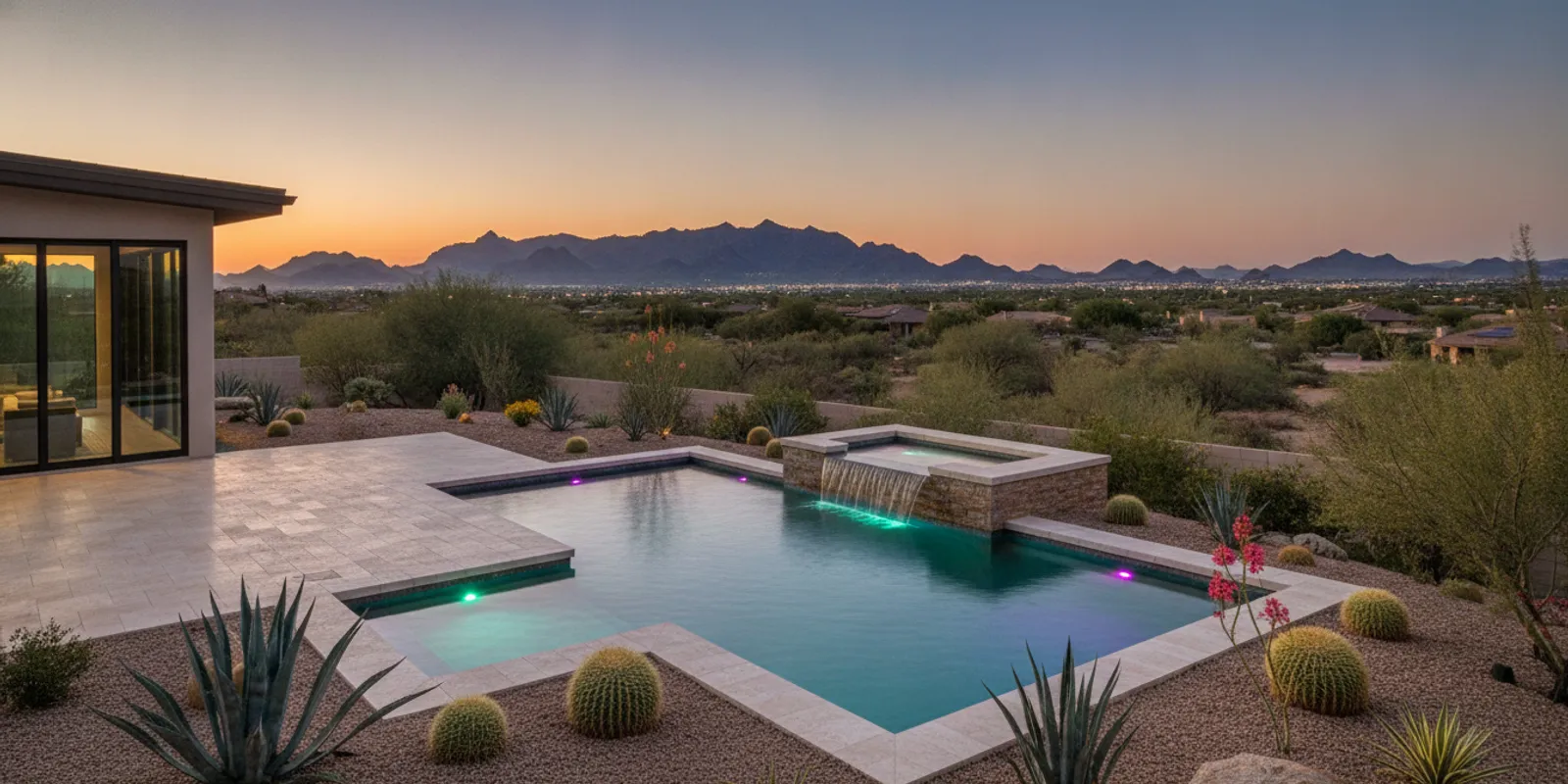
Lighting decisions combine an aesthetic choice with a construction detail. You can think about the mood and color palette early, but the number and position of lights, conduit routes and control requirements should be coordinated before those parts of the pool and deck are complete. The same light can look different depending on its location, the pool's shape and the surrounding finishes.
Ask whether the proposed lighting is white-only or offers color selection, whether lights can be controlled individually or together, and how the controls integrate with the pool's automation. Get the selected locations and included equipment recorded in the scope. Modern Pools' content identifies LED lighting and automation among its premium features, but the exact equipment and selections for a particular project should be confirmed in its current written package details.
If you want to understand the upgrade choices in more depth, read the Arizona pool LED lighting guide. Decide the look and layout early; the final color preference may be adjustable later depending on the installed system.
Which water features are easiest to plan now?
Waterfalls, deck jets, scuppers and other features can change the sound and visual character of a backyard. They also affect practical details such as water flow, splash, plumbing, equipment capacity, seating and nearby surfaces. A feature that looks striking in isolation may send water onto a walkway or create more sound than you want next to an outdoor dining area.
Choose the general type and location during design, then ask what needs to be built into the shell or deck. The visible finish or final decorative detail may offer more flexibility than a concealed water line or structural connection. Confirm expected flow, operation, controls and how the feature will be maintained. Phoenix evaporation and summer heat make it sensible to discuss water use and splash with the designer, without assuming a single feature will fit every yard.
Explore examples in the Arizona pool water features guide. If a feature is important to the overall effect, include it in the design conversation rather than treating it as a last-minute decoration.
What can wait until after the pool is built?
Some choices are mostly operational or decorative and may not require changes to the pool shell. Depending on the selected equipment and layout, you may be able to make a later decision about a compatible salt system, adjust lighting settings, or add furnishings and movable shade. “Can wait” does not mean every option can be added easily; it means you should ask whether the choice requires concealed infrastructure or a change to finished surfaces.
A practical way to sort the list is to label each item as install now, rough-in now and finish later, or revisit after the pool is operating. Ask the builder to identify what each category means for your design. If a feature needs a line, conduit, niche or structural connection, making provision during construction may preserve options even if you postpone buying the final component.
- Install now: features whose plumbing, wiring or structure must be integrated into the pool or deck.
- Rough-in now: provisions that keep a future option available, if the builder confirms the right connection and space.
- Revisit later: operating preferences and compatible add-ons that do not require disruptive construction.
Talk through your upgrade priorities with Modern Pools
How can you compare upgrades without guessing at cost?
Feature prices depend on what is selected and how it fits the project, so avoid comparing a short label or allowance without checking the scope. Start with a written list of what is included in the base plan, then identify each optional feature and its exact equipment, installation and connection requirements. Modern Pools emphasizes transparent, published pricing; ask for the project-specific inclusions and additions to be clearly documented so you can make an informed comparison.
For every feature, ask these questions:
- What exactly is included? Request model or feature details where applicable, not just a category name.
- What must be decided by when? Ask for the deadline tied to plumbing, electrical work, shell construction or deck completion.
- What is the complete scope? Confirm equipment, labor, controls, connections and any stated exclusions in the written estimate.
- Can I add it later? Ask what future work would involve and whether a rough-in or reserved space is available now.
- How does it fit the backyard? Consider use, sound, splash, access, maintenance and the relationship to outdoor living areas.
These questions also make it easier to compare a pool-only plan with a larger backyard transformation. Modern Pools describes its work as including custom pools and outdoor living solutions; see the Phoenix pool builder overview and hardscape and landscape services when considering how the pool connects to the rest of the yard. For examples of completed designs, browse the project gallery.
What should Phoenix homeowners ask at the estimate?
Bring a short wish list rather than trying to settle every detail on your own. Mark each feature as essential, desirable or undecided. Then ask the builder to explain which choices change the design or construction sequence, which may be added later, and what information is needed to provide a clear project scope.
- Which of my preferred upgrades need plumbing, conduit, wiring or structural work before the shell or deck is finished?
- Can you show the proposed locations and equipment connections on the design?
- Which features are in the current base scope, and what exact selections are included?
- What can be roughed in now if I want to delay the final equipment decision?
- How might the feature affect water circulation, equipment space, maintenance or the way we use the yard?
Homeowners in Scottsdale, Chandler, Mesa and Tempe should also ask how the proposal accounts for their specific lot, access and local review requirements. A plan should reflect the site rather than assume every East Valley backyard has the same constraints.
As a separate pre-contract check, Arizona homeowners can use the Arizona Registrar of Contractors' official website to verify contractor license information. Confirm the record directly as part of evaluating a proposed project.
Get in touch to discuss your pool plan
Frequently Asked Questions
Which pool upgrades are hardest to add after construction?
Features that require plumbing through the pool shell, embedded fittings, conduit or wiring in finished areas, or structural work can be more disruptive to add later. Ask the builder to identify those requirements for your selected design before construction milestones are reached.
Can I wait to choose a pool heater?
Possibly, but first confirm the equipment space and utility or connection requirements for the heating option you may want. Planning that provision early can help avoid a future layout conflict, even if you delay selecting or installing equipment.
Is a saltwater system chlorine-free?
No. Saltwater systems produce chlorine from salt through a system cell. Discuss the care routine, equipment compatibility and manufacturer guidance with your pool professional before choosing.
Do I need to choose light colors before construction?
You should confirm light locations, wiring and control compatibility as part of the construction plan. The color or settings may be adjustable after installation if the selected lights and controller support those options.
Plan the infrastructure before you finalize the look
The most useful time to consider an upgrade is before the work it affects is complete. Decide early on features that need plumbing, power, placement or structural coordination; consider rough-ins when a future choice is uncertain; and leave flexible selections for later only after confirming that they will not require disruptive changes. A clear design and written scope let you prioritize the features that will make your Phoenix backyard work the way you want.