

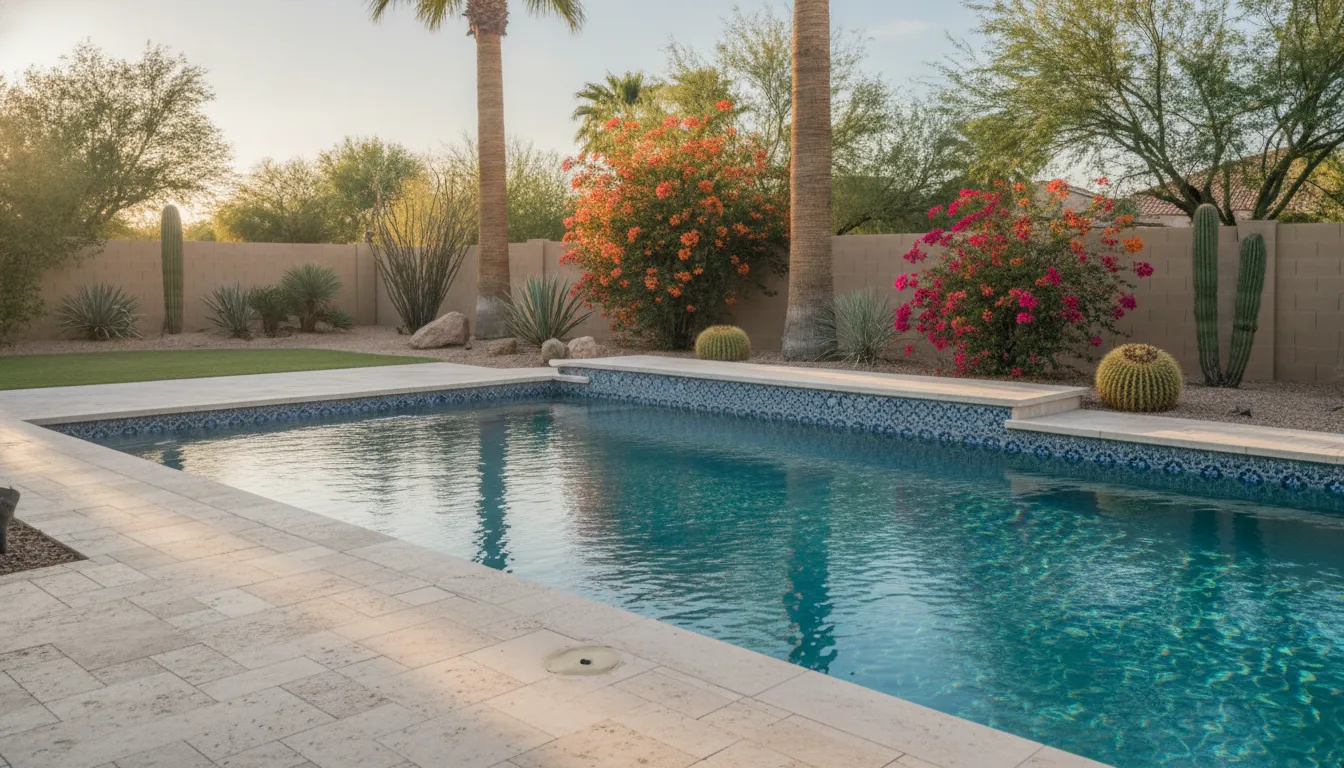
Pool tile replacement Arizona homeowners plan often starts with one visible problem: a loose tile, a stained waterline, or a finish that no longer suits the backyard. In Phoenix East Valley conditions, the right solution depends on the affected area and what is happening behind the surface. For broader renovation planning, review Modern Pools’ Phoenix pool remodel and renovation guide.
Book an Estimate to review your pool tile replacement options.
What Does Pool Tile Replacement in Arizona Include?
Pool tile replacement in Arizona can mean a focused waterline repair, a feature-tile update, or tile work coordinated with a larger pool remodel. The scope should be based on the tile condition, setting surface, pool structure, access, and the homeowner’s design goals. A site review helps distinguish a tile-only issue from a coping, substrate, movement, or waterline problem.
A practical evaluation considers:
- The affected tile area, including waterline, steps, spillways, or feature walls.
- The condition of the setting bed, joints, coping, and adjacent pool finish.
- Access for removal, preparation, material delivery, and installation.
- Whether the homeowner wants a targeted repair or a complete backyard transformation.
Modern Pools’ pool remodeling service can include new full tile or pebble finishes, waterline and water-feature tile, coping replacement, structural modifications, feature additions, and equipment upgrades. The goal is to identify what is necessary, what is optional, and what can reasonably wait.
When Does Pool Tile Need Replacing?
Pool tile may need replacement when pieces are loose or missing, cracks are spreading, edges are sharp, or deterioration keeps returning after cleaning. These signs do not identify the cause by themselves. Tile loss can involve the bond, substrate, coping, movement, installation, water chemistry, or age, so an on-site inspection is more useful than choosing replacement material from a photograph.
- Loose, hollow-sounding, or missing pieces: A weakened bond can allow tile to lift or fall away.
- Cracks, chips, or sharp edges: Damaged tile can affect appearance and deserves an inspection of adjacent pieces.
- Heavy mineral buildup: Deposits can change the look of the waterline and may be associated with underlying bond concerns.
- Persistent staining: Discoloration that does not respond to appropriate cleaning may mean the finish no longer meets the homeowner’s goals.
- Deteriorating joints or coping: Movement at the transition between tile, coping, and deck may cause a replacement to fail again if it is not addressed.
Photos are useful for documenting symptoms, but they cannot reliably reveal a hollow bond, moisture issue, movement, or substrate damage. Modern Pools can evaluate the affected area and explain whether cleaning, spot repair, waterline replacement, or a broader remodel is the most sensible next step.
Which Pool Tile Works Best for Arizona Heat and Sun?
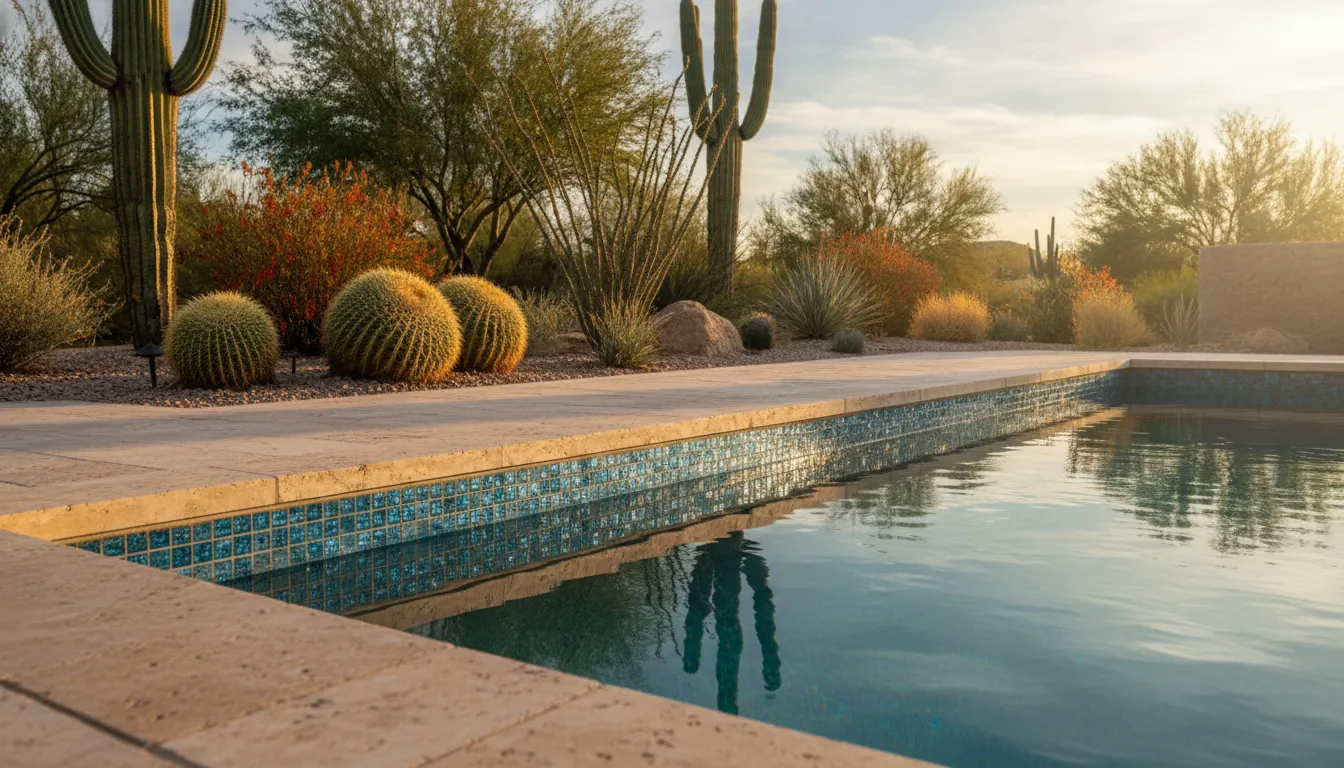
The best pool tile for Arizona is the material that suits the exact application, installation conditions, maintenance expectations, and design direction. Glass, porcelain, ceramic, natural stone, and mosaics can all create different results. No material should be described as maintenance-free or guaranteed against every heat-related issue without considering the complete installation.
| Tile category | Where it may fit | What to confirm |
|---|---|---|
| Ceramic or porcelain | Waterline areas and designs that need varied colors, formats, or textures. | Confirm pool suitability, edge details, movement planning, cleaning needs, and availability. |
| Glass | Reflective waterlines, mosaics, spillways, feature walls, or a luminous luxury look. | Confirm the application, installation system, substrate preparation, and detailing for water and movement. |
| Natural stone or mosaic | Decorative transitions and feature areas that connect the pool with coping or landscape materials. | Review water exposure, chemical care, cleaning, adjacent materials, and the intended visual style. |
View physical samples against the pool in actual sunlight. Compare them with the interior finish, coping, decking, landscaping, and home exterior rather than selecting from a small indoor sample. Modern Pools has experience with premium finishes, including fully glass-tiled pools and spas, while treating every material choice as an application-specific decision.
Preparation and movement planning matter as much as the visible surface. The Tile Council of North America guidance on tile placement explains why layout, joints, and substrate movement deserve attention. The selected product and installation system should be reviewed for the intended pool application, not assumed from its appearance.
How Much Does Pool Tile Replacement Cost in Arizona?
Pool tile replacement cost in Arizona depends on the project scope, not just the tile selected. A useful estimate separates material, square footage, removal, preparation, installation, access, substrate or waterline repairs, coping or decking, and any applicable permits or taxes. The same tile material can require very different work in two backyards.
- Tile area and layout: A waterline, feature wall, steps, spillways, and a fully tiled pool create different quantities and detailing.
- Material and format: Glass, porcelain, ceramic, stone, and mosaic selections differ in cuts, trim, sourcing, and installation requirements.
- Removal and preparation: The setting surface may need cleaning, leveling, crack-isolation work, waterproofing, or repair after old tile is removed.
- Related repairs: Loose tile can be connected to movement, coping deterioration, substrate problems, or waterline conditions.
- Site access: Narrow side yards, deck protection, staging, drainage, and equipment access can affect labor and scheduling.
- Bundled improvements: Resurfacing, coping, decking, lighting, equipment, or water features may change the sequence and total scope.
Modern Pools approaches remodel work transparently and prices it by project scope rather than a one-size-fits-all promise. A consultation can compare a tile-only recommendation with optional improvements, so homeowners understand what each part of the work accomplishes.
Book Estimate for a transparent, scope-based pool remodel consultation.
How Long Does Pool Tile Replacement Take?
A tile replacement schedule depends on the affected area, pool size, material availability, preparation, repairs, access, and whether the work is bundled with resurfacing or another remodel phase. A focused project may move quickly, but a careful sequence protects the bond and gives the team time to address conditions behind the old tile.
- Assessment and planning: Review tile condition, affected area, access, substrate or waterline concerns, and the intended material.
- Preparation and removal: Protect the site, remove old tile, and inspect the setting surface for cracks, movement, loose material, or coping concerns.
- Installation and detailing: Lay, align, trim, and detail the new tile for its specific waterline, step, spillway, or decorative application.
- Cure, refill, and startup: Allow the materials appropriate care before refilling the pool and returning it to normal use.
Industry timelines vary widely by scope. Spot repairs, a defined waterline, and a tile project combined with resurfacing are not interchangeable schedules. Material availability, substrate repairs, pool size, access, and bundled work can all change the timeline. Ask for the assumptions behind the proposed schedule instead of relying on a generic promise.
Modern Pools’ Phoenix pool remodel process guide provides additional context on how assessment, planning, preparation, and installation fit together.
Can You Replace Pool Tile Without a Full Renovation?
Yes, waterline tile can often be replaced without a full renovation when the surrounding pool surface and structure are sound. Tile work can also be limited to loose, cracked, or missing areas rather than expanding into a full resurface. The correct boundary depends on what the evaluation finds behind and around the visible damage.
Consider a focused tile scope when the problem is limited and the coping, finish, and structure remain in good condition. Consider coordinating additional work when several connected surfaces are aging or when the backyard design no longer supports how the family uses the space.
- Tile-only replacement: A defined waterline, feature, or group of damaged pieces with sound surrounding surfaces.
- Tile plus surface work: A worn or stained interior finish that is already due for renewal. Compare options in this guide to Arizona pool resurfacing finishes.
- Broader remodel: Coping, decking, plumbing, equipment, layout, or structural conditions that need attention at the same time.
Expanding a project should not be automatic. The best scope is the one that addresses the cause, protects the finished work, and fits the homeowner’s priorities.
How Should Phoenix East Valley Homeowners Plan a Tile Upgrade?
A thoughtful tile plan starts before demolition by reviewing the pool in its actual setting. Arizona homeowners should evaluate the waterline, steps, spillways, coping, and outdoor living areas together rather than choosing a tile based only on a showroom sample.
- View samples in sunlight: Arizona sun can change how glass, porcelain, ceramic, stone, and mosaics read in the water.
- Match material to application: Waterline, step, spillway, and decorative tile may have different performance and detailing needs.
- Check the whole visual system: Compare tile with the interior finish, coping, decking, landscaping, and home exterior.
- Ask about HOA and permitting: City and neighborhood requirements can vary. Scottsdale homeowners can review the City of Scottsdale swimming pool code information as a starting point.
- Review access and bundled scope: Discuss narrow side yards, deck protection, repairs, coping, resurfacing, and feature work before demolition begins.
Modern Pools serves homeowners in Scottsdale, Chandler, Mesa, Tempe, and nearby Phoenix East Valley communities. Its owner-involved approach and 36+ years of combined experience support a clear conversation about materials, craftsmanship, local conditions, and the full backyard transformation.
Book Estimate to plan your Arizona pool tile replacement.
Frequently Asked Questions
How much does pool tile replacement cost in Arizona?
There is no reliable one-size-fits-all price. A professional estimate should separate tile material, removal and preparation, installation, access, substrate or waterline repairs, and any coping, decking, permit, or tax requirements. Modern Pools prices remodels by project scope.
Why is my pool tile falling off?
Loose or missing tile can involve mineral buildup, temperature changes, improper installation, age, or movement in the pool shell, coping, or deck. Because the visible symptom does not identify the underlying cause, have the area evaluated before replacing isolated pieces.
Can you replace only the waterline tile?
Yes, waterline tile can often be replaced independently when the pool surface and surrounding structure are sound. The work may expand if the substrate needs repair, coping is deteriorating, or the homeowner is already planning a broader finish update.
What types of pool tile work well in Arizona?
Common options include glass, porcelain, natural stone, ceramic, and mosaics. The right selection depends on the application, sun and heat exposure, maintenance expectations, and design goals. Review physical samples in the pool’s actual setting.
How long does pool tile replacement take?
The timeline depends on the tile area, material availability, preparation, access, repairs, and whether the work is combined with resurfacing or another remodel phase. A scope-based estimate should explain the assumptions behind the schedule.
Ready to Plan Your Pool Tile Replacement?
A focused tile evaluation can clarify whether a waterline update, targeted repair, or broader remodel best fits your pool’s condition and design goals. Modern Pools can review the scope with Phoenix East Valley homeowners and outline the work, materials, and project considerations clearly.
Book Estimate for a transparent, scope-based consultation.