

For a typical custom shotcrete pool in Arizona, plan on roughly three to six months from signing the contract to the first swim. The construction portion usually takes about eight to twelve weeks, while design, engineering, permits, HOA coordination, and final startup account for the rest. A simpler project may move faster; a hillside lot or features such as a grotto, slide, or waterfall can extend review and construction.
So how long does it take to build a pool in Arizona? Most custom shotcrete builds land between three and six months from contract signing to first swim. With roughly two to two and a half months from excavation through water once construction begins.
Schedule your free pool design consultation to get a timeline that reflects your exact site, scope, and feature list.
The sequence matters because each stage prepares the site for the next: design and approvals come before excavation, followed by steel, plumbing, gunite, finishes, decking, and startup. This complete guide to custom pool construction in Arizona explains the broader planning picture; below, we break down where the calendar goes and what can affect your backyard transformation.
How Long Does It Take to Build a Pool in Arizona from Start to Finish?
- 8 to 12 weeks: The typical construction window once work begins in the backyard, including the major shotcrete pool phases. Source
- 3 to 6 months: The broader timeline from signing a contract to taking the first swim, including design, permitting, and pre-construction. Source
- 2 to 3 months: A standard backyard build may fit within this range, while a more complex custom oasis can require additional time. Source
- 2 to 2.5 months: For a shotcrete pool, excavation through filling the pool with water commonly falls in this range, depending on the design. Source
| Build phase | Typical time in Arizona |
|---|---|
| Design, permits, and HOA approval | 4 to 8 weeks |
| Excavation through water (shotcrete) | 2 to 2.5 months |
| Standard backyard build, start to finish | 2 to 3 months |
| Full project, contract to first swim | 3 to 6 months |
| First swim after interior finish | About 1 week |
These ranges explain why two Phoenix East Valley homeowners can receive different schedules for seemingly similar projects. The design itself is a major variable. A clean geometric pool with straightforward access usually moves differently from a backyard transformation with an infinity edge, raised spa, fire features, integrated landscape, or an outdoor kitchen. Permit and HOA timing can also affect the start date, especially when plans require detailed site information or additional review. Weather, site access, soil conditions, material coordination, and changes made after approval can add further variance.
A clear schedule should account for the full sequence, not just excavation. Design and permitting come first, followed by excavation, steel, plumbing, gunite, tile and coping, decking or landscape work, and startup. Reviewing the complete guide to custom pool construction in Arizona can help you understand how those stages fit together before you choose finishes or finalize the backyard layout.
For homeowners in Scottsdale, Chandler, Mesa, or Tempe, the most useful timeline is the one tied to your approved plans, property, and feature list. Modern Pools keeps that planning process owner-involved, so the schedule reflects the actual scope of your project rather than a generic promise. Treat the estimate as a practical planning range, then build in flexibility for the details that make your backyard distinctly yours.
Phase 1: Design, permits, and HOA approval
Before excavation begins, the project needs a clear design, an approvable plan set, and sign-off from any community association with review authority. In the Phoenix East Valley, this pre-construction stage typically takes 4 to 8 weeks. A straightforward plan can move faster and a complex design may require more time.
Design and engineering
Design begins with how you want to use the backyard, then translates that vision into a practical layout. Your designer should account for the pool shape, elevations, decking, equipment location, drainage, access, and the relationship between the pool and other outdoor living spaces. A 3D rendering helps you evaluate proportions and finishes before construction, while an engineered site plan turns the selected concept into a buildable document.
For Scottsdale, Chandler, Mesa, and Tempe homeowners, early attention to setbacks, grading, utilities, and desert conditions can prevent avoidable revisions. It is also the right time to identify features that affect structural review, such as a waterfall, slide, or grotto.
Permitting
Permit requirements vary by municipality. Phoenix reports an average turnaround of about five days for approved standard pool plans, but custom, hillside, or structurally complex plans receive a longer review. Those design details should be resolved before submission, not after a reviewer requests changes.
Scottsdale requires a construction plan and a site plan showing the pool location, required setbacks, and the location and height of the pool barrier fencing. The plans must also identify required walls or fences relative to the pool structure. An approved Scottsdale standard plan can reduce both permit fees and processing time when it fits the project.
For a practical overview, review the Arizona pool permit process. It explains why local requirements matter and what information belongs in a complete submission.
HOA and community review
If your neighborhood has an HOA, its architectural or design committee may need to approve the pool, hardscape, fencing, equipment screening, and visible finishes before work starts. HOA review is separate from municipal permitting, so submitting both packages early helps avoid one approval sitting idle while the other is complete. This is especially important for East Valley communities with specific rules for view corridors, fence design, or exterior colors.
A coordinated design and approval process creates a more dependable start date and keeps the construction sequence moving once excavation is scheduled.
Phase 2: Excavation and steel
Once design approvals and permits are in place, the project moves from paper to the backyard. The crew confirms the pool’s position, establishes the finished elevations, and stakes the shape so the excavation matches the approved plan. In a Phoenix East Valley yard, that layout work also helps account for existing hardscape, access, setbacks, and the relationship between the pool and future outdoor living areas.
Preparing and excavating the pool shell
After staking, the excavator removes soil to create the pool shell. Digging for a standard design usually takes days rather than weeks, although tight access, difficult soil, slopes, retaining conditions, or a more involved shape can add time. The excavation must be accurate at the floor, steps, benches, deep end, and transitions because every later construction phase depends on the shape being right.
Modern Pools follows the planned sequence of design and permits, excavation, steel, plumbing, gunite, tile and coping, decking and landscaping, then startup. For a typical Arizona shotcrete pool, the excavation-to-water phase is commonly about two to two and a half months, depending on the project’s complexity. Excavation is only the beginning of that window, not the entire construction timeline.
Placing the steel reinforcement
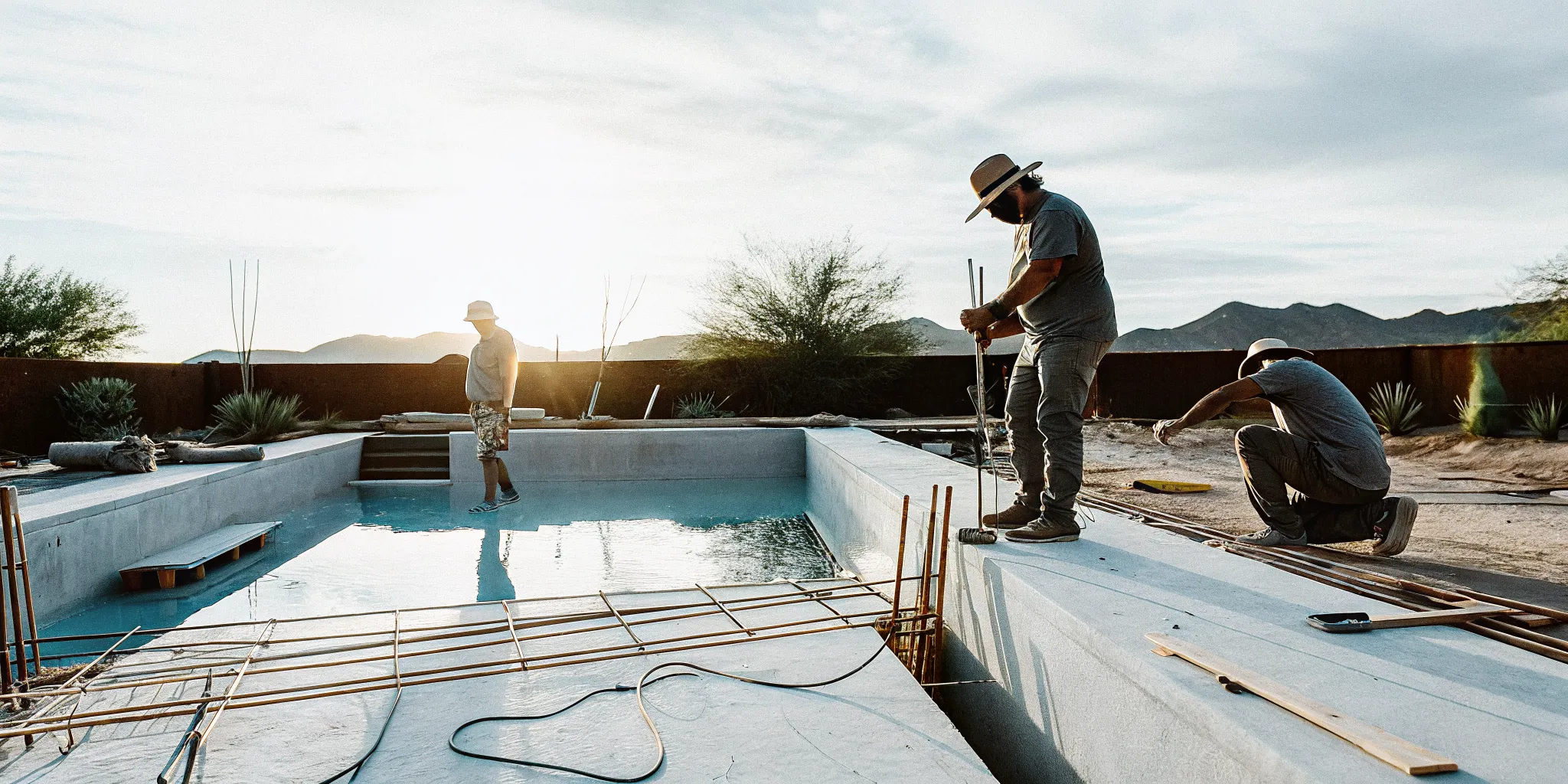
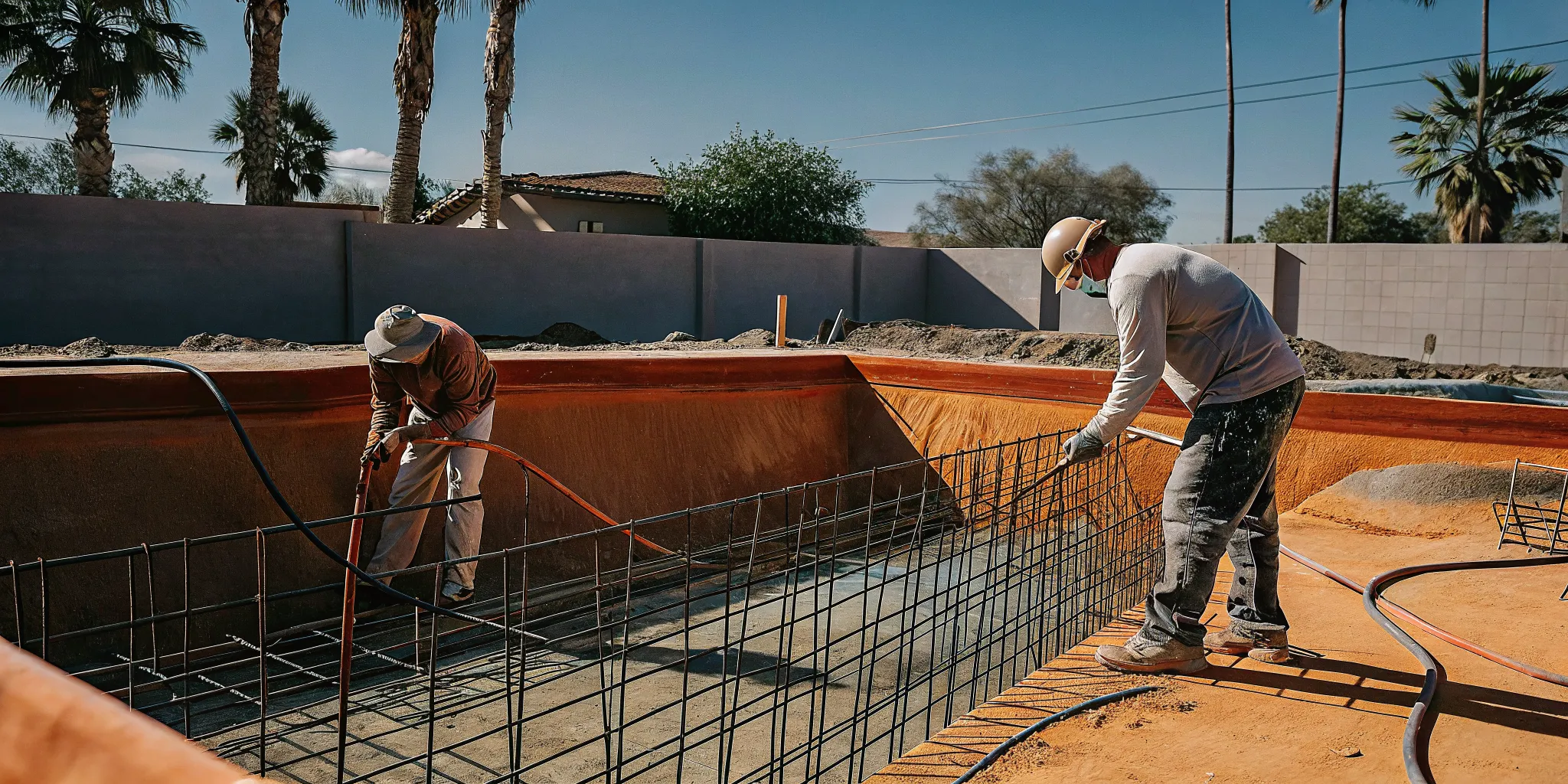
With the shell excavated, crews place a reinforcing steel grid throughout the pool. The rebar supports the future shotcrete structure and is shaped around walls, curves, stairs, benches, and other structural transitions. Steel placement generally takes several days on a typical build, with the schedule influenced by the pool’s size, geometry, and engineered details.
The inspection checkpoint
Before shotcrete is applied, the installed steel and related preparation go through a structural inspection. This inspector gate is an important quality checkpoint, not a formality. It confirms that the work is ready for the next phase and creates an opportunity to resolve questions before the shell is covered. Once approved, the project can proceed into plumbing and gunite with greater confidence that the foundation of the backyard transformation is sound.
Phase 3: Plumbing, electrical, and gunite
With the excavation and steel reinforcement in place, the pool begins to take shape as a working system. The plumbing crew installs the suction and return lines that move water between the pool, pump, filter, and equipment pad. Main drains, skimmers, cleaner lines, and dedicated lines for water features are positioned before the shell is applied. Careful placement matters because these lines become embedded in the structure and are difficult to change later.
Electrical rough-in happens alongside the plumbing work. This stage typically includes bonding the pool’s conductive components, planning equipment connections, and running conduits for underwater and landscape lighting. In Phoenix, overhead utilities also require special attention. The city’s guidance points builders to the 2017 National Electrical Code, Article 680, for minimum clearances between overhead conductors and pools or fountains. Review the Phoenix electrical clearance guidance before finalizing a design near overhead lines.
After inspections and rough-in approvals, the gunite or shotcrete crew pneumatically applies the concrete shell over the reinforced steel. The material is placed under pressure to form the walls, steps, benches, and other custom contours. It is a defining stage for a custom shotcrete pool because the shell’s geometry establishes the foundation for the tile, coping, interior finish, and surrounding deck. Modern Pools follows the broader sequence of plumbing, gunite, tile and coping, decking, landscaping, and startup described in its custom pool construction process.
The shell must then cure before finish work begins. Arizona’s heat can make scheduling and moisture management especially important, so the team should follow the specified curing and inspection requirements rather than rushing the next trade. This waiting period protects the long-term integrity of the shell and gives crews a sound surface for tile and plaster.
Shotcrete vs fiberglass build times
Fiberglass pools can move from excavation to water in roughly two to three weeks, according to published Arizona pool timelines. Shotcrete pools take longer because the shell is formed on site and followed by multiple finish and startup stages. One Arizona estimate places the excavation-to-water period for shotcrete at about two to two and a half months, depending on complexity. Fiberglass is included here only as a market comparison; Modern Pools builds custom shotcrete pools for homeowners who want a tailored backyard transformation.
Request your free consultation to see how your backyard transformation would be sequenced and scheduled.
Phase 4: Tile, plaster, and finishes
Once the shell, plumbing, and equipment are in place, the project begins to look like the backyard transformation you approved. This phase brings together the visible finishes and the final operating checks, from waterline tile and coping to the interior surface, decking, landscaping, and startup.
Tile, coping, and the interior finish
Waterline tile creates a clean transition between the pool water and the surrounding structure, while coping protects and defines the pool edge. These details need to work with the architecture of the home and the desert setting, not simply be selected as isolated materials. For a more distinctive design, Modern Pools can incorporate glass tile and water features as part of the custom design package.
The interior surface is then applied. Traditional plaster remains an option, while pebble aggregate finishes can add texture and a more natural visual character. The right choice depends on the overall design, how you want the water to look, and the finish level that suits your long-term plans for the pool.
Decking, landscaping, and startup
Decking and landscaping complete the connection between the pool and the rest of the property. In the Phoenix East Valley, that may include carefully selected hardscape materials, shade-oriented outdoor living areas, and desert-appropriate planting. The goal is a cohesive setting for everyday use, entertaining, and time outdoors, rather than a pool placed in an unfinished yard. Explore Modern Pools’ outdoor living solutions for the broader approach to the space.
Modern Pools includes LED lighting, automation, and variable-speed pumps as standard premium features, helping the finished pool perform as well as it looks. After the interior finish is applied, the startup phase begins. Water chemistry is balanced and monitored before swimming. The first swim is approximately one week after the interior finish is applied and the water chemistry is balanced, according to this Arizona pool timeline. That final interval protects the finish and gives the team time to confirm that the backyard is ready for use.
What can delay your pool build, and how Modern Pools avoids them
Even with a well-defined plan, a Phoenix East Valley pool timeline is an estimate rather than a fixed deadline. A standard backyard build may take about 2 to 3 months, while a complex custom oasis with substantial features can take longer. Once construction begins, planning for roughly 8 to 12 weeks gives homeowners a practical framework without treating every project as identical.
Design complexity and local review
Permit review is one of the earliest variables. Phoenix reports an average turnaround of about five days for approved standard pool plans, but custom or hillside plans require longer review. Plans that include structural features such as waterfalls, slides, or grottos also receive additional scrutiny. These elements can be central to a design, but they need to be engineered, documented, and reviewed before work can move ahead. See the city guidance on custom pool plan review for the factors that can affect timing.
That is why the design phase deserves careful attention. Clear plans, realistic selections, and a construction sequence that accounts for the entire backyard transformation help reduce avoidable revisions. Homeowners considering custom pool construction should expect the design to reflect site conditions, permitting requirements, and the intended lifestyle, not just the pool footprint.
Weather and supply conditions are real variables
External events can affect even a disciplined schedule. Industry reporting notes that the 2020-2022 pandemic and historic rainfall drastically affected construction timelines. Arizona weather is usually an advantage for outdoor work, but unusual rainfall can still affect excavation, access, soil conditions, and sequencing. Material availability can also change without warning, so flexibility matters when selecting finishes or coordinating multiple outdoor-living elements.
Owner involvement protects the process
Modern Pools keeps the process personal: an owner-involved team oversees every project from start to finish. Combined 36+ years of experience supports better anticipation of Valley-specific soil, weather, and permitting challenges before they become schedule surprises. The goal is not to rush a pool into the ground. It is to deliver a design-first backyard transformation that performs as a long-term lifestyle investment, including the connected outdoor living spaces around it.
Book your estimate today and get a clear timeline for your Arizona pool build from the first design conversation.
Frequently Asked Questions
How long does it take to build a pool in Arizona from start to finish?
A typical custom shotcrete pool takes about three to six months from contract signing to the first swim. Once construction begins, the excavation-to-water phase commonly takes two to two and a half months, depending on the design. Shasta Pools provides a comparable Arizona timeline.
Does the pool construction timeline start at excavation?
No. The project timeline should include design, engineering, permits, and pre-construction before excavation begins. That preparation commonly takes four to eight weeks, although the actual review period varies by city and project complexity.
How long does the permitting process take for a new pool in Arizona?
It depends on the municipality and plan. Phoenix reports an average turnaround of about five days for approved standard pool plans, while custom, hillside, or feature-heavy plans can require longer review. Scottsdale also requires detailed site plans, setbacks, and barrier fencing information.
Do waterfalls, slides, or grottos make a pool take longer to build?
Yes. Structural features add design, engineering, permitting, and construction work. Phoenix specifically notes that waterfalls, slides, grottos, hillside locations, and custom plans can increase plan-review time. They may also extend the construction phase after approval.
When can you start swimming after the pool is completed?
Plan for approximately one week after the interior finish is applied. The finish needs time to cure while the water chemistry is balanced and the startup process is completed before the pool is ready for swimming. This Arizona timeline reference uses the same general guidance.
Ready to Plan Your Arizona Pool Build?
A design consultation helps turn your preferred features, site conditions, and project goals into a clearer construction plan and estimate. Modern Pools can help you understand the likely phases and timeline for your backyard transformation. To book a complimentary design consultation and estimate, call Modern Pools at (480) 698-8412.