Choosing pool service in Phoenix means more than comparing how often someone visits. Clarify what each visit includes, how water and equipment concerns are reported, and what happens when a repair or larger project may be needed. A clear scope helps you match ongoing care to your pool, household routine, and long-term plans.
What does pool service include at each visit?
The phrase “pool service” can mean different things. One homeowner may be looking for regular cleaning and water checks; another may need equipment troubleshooting or advice about an aging finish. Ask for a written description of recurring work, not just a visit frequency.
Before comparing providers, clarify whether the proposed service covers items such as:
- Skimming leaves and other debris from the water.
- Brushing surfaces and steps, and vacuuming when included in the scope.
- Emptying baskets and noting visible circulation concerns.
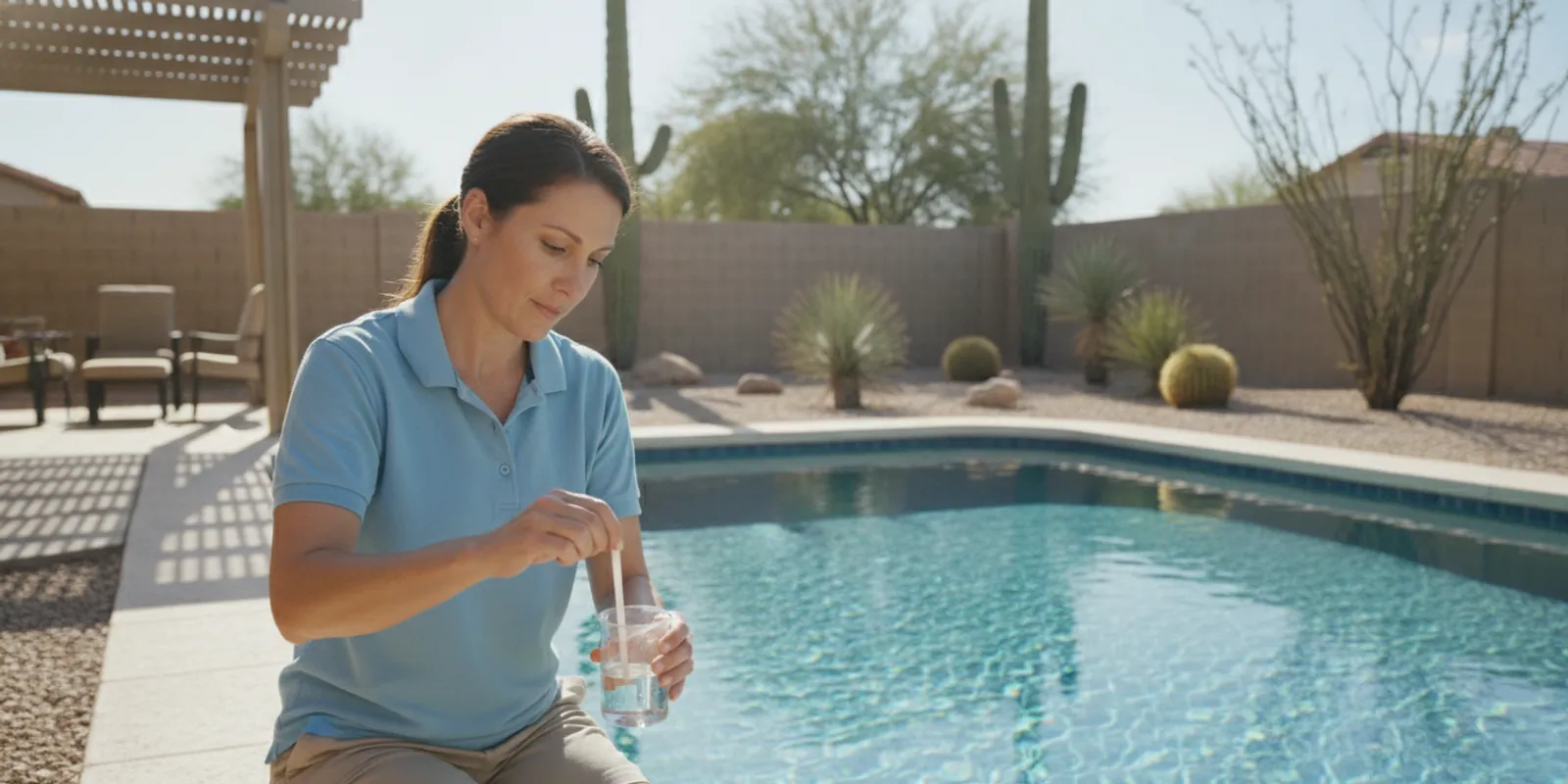
- Testing water and explaining adjustments or treatment included in the plan.
- Looking over accessible equipment and reporting unusual sounds, leaks, or error messages.
- Sending a visit note that records what was completed and what needs attention.
These are questions to ask, not assumptions about every provider’s package. The same task may be included in one plan and excluded or billed separately in another. Ask how the provider defines a completed visit, what supplies are included, and whether the service changes with pool use, weather, or debris levels.
Make the scope concrete by asking what a normal visit looks like from arrival to departure. For example, if brushing is listed, does the technician brush steps and the waterline, or only selected surfaces? If water testing is listed, will you receive readings or only a note that an adjustment was made? A specific answer gives you a basis for comparing plans and for following up when something is missed.
If you are comparing regular upkeep with construction or an upgrade, review the full range of pool and outdoor living services. Routine attention and construction work solve different needs, even when they concern the same backyard.
How should you compare visit frequency and expectations?
Visit frequency should make sense for the pool and household, rather than being selected from a generic checklist. Phoenix heat, dust, wind, monsoon weather, shade, nearby plants, and how often the pool is used can all affect what an owner needs to monitor. Ask the provider how it determines a schedule and how it handles a week when conditions change.
Use these questions to make the comparison concrete:
- How often will a technician visit, and what is the usual service window?
- How will a missed visit, holiday, or weather disruption be communicated?
- What should I do between visits if I notice cloudy water, a new sound, or reduced circulation?
- Will the same technician usually visit, or should I expect different staff?
- How can I confirm that a visit took place and see what was done?
Do not assume a frequent visit automatically means a broader scope. A short, consistent visit with a clear checklist may be easier to evaluate than a vague promise of “full service.” Ask for practical examples: if a basket is full, an equipment display shows a warning, or the pool has more debris than usual, what does the provider do and how will you hear about it?
Think through a realistic week at your property. A pool near trees may collect debris after wind, while a pool with little shade may face a different pattern of exposure. A household that swims often may notice changes sooner than one that uses the pool occasionally. These examples do not dictate a universal schedule; they help you explain your situation and ask whether the proposed visit rhythm has a clear rationale.
Also distinguish the scheduled visit from urgent communication. Ask what to do if you see a sudden leak, an equipment alert, or a major change in water appearance between visits. Confirm the appropriate contact method and whether a response or an additional visit is part of the arrangement. Clear boundaries reduce the risk of assuming a routine plan covers an unplanned issue.
What should you ask about water care and equipment checks?
Water care and equipment checks are related, but they are not the same task. Ask how water is tested, whether results are shared, and what is included when readings suggest an adjustment. Find out whether chemical products are part of the stated service, how product use is recorded, and whether you will be contacted before work outside the regular scope.
For equipment, ask what the technician can observe during a standard visit and how a possible repair is handled. A basic visual check is not the same as diagnosing or repairing a pump, filter, heater, lighting system, or automation control. Confirm whether troubleshooting is included, whether repair work requires separate approval, and how the provider documents a recommendation.
Homeowners should also know where to find general recreational-water safety information. The Centers for Disease Control and Prevention provides public health resources; for pool-specific questions, use its Healthy Swimming guidance and ask a qualified pool professional about care for your particular system.
Keep your own simple record of service notes, water readings if provided, equipment alerts, and repairs. A short history makes it easier to explain a new concern and can help you see whether the same issue is recurring. It is also useful context if you later discuss an equipment upgrade or a broader pool update.
A simple log can be a dated note on your phone. Record the visit date, the work reported, any readings supplied, products or adjustments mentioned, and follow-up recommended. Add your own observations separately, such as when a sound began or whether a display alert returned. Separating observations from a provider’s diagnosis helps keep the history useful and avoids treating a guess as a confirmed cause.
How can you compare pool service plans fairly?
Compare the work, not just the label or visit cadence. Ask each provider to describe the same set of tasks and exclusions in writing. The table is a checklist for the conversation; it does not describe a specific company’s service plan or imply that every task is included.
| Comparison point | What to clarify | Why it matters |
|---|---|---|
| Visit tasks | Which cleaning and inspection steps are completed each time? | “Service” can cover different levels of work. |
| Water care | What is tested, what products are included, and how are results shared? | You can understand what happens between visits and what is outside scope. |
| Equipment | Is the work a visual check, troubleshooting, or repair? | Those activities require different time, authorization, and expertise. |
| Communication | Do you receive a visit record and a clear notice about concerns? | Written updates help you follow up and keep a history. |
| Additional work | How are extra tasks described and approved before they begin? | You can distinguish routine service from a separate repair or project. |
| Schedule | What is the normal visit window, and how are changes handled? | Clear expectations make service easier to coordinate. |
Ask for plan details in plain language: included tasks, exclusions, schedule, communication method, and the process for approving work beyond the regular visit. If you have more than one proposal, put the answers side by side. That is a more useful comparison than relying on the plan name alone.
For a practical side-by-side review, make one column for each provider and one row for each task in the table. Mark an item “included,” “not included,” or “needs clarification.” Do not treat an unclear answer as a promise. Follow up in writing and keep the response with the plan details. This method also helps expose differences that a low headline price or a frequent schedule might otherwise obscure.
Modern Pools emphasizes published package pricing for eligible new-pool work, while some projects are custom planned. For a new build, the live site lists the Basic Pool Package at $37,999, plus permits and taxes; do not assume that amount describes recurring pool service, repairs, or a remodel. Review what pool packages are designed to compare and ask what applies to your project.
When is a service concern a sign to discuss a remodel?
Ongoing care can reveal a change worth investigating, but one service note does not by itself mean a pool needs a remodel. Look for a pattern and ask a qualified professional to assess the specific condition. Repeated equipment trouble, a finish or tile that appears to be deteriorating, persistent circulation concerns, or a layout that no longer suits your household may be reasons to discuss options.
Start by gathering useful details:
- Write down when the concern began and whether it is becoming more frequent.
- Save service records, equipment alerts, and photos that show a visible change.
- Ask whether the issue appears to be routine maintenance, a repair, or a condition that needs a closer assessment.
- Describe how you use the pool and what you want the backyard to do better.
For example, a homeowner who sees the same equipment alert several times can collect dates and notes before requesting an assessment. That record does not establish what is wrong, but it gives a professional a clearer timeline. Similarly, a visible surface change can be photographed from the same angle over time, then discussed without assuming that replacement or refinishing is the answer.
A remodel conversation may cover surface refinishing, tile, equipment upgrades, or other changes, depending on the pool and the owner’s goals. Explore pool remodeling options for a sense of the service category, and use an estimate discussion to explain the concern rather than presuming a particular solution.
For a broader decision, Modern Pools has a guide to remodeling versus replacing a pool in Arizona. The right direction depends on the condition of the existing pool, the scope of work, and what you want from the finished backyard.
Contact Modern Pools to discuss your project
How does pool service connect to a new build or backyard plan?
Pool service is one part of owning an outdoor space; a new pool or full backyard transformation is a separate planning decision. If your needs are changing, list what matters most: swimming space, shade, lighting, easier operation, entertaining areas, or a different look. Clear priorities help a design and estimate conversation stay focused.
For new construction, review the new pool and spa build information. If you are planning connected outdoor spaces, consider hardscape and landscape options as part of the larger picture. The Modern Pools company overview explains its owner-involved approach and 36+ years of combined experience.
Local details also matter. East Valley properties can have different lot layouts, access, shade, and approval considerations. If you live in Mesa, see the Mesa pool planning page; homeowners in Chandler can review pool and outdoor living information for Chandler. These pages help frame a local project conversation, not a promise about routine service availability or a particular schedule.
If you are still gathering ideas, browse the project gallery to see examples of pool and backyard design. Bring a few examples and a short list of priorities to a consultation so the discussion can focus on your property and goals.
It can help to separate your notes into “care now” and “planning later.” The first list might include a recurring alert or a question about visit records. The second could include a desire for more shade, updated lighting, or a new layout. That distinction helps prevent a routine service conversation from turning into an unfocused construction discussion while still preserving ideas for the future.
Book Estimate for your backyard plans
Frequently asked questions about pool service in Phoenix
What should a pool service visit include?
It depends on the written scope. Ask whether the visit covers cleaning, water testing or treatment, basket care, equipment observation, and a service report. Confirm what is excluded and how extra work is approved.
How often should a Phoenix pool be serviced?
There is no single schedule that suits every pool. Pool use, weather, debris, shade, and equipment all affect care needs. Ask a qualified provider to explain how it recommends a schedule for your pool and what to monitor between visits.
Does regular pool service include repairs?
Not necessarily. Routine upkeep, equipment troubleshooting, and repair work can have different scopes. Ask what is included in recurring visits, how a problem is reported, and whether you must approve separate repair work.
When should I discuss a pool remodel?
Consider a professional assessment if you notice a recurring issue, visible wear, equipment concerns, or a layout that no longer fits your needs. Keep service notes and explain your priorities; an assessment can help determine whether maintenance, repair, or a larger update is appropriate.
Clear expectations make pool ownership easier to manage: compare the actual tasks, ask how concerns are reported, and keep a record of what is done. When your needs move beyond routine care, a focused conversation can help you plan the right next step for your Phoenix-area backyard.