

Arizona sunshine does more than warm a swimming pool. Phoenix-area heat, intense UV exposure, dry air, and long summer operating seasons influence the surface materials, deck comfort, shade, water management, and equipment selected before construction begins. A pool that looks beautiful on day one should also remain comfortable, efficient, and durable through the desert climate.
Good pool design arizona climate planning matches every major decision to local conditions, from UV-resistant finishes and heat-conscious deck materials to shade, evaporation control, variable-speed circulation, and smart automation.
That climate-first approach is part of thoughtful custom pool construction in Phoenix. Understanding the forces your pool will face makes it easier to compare options, prioritize long-term value, and create a backyard that works well in every season. Start with the effects of heat and UV exposure, because those conditions shape many of the design choices that follow.
How Arizona Heat and UV Exposure Affect Your Pool
Phoenix-area summers put pool surfaces and equipment through a demanding cycle. Extended periods above 100 degrees Fahrenheit increase water temperature, accelerate evaporation, and raise the workload on pumps and filtration systems. At the same time, intense desert sunlight exposes the pool interior, deck, and surrounding finishes to constant ultraviolet radiation.
These conditions do not automatically make a pool a poor investment. They do make climate-aware planning important. A durable pool design for Arizona should account for how sun, heat, and water chemistry work together instead of treating each concern as a separate issue.
What direct sun can do to pool surfaces
UV exposure can gradually break down traditional plaster finishes. In direct desert sun, some plaster surfaces may begin requiring attention in as little as five years. Arizona pool interiors are often resurfaced on a roughly eight- to twelve-year cycle. The actual timeline depends on the finish, installation quality, exposure, use, and maintenance history. These ranges are drawn from industry guidance on Arizona sun and heat impacts, not a promise for every pool.
Heat also magnifies the effect of imbalanced water. When chemistry is neglected, the interior finish can etch, scale, discolor, or lose its smooth feel faster. Proper water chemistry may extend surface life by up to 30 percent, making testing and adjustment a meaningful part of protecting the original design.
How heat affects the rest of the backyard
- Water: High temperatures and dry air increase evaporation, which means more frequent refilling and greater concentration of dissolved minerals when water levels drop.
- Equipment: Pumps, filters, heaters, and automation components may operate for longer periods as the pool works to maintain clean, comfortable water.
- Decking and finishes: Unshaded materials absorb heat and face repeated expansion, cooling, and UV exposure. Surface selection and placement matter for durability and comfort underfoot.
- Water temperature: A pool that receives uninterrupted afternoon sun can become less refreshing during peak summer, even when circulation and chemistry are properly managed.
Smart planning addresses these pressures early through appropriate interior and deck materials, equipment sized for the pool, circulation strategies, and practical shade or water-management features. The goal is not to eliminate Arizona’s climate. It is to design around it so the backyard remains attractive, efficient, and usable for more of the year.
That approach is part of climate-conscious pool construction, where long-term performance is considered alongside the initial appearance.
Why Arizona Pools Need Specific Material Choices
Arizona pool design is shaped by more than color and style. Pool finishes and deck materials must handle intense sunlight, high surface temperatures, and the daily expansion and contraction that come with desert conditions. Proper material selection is critical for heat and UV resistance, especially on surfaces exposed to direct afternoon sun. Custom pool and spa construction in Arizona should account for those demands before the first material is specified.
Traditional plaster can be attractive and cost-effective, but extreme heat and UV radiation can accelerate its breakdown. One industry source reports that direct desert sun can degrade pool plaster in as little as five years. That does not make plaster automatically unsuitable, but it does make finish selection, water chemistry, shade planning, and long-term maintenance important parts of an honest design conversation.
| Material | Heat and UV resilience | Durability | Maintenance considerations |
|---|---|---|---|
| Pebble finish | Strong choice for intense sun and heat when properly installed | Highly durable, with a textured natural appearance | Requires balanced water chemistry and periodic professional care |
| Quartz finish | Better UV and heat resistance than basic plaster | Durable smooth finish for many residential applications | Needs consistent chemistry and routine surface maintenance |
| Glass or ceramic tile | Excellent resistance to sun exposure when rated for pool use | Long-lasting, especially on waterlines and feature areas | Higher upfront investment; grout and individual tiles should be inspected |
| Cool-deck concrete | Designed to reduce the feel of heat underfoot compared with standard concrete | Durable when installed with suitable joints and drainage | May need resealing or repairs over time; inspect for cracks and wear |
The right answer depends on how the pool will be used, the amount of direct sun, the desired look, and the renovation horizon. Pebble and quartz are practical finish options for homeowners who want durability with a refined appearance. Tile works well as a premium accent or waterline material, while cool-deck concrete can make surrounding circulation areas more comfortable during peak summer heat. No material eliminates maintenance, and no finish should be presented as maintenance-free.
For homeowners comparing finishes during a remodel, this guide to Arizona pool surface materials can help clarify what changes during resurfacing and what to evaluate before choosing a replacement. A transparent plan should explain the material, expected care, installation conditions, and how each choice fits the overall backyard transformation.
Shade Structures, Pergolas, and Sun Control for Desert Pools
In a desert backyard, shade is part of the pool design, not an afterthought. Arizona’s low deserts receive roughly 70 to 80 inches of annual evaporation but only 4 to 12 inches of precipitation, according to the University of Arizona’s AZMET-based guidance. That imbalance affects both pool water and the comfort of everyone using the space.
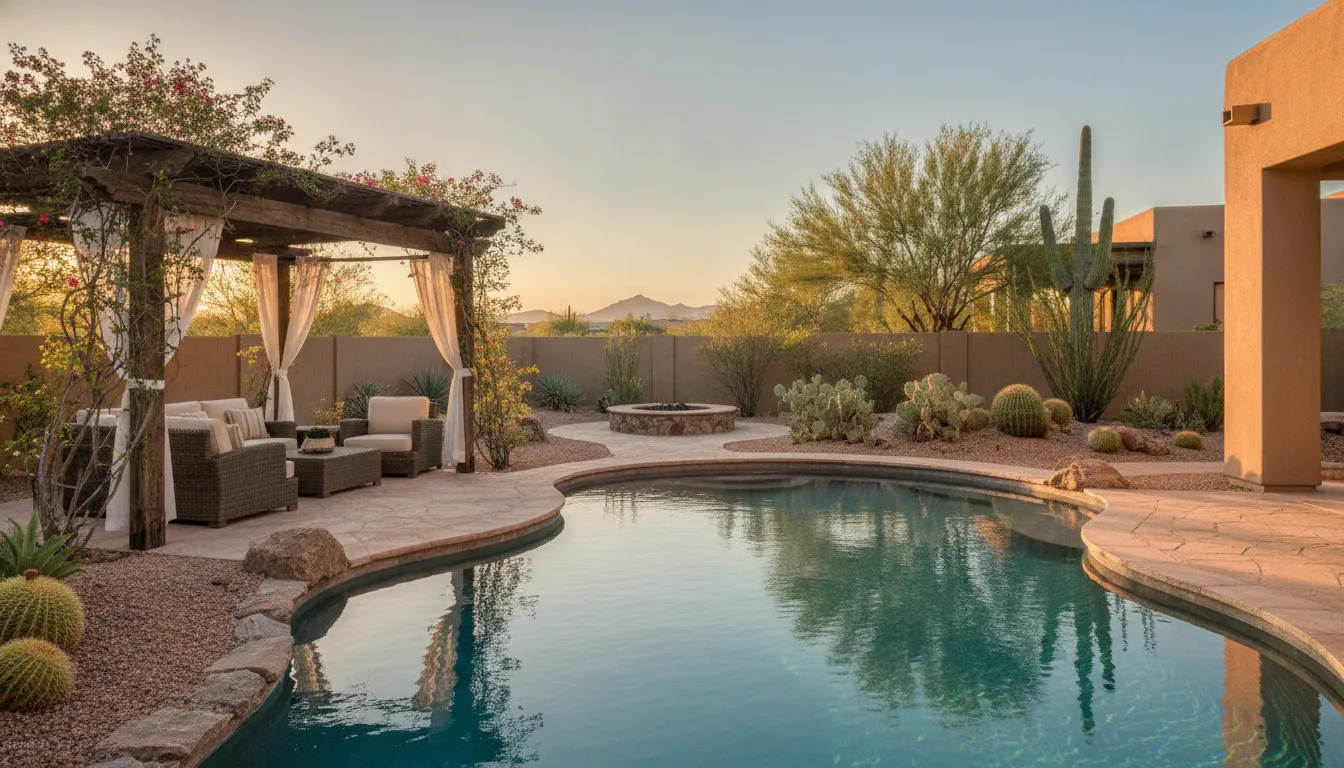
A thoughtful sun-control plan can reduce direct exposure, make the deck more usable during peak afternoon heat, and create distinct zones for swimming, dining, and relaxing. The best solution usually combines a permanent structure with flexible shade and climate-appropriate planting.
Choose the right structure for how you use the backyard
- Pergolas: A pergola defines an outdoor room for dining or lounging while adding architectural character. Slatted or louvered roofs can filter sunlight without making the space feel enclosed. Position the structure to shade the areas people use most, such as a conversation seating group or outdoor kitchen.
- Shade sails: Shade sails offer a lighter, more sculptural solution for tanning ledges, play areas, or a section of pool deck. Their angled installation can provide strong coverage while preserving sightlines across the yard. Use durable, tensioned fabric and plan the anchor points during the initial construction.
- Retractable awnings: A retractable awning gives homeowners control over changing conditions. Extend it during the hottest part of the afternoon, then open it when you want more winter sun or a clearer view of the sky. It works particularly well beside the house or over a narrow entertainment zone.
- Desert landscaping: Carefully placed trees, tall accent plants, and layered planting can reduce direct UV exposure around the pool and help keep loungers and hardscape cooler. Select plants for mature size, root behavior, maintenance needs, and water requirements. Avoid placing heavy-dropping or thorny plants where they will create constant pool cleanup or interfere with foot traffic.
Plan shade around movement, views, and water care
Start with a simple observation of the backyard at different times of day. Note where the sun reaches the pool, steps, shallow areas, seating, and service equipment in summer. Shade should protect high-use spaces without blocking the home’s best views or trapping heat around mechanical equipment.
Also consider how shade interacts with water management. A covered seating area may encourage longer stays outdoors, while planting can soften the hardscape and improve the feel of the backyard. However, landscaping should not shed leaves directly into the water or make access to the equipment pad difficult. Pair the plan with efficient circulation, automation, and a practical maintenance route.
For a complete backyard transformation, coordinate shade with lighting, water accents, and the rest of the outdoor living plan. Explore Modern Pools’ desert-ready fire and water features to see how those elements can work together without competing with the pool’s clean lines.
Chemical Balance and Evaporation Management in Dry Heat
Desert heat changes pool care in ways that are easy to underestimate. Phoenix-area pools can lose substantial water to evaporation, especially during long, hot stretches with low humidity. Arizona’s low deserts receive only about 4 to 12 inches of precipitation each year. Annual evaporation can reach 70 to 80 inches, according to the University of Arizona Cooperative Extension. That gap makes water-conscious planning part of responsible pool design, not an afterthought.
As water evaporates, the minerals and dissolved substances left behind become more concentrated. The result can be chemistry that drifts faster, scale on tile or equipment, and more frequent adjustments after topping off the pool. Sunlight and heat also increase the demand on sanitizers. A pool that starts the season balanced can require a different maintenance rhythm by midsummer.
Use a cover as a water and energy control
A properly fitted pool cover is one of the most direct ways to limit evaporation. The U.S. Environmental Protection Agency says a pool cover can prevent up to 95 percent of pool water evaporation. It can also help retain heat, reducing the energy and operating cost associated with replacing lost water and reheating the pool. The best cover is one that fits the pool’s shape and can be used consistently, not one that stays stored because it is difficult to handle.
Cover planning should happen with the pool layout. Consider where the cover will be stored, whether an automatic system is practical, and how raised spas, vanishing edges, steps, or water features affect coverage. These details are especially important when designing a pool for Arizona climate conditions, where small daily losses can compound across an extended summer.
Build maintenance around the season
Start with accurate water levels and avoid treating routine evaporation as a leak. If the pool needs unusually frequent refilling, have the plumbing, shell, equipment, and autofill system checked rather than simply adding more water. A leak can waste far more water than normal surface evaporation.
- Test sanitizer, pH, alkalinity, and stabilizer levels on a consistent schedule during hot weather.
- Keep stabilizer, also called cyanuric acid or CYA, within the range recommended for the sanitizer system. It helps protect chlorine from sunlight, but excessive levels can complicate water management.
- Maintain adequate circulation and clean filters as needed so heat, debris, and increased swimmer demand do not overwhelm the system.
- Use automation for dependable run times and more consistent chemical management, while still checking the water manually.
Phoenix pool design should account for evaporation management from the start, including efficient circulation, accessible equipment, cover integration, and finishes that are practical to maintain. That approach does not eliminate summer upkeep. It makes the upkeep more predictable, limits waste, and gives homeowners a clearer view of what their pool will require year after year.
Energy Efficiency: Why Variable-Speed Pumps Are Essential in Arizona
Arizona pool equipment works harder when summer temperatures stay high and the pool needs longer circulation periods. That makes energy efficiency a design priority, not a minor equipment upgrade. A circulation system that is sized and programmed thoughtfully can help manage utility costs while keeping water moving, filtered, and ready for use.
Variable-speed pumps are especially useful because they can operate at lower speeds for routine filtration, then increase output when the pool needs additional circulation or features are running. Lower-speed operation is typically quieter and places less demand on the motor than running a single-speed pump at full power for every task. The right schedule still depends on the pool’s size, plumbing, equipment, water temperature, and maintenance needs, so the goal is a balanced system rather than a one-size-fits-all setting.
Why longer run times matter in East Valley summers
Heat, heavy use, and intense sun can increase the operational demands placed on a pool. Filtration may need to run for extended periods to support water quality, especially during the hottest part of the year. If the pump only has one operating speed, every hour of circulation can require the same high electrical draw, even when the pool needs only gentle filtration.
A variable-speed system gives homeowners more control over that daily workload. It can support a steady baseline of circulation and reserve higher speeds for tasks such as heating, cleaning, or operating water features. Scheduling circulation during cooler periods may also support better temperature management. In practice, an energy-conscious pool design considers both the equipment and the programming that controls it.
LED lighting and automation complete the system
Efficient circulation is only one part of responsible pool operation. LED lighting uses less energy than older pool-lighting technologies and provides flexible illumination for evening swimming and outdoor entertaining. Thoughtful placement also matters. A well-designed lighting plan can create a polished atmosphere without relying on excessive fixtures or unnecessary operating hours.
Automation adds another layer of control. A connected system can coordinate pump schedules, lighting, heating, and other features from a central interface. That makes it easier to follow a consistent routine instead of leaving equipment running longer than necessary. It can also give homeowners clearer visibility into how their pool operates, which supports the transparent, hands-on ownership experience Modern Pools is built around.
Variable-speed pumps, LED lighting, and automation are standard features in Modern Pools packages because they address the practical demands of Arizona pool ownership. The result is a more refined system that supports comfort, water quality, and cost awareness throughout the season. Energy efficiency should be discussed early in the design process, alongside circulation, shade, materials, and evaporation management, so the finished pool performs as well as it looks.
How Arizona’s Climate Drives Smarter Pool Design in the East Valley
A successful East Valley pool is designed around the conditions it will face every day, not only how it looks in a rendering. Scottsdale, Chandler, Mesa, and Tempe share intense summer heat, strong UV exposure, dry air, and long swimming seasons. The right pool design responds to those demands while still making the backyard comfortable in cooler months.
Water management is one of the clearest examples. Arizona’s low deserts receive only about 4 to 12 inches of precipitation each year. Annual evaporation can reach 70 to 80 inches, according to the University of Arizona Cooperative Extension. That imbalance makes evaporation control an important design decision, not an afterthought. Pool covers, thoughtful orientation, shade, and properly selected equipment can help reduce unnecessary water loss without compromising the experience.
Phoenix-area pools should also be planned with evaporation management and extended summer operation in mind. That means circulation and control systems need to work efficiently through the hottest part of the year. When the pool is used most and equipment may run for longer periods. A variable-speed pump can adjust circulation to the pool’s needs instead of operating at one high setting all day. Automation can make those schedules easier to manage, while LED lighting supports evening use with less energy demand than older lighting systems. These features are standard recommendations in Modern Pools packages because they address real operating conditions, not because technology sounds impressive.
Materials and comfort matter just as much. Heat- and UV-resistant deck materials, durable interior finishes, and carefully planned shade help the pool area remain inviting when surfaces and water are exposed to direct summer sun. A pergola, covered seating area, or strategically placed landscape can create relief during the day. In the cooler season, orientation and flexible shade design can preserve sunny areas for comfortable lounging. The goal is balance: enough sun for warmth when temperatures fall, with enough protection when the desert heat peaks.
The same thinking improves year-round usability. A pool can support quiet morning swims, family gatherings, and evening entertaining. Shoulder-season relaxation comes naturally when its circulation, lighting, shade, finishes, and surrounding outdoor living areas work as one system. That integrated approach also makes maintenance expectations clearer. Water chemistry, leak checks, and equipment schedules remain important, but smart design reduces the amount of work created by the climate.
For homeowners planning a backyard transformation, climate-conscious decisions are part of the value of custom work. Review the complete custom pool construction guide to see how site planning, features, materials, and project decisions fit together before you build.
Frequently Asked Questions
How does Arizona’s heat affect pool design choices?
Arizona heat influences the pool’s finish, deck materials, circulation plan, and shade strategy. Light-colored finishes and heat-resistant surfaces can help create a more comfortable, durable space, while thoughtful circulation supports water quality during long summer operating periods. Shade from a pergola, shade sail, or well-placed landscaping can also reduce direct sun exposure and improve comfort.
What are the best pool surface materials for high-sun environments?
Choose finishes and decking based on heat and UV resistance, surface comfort, maintenance needs, and the overall design. Traditional plaster can degrade faster under intense desert exposure. One industry source reports that UV radiation may break down plaster in as little as five years. Proper water chemistry can extend surface life by up to 30 percent. Surface and chemistry guidance should be weighed alongside the manufacturer’s specifications.
How can I reduce pool water evaporation in the Arizona desert?
A properly fitted pool cover is the most direct design and operating measure. The EPA says a pool cover can prevent up to 95 percent of evaporation. Limit unnecessary spray from water features during the hottest periods, monitor water levels, and investigate unusual loss promptly. Arizona’s low deserts can experience approximately 70 to 80 inches of annual evaporation, according to the University of Arizona Extension.
What energy-efficient equipment is useful for an Arizona pool?
Variable-speed pumps, LED lighting, and automation help manage circulation, lighting, and operating schedules more efficiently. Equipment sizing and run times should be selected for the pool’s volume, features, and seasonal demands rather than copied from another backyard. Automation can also make consistent chemistry and schedule management easier.
Which shade features work best around an Arizona pool?
Pergolas, shade sails, covered outdoor rooms, and carefully positioned trees or native plants can provide different levels of sun control. The right choice depends on the yard’s orientation, usable deck area, views, privacy, and how you plan to use the space. Integrating shade during the initial design usually creates a more cohesive result than adding it later.
Ready to Design a Pool for Arizona Living?
A climate-smart pool starts with choices that fit your backyard, lifestyle, and the demands of Phoenix East Valley weather. Modern Pools can help you turn those considerations into a comfortable, durable outdoor living space.